


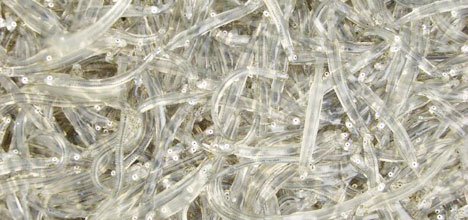
A connection between trout numbers and lack of whitebait is being confirmed by the introduction of a trout barrier at Hamurana Springs, north east of Lake Rotorua.
Whitebait species 'koaro' are breeding well.
Installed in May 2012, the barrier captured trout which were then relocated downstream.
It also prevented trout entering part of the stream which provides an area for the whitebait species koaro to breed.
Moreover, monitoring, undertaken in August, is indicating promising results for the restoration of koaro.
Koaro is one five species of fish in a group called migratory galaxiids. Small fish caught each spring by whitebaiters throughout the country are actually juveniles of fish in this group.
Initial monitoring in July 2012 and February 2013 still show overall numbers were low. But monitoring in July this year is showing the numbers of koaro have significantly increased – and providing hope that the koaro population will continue to breed and grow in size.
'This is the first structure of its kind in the Bay of Plenty – and if successful may be used in other locations in the Rotorua Te Arawa Lakes for koaro restoration,” says Rikihana Hancock from Ngati Rangiwewehi.
The restoration plan to prevent further decline of the whitebait species is a collaborative effort between Ngati Rangiwewehi, Te Arawa Lakes Trust, Bay of Plenty Regional Council, Fish & Game, Department of Conservation, NIWA and the Hamurana Springs Incorporated Society.
Koaro (Galaxias brevipinnis), were once abundant in the Rotorua Te Arawa lakes but declined following the introduction of trout, and because of reduced water quality and habitat disruption.
'A population of koaro was discovered on the Waitarere tributary of Hamurana Springs in the initial study. Once this study was completed the Hamurana Koaro Restoration working party was set up to develop the restoration plan,” says Rikihana. 'The restoration plan identified Hamurana Springs as an ideal site to install a trout barrier.
'The latest survey results, although positive, should not be viewed as conclusive. However what can be noted is the current survey indicates not only has there been an increase in the number of koaro surveyed; but also a number of new juveniles have been added to the local population.”
The current North Island whitebait season closes on November 30.

0 comments
Leave a Comment
You must be logged in to make a comment.