


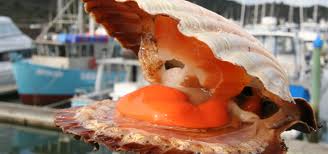
An update on the toxic shellfish warning in Bay of Plenty waters hasn't been issued since March despite the 2013 scallop season opening this month.
The scallop season opened on Sunday, September 1, but people gathering the seafood delicacy from Bay waters remain at risk of paralytic shellfish toxin poisoning.
The 2013 scallop season opened this month, but a health warning remains in place.
A health warning against the collection of shellfish from Tairua, on the east coast of the Coromandel peninsula, south to Whakatane Heads, in the Eastern Bay of Plenty, was issued on October 5, 2012.
The warning remains in place and includes the Tairua Harbour and Tauranga Harbour, Maketu and Waihi estuaries, Matakana and Motiti islands, and all other islands along the coastline.
Tauranga Coastguard operations manager Simon Barker says he has not been updated by Ministry of Primary Industries in months, but believes the warning is still in place.
'That would imply that it [the warning] is still in place.”
Toi Te Ora Public Health officer Dr Jim Miller admits the last update on the toxic shellfish warning was in March. Jim says it is because there hasn't been anything 'new” to update the reminder with, and the warning still remains.
'The warning has been on for many, many months now.”
However, Jim says the latest warning comes from the 300 signs erected along the coastline area reminding people of the warning.
Moreover, there haven't been any paralytic shellfish poisoning cases in the Bay of Plenty since the 29 cases in mid-December 2012, says Jim.
'Fortunately, there haven't been any cases since then and I think that's because people are still aware of the warning.”
The levels of paralytic shellfish poisoning are not as high as they were in December 2012- January 2013, but Jim says the levels are not yet low enough – and eating the shellfish can still cause severe illness.
'One patch could have the toxin and another patch may not. It's just luck and we have had some people that weren't so lucky.”
Jim is aware the scallop season opened this month and can only continue to offer the advice of not collecting shellfish in the areas where the health warning is in place.
'We can't stop people collecting shellfish. It is a warning not a ban. But we are hoping people will take our advice.”
The health warning applies to all bi-valve shellfish including mussels, pipi, tuatua, cockles, oysters, scallops as well as cat's eyes, snails and kina (sea urchin). Shellfish in the affected area should not be taken or eaten.
Shellfish containing toxic levels of paralytic shellfish poison don't look or taste any different from shellfish that are safe to eat. Cooking or freezing the shellfish does not remove the toxin – which comes from the algae shellfish feed on in the ocean.
Paua, crayfish and crabs can still be taken, but, as always, the gut should be removed before consuming.
Consumption of shellfish affected by the paralytic shellfish toxin can cause numbness and tingling around the mouth, face, hands and feet; difficulty swallowing or breathing; dizziness; double vision; and in severe cases, paralysis and respiratory failure. These symptoms can start as soon as 1-2 hours after eating toxic shellfish and usually within 12 hours.
Anyone suffering illness after eating shellfish should seek urgent medical attention.
People can check current warnings before going out to collect shellfish on the Toi Te Ora Public Health Service website. They can also phone the 0800 221 555 for information on the health warning.

2 comments
Updates
Posted on 08-09-2013 08:44 | By Ebco
Why aren't we updated monthly.Why has this gone on for so long.What is causing this?Seems like its being swept under the carpet so to speak.Do the public care?
What Toxin?
Posted on 09-09-2013 07:36 | By dbunk
Feel fit as a fiddle from mayor island scollops of lunch and dinner sat!
Leave a Comment
You must be logged in to make a comment.