


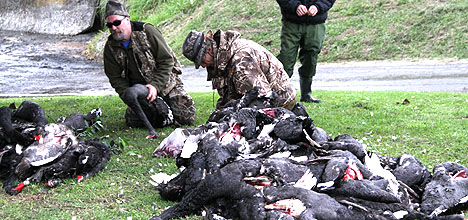
Black swans are 146 fewer on Tauranga Harbour after the annual swan shoot today.
Hunters remove the breast meat from the swans at the Katikati boat ramp. - Photos Ross Brown
Fish and Game has issued a permit to the Western Bay of Plenty Fish and Game Club to use boats to move the birds away from public areas in the harbour to an isolated bay where the shootings will take place.
About 120 hunters took part.
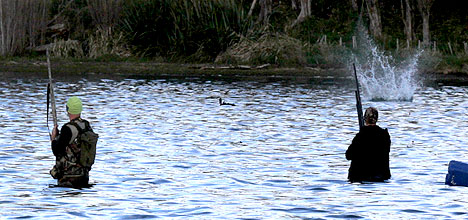
About 200 birds were killed in last years hunt.
Eastern Fish and Game regional manager Rob Pitkethley says providing this permit to assist a single large organised hunt allows for a more effective control of excessive black swan numbers in a safe and humane manner.

Rob says Eastern Fish and Game Council, which manages sports fish and game birds in this region, has a responsibility to keep game bird populations to a manageable size so they don't have a detrimental effect on other natural resources or users of the harbour.
'The permit we issue, which allows the swan population reduction, is all about authorising the club to proceed in a safe and effective manner. The permit allows the birds to be guided by boat to an area where they can be harvested with no risk to members of the public.”
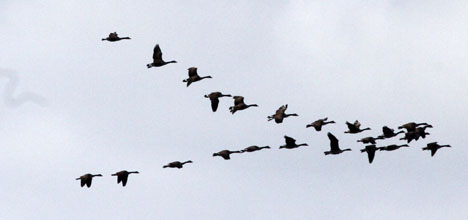
The hunt is an organised hunt initiated by Tauranga Hunting Club, under the current game season conditions.
Fish and Game's key involvement, acting under authority delegated by Department of Conservation, is to issue a permit to disturb the birds, and then observe what happens on the day to ensure that game bird hunting regulations are followed.
Rob says recent research shows swan populations of more than 4600 are threatening the sustainability of sea grass meadows, which are known to be important nursery habitats for juvenile snapper.
He says the research shows the swan population can remove more than 30 per cent of the Zostera seagrass biomass annually – a critical threshold where seagrass meadows may not fully recover.

While the black swans are a native species, there is also research to show that they can withstand moderate harvest measures, says Rob.
'We are well aware that some people are uncomfortable with these hunts, but we also have a clear responsibility to act on the concerns of harbourside property owners and public users, including farmers whose crops are damaged, and airport officials who've voiced concern in the past, that the birds pose a potential threat to air traffic safety.
'We hear from residents and others who see quite clearly that the swan numbers are a problem in terms of the fouling of beaches and sandbars – and serious impacts on the ecology of the harbour.
'The Bay of Plenty Regional Council also backs the hunt, well aware of the swans' environmental impact.”
Around 300 Tauranga game bird licence holders participate in the organised hunt.
The hunt is funded by the individual hunters taking part and no ratepayer or taxpayer money is spent on the hunt.

2 comments
Good on ya mate!
Posted on 02-06-2013 14:00 | By Plonker
I hope that they will make a full sweep of the Tauranga habour clearing all before them and of course the "cream-la-cream" will be to spear head a landing at the Strand and clear the stronghold at TCC, that will be the mother load that will bloat the quota. If they are over quota I would then not have a problem with that.
Swan Facts
Posted on 04-06-2013 15:51 | By mikey
The black swan was introduced from Western Australia in the late 1800s (see Wikipedia). It is not a native, although there was a New Zealand Swan- once. It is a pest, just like rats, rabbits and possums. It's pest status, and various scientific reports confiming the environmental damage it does can be obtained from Eastern Fish and Game Regional Manager Rob Pithkethley.
Leave a Comment
You must be logged in to make a comment.