


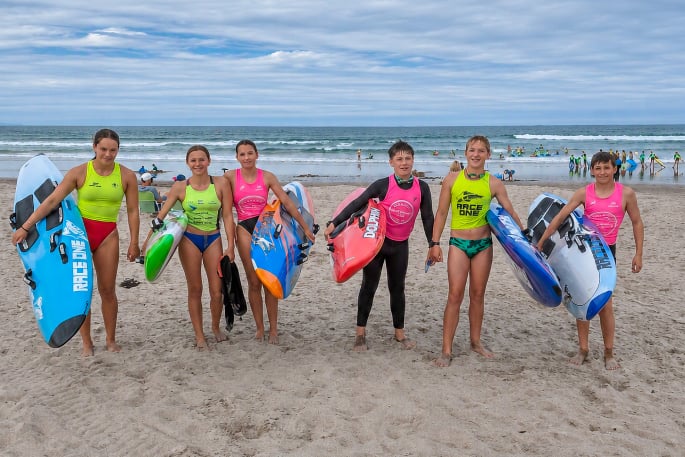
Five young surf lifesavers, aged 12 to 14, have been praised for their quick thinking and bravery after helping to rescue seven people caught in a dangerous rip at Ōmanu Beach on Friday evening.
The young members of Ōmanu Beach Surf Life Saving Club were the first to reach the group in the water, paddling out on rescue boards.
Club general manager Scott Bartlett said the youngsters’ actions, alongside those of experienced surf lifesavers who quickly joined them, may have prevented a tragedy.
“I firmly believe without the young kids there and Cory Hutchings, we’d be looking at a loss of life today,” Bartlett said.
Bartlett was at the club when the incident unfolded about 5.10pm, around 150m along the beach from the surf club, in an area that had been particularly susceptible to rips over the past week amid big tides and a 1.5m swell.
A club member spotted a group of people in trouble, caught in the outgoing tide, prompting Bartlett to immediately get on the public address system to alert those at the club and co-ordinate a response.
The five young lifesavers had just finished a training session with Ōmanu club coach Cory Hutchings and were heading in when they were called to assist.
The five were Willa Hammond, 12, Hudson Meade, 14, Austin Day, 13, Thomas Braithwaite, 14, and Cohen Cooper, 13. They reached the swimmers first and began helping them on to their rescue boards.
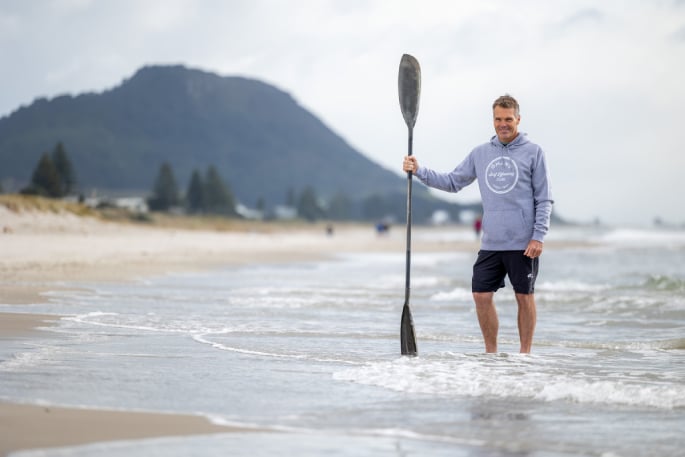
Ōmanu Beach Surf Life Saving Club coach Cory Hutchings. Photo / Jamie Troughton /Dscribe Media Services
Hutchings, who was further offshore training with senior athletes, spotted what was happening and immediately paddled over to help.
He went straight to the person in the most serious condition, a young woman who was struggling to keep her head above water and helped get her safely back to shore.
The senior athletes also stopped their training session to assist, joining the rescue effort and helping bring all seven people back to the beach.
Among them were Maia Symes, Olivia Halls, New Zealand junior representative Braith Swanberg, Tessa Scott, who is part of the national high-performance squad, and Sienna Ropati.
Bartlett said the young surf lifesavers had performed exceptionally well in a situation that was well beyond what would normally be expected of people their age.
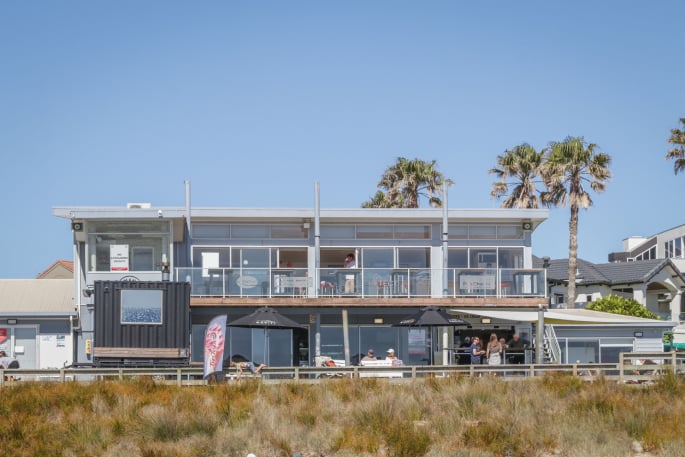
Ōmanu Beach Surf Life Saving Club, Tauranga. Photo / Kelly O'Hara
“They were amazing, to be honest with you,” he said.
“It was something well above their pay grade, and they were incredible the way they got there so quickly and offered those seven people help.”
He said the club juniors did not initially appreciate just how serious the situation had been.
“They’d just done something pretty special, but I don’t think they’d realised just how special it was because all they thought was that they’d helped someone back to the beach,” Bartlett said.
Hutchings explained the severity of the incident during the subsequent debrief.
Bartlett recalled Hutchings telling the group: “Oh my Lord, that was pretty bad and that person I got was about to go under”.
“It was a very serious situation and I think the patients realised how much trouble they were in when they got back to shore,” Hutchings said.
“A couple of them were really huffing and one was very pale, and if our young crew hadn’t responded so quickly, supported by the seniors, we could’ve been looking at something far worse.”
Bartlett said the swimmers appeared to be aged between 15 and 20, although he could not confirm their exact ages. He believed they were locals.
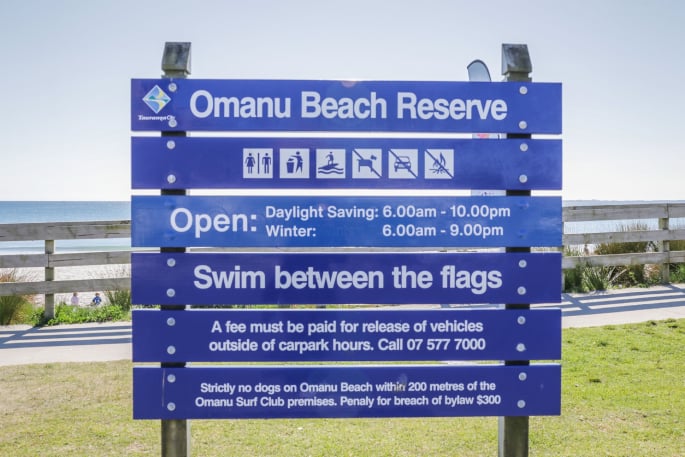
Ōmanu Beach signage reminds people to swim between the flags which are present during surf life saving patrol hours. Photo / Kelly O'Hara
He said the swimmers had entered an area where a particularly strong rip was running straight out from the shore and well beyond the breakers.
Rips can be difficult to identify, but they often appear as darker, calmer-looking channels of water between breaking waves.
There were no lifeguard patrols operating at the time.
Bartlett said it was fortunate the incident happened on a Friday evening when the club was hosting its regular club night, with members upstairs having dinner and socialising.
“That’s the reason why we were all there at the club on the Friday night,” he said.
“Someone spotted the kids in trouble from the top of the surf club. If we hadn’t had our usual Friday club night, then it would have been a different story.”
Bartlett urged beachgoers to take care when swimming, particularly outside patrol hours.
He said people should always swim between the red and yellow flags when lifeguards were on duty.
Outside patrol hours, swimmers needed to assess the conditions, consider whether they could handle the surf and let someone know where they were going.
“You’ve got to think ahead, and you’ve got to just play it a bit safe at times,” he said.
Meanwhile, a mass sea rescue in the Bay of Plenty on Saturday saved the lives of 10 people in two overlapping incidents, involving surf lifeguards from three clubs.
Surf Life Saving New Zealand (SLSNZ) says crews also responded to a third event, in strong currents on an outgoing tide.
The first incident came just after 3pm, as an overturned boat with six people on board north of the Tauranga Harbour entrance at Matakana Island, sent out a mayday call.
Mount Maunganui surf lifeguards launched one Rescue Water Craft and an Inflatable Rescue Boat (IRB) within minutes, with additional craft from Ōmanu and Pāpāmoa joining the search alongside Coastguard and the Aerocool Rescue helicopter.
While that search was underway, surf lifeguards from Ōmanu were called to a second incident between Tay Street and Ōmanu Beach, where a member of the public reported three swimmers in difficulty beyond a rip. A fourth swimmer entered the water after the alert and also required help.

0 comments
Leave a Comment
You must be logged in to make a comment.