


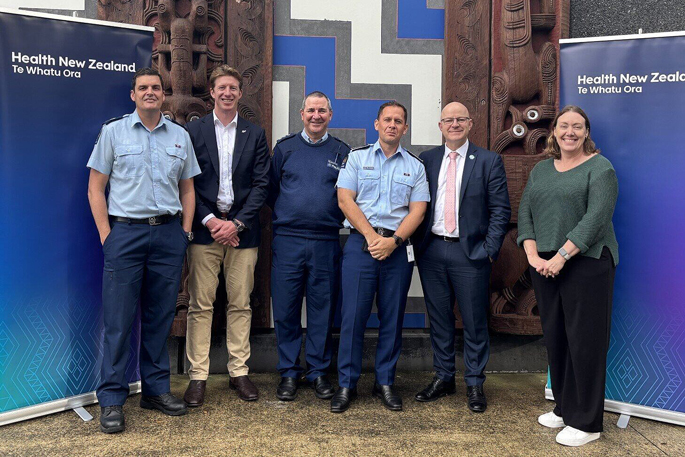
A new co-response team pairing police and a mental health clinician is reshaping how crisis calls are handled in Tauranga.
The initiative, launched on Wednesday, sees a police officer and clinician respond together to selected 111 calls involving mental distress, shifting the focus from a purely law enforcement approach to a health-led response.
The Western Bay service began operating on April 7 and has already responded to 52 people experiencing mental distress. It currently runs four days a week from 4pm to 2am, with plans to expand to seven days.
Calls are assessed through the emergency dispatch system and may be referred to the co-response team when a mental health component is identified.
The Bay of Plenty team is one of 10 co-response teams being rolled out nationwide as part of a $28 million Government investment over four years.
During his visit to Tauranga police station on Wednesday, Mental Health Minister Matt Doocey said people in crisis should receive a health-led response rather than a purely criminal justice one.
He said the Bay of Plenty was selected as an early rollout location because of the high demand for crisis responses and the readiness of local health and police agencies to implement the model.
Doocey said evidence from earlier pilots, including a Wellington programme, showed fewer people were taken to emergency departments, and those in crisis reported receiving a more appropriate response.
He said the initiative reflected a broader shift toward treating mental health emergencies as health issues while allowing police to be available for safety concerns.
“While we know police do an excellent job in our communities, the bottom line is they are not mental health professionals.”
Senior Sergeant Scott Merritt said the approach combined the strengths of both services, with clinicians leading assessments and police supporting safety.
“We rely on health to use their specialist skill set to identify the best pathway for that person, and we are there to support health to do that and keep them safe while they’re doing that,” Merritt said.
The team can attend incidents across the Western Bay of Plenty, from Katikati to Pukehina and Te Puke, and can provide remote support across the wider Bay of Plenty.

Police can attend mental health incidents daily. Photo / NZME
Outside operating hours, crisis calls continue to be managed through standard police procedures, supported by health advice when required.
Pip Lee, Health New Zealand’s service manager for adult mental health and addiction services in the Bay of Plenty, said the co-response approach was changing what happened once help arrived.
The first moments of a crisis could shape the outcome for a person in distress.
“Even when everyone is trying to help, it can feel like a health situation is being managed through a justice lens.”
Lee said the aim was to keep people connected to care while reducing the need for more restrictive interventions.
“In many situations, that means they can stay at home, talk through what’s happening, and get the support they need without being moved into hospital or custody.”
Rebecca Webster, national programme director for specialist mental health and addiction services, said having a clinician present during a mental health crisis could help de-escalate situations.
“Sometimes the very fact of police attending can be an escalating experience for people, so having a mental health professional there can help work through what’s necessary for that person and how they can best be supported.”
The success of the programme would be measured through indicators that included reduced use of mental health legislation, fewer presentations to emergency departments, and improved access to ongoing support services.
Zoe Blake is a multimedia journalist at the Bay of Plenty Times and Rotorua Daily Post.

0 comments
Leave a Comment
You must be logged in to make a comment.