


Landowners of a Pāpāmoa East development that could deliver 8000 new homes are urging the council to keep infrastructure planning moving or face major delays as key laws change.
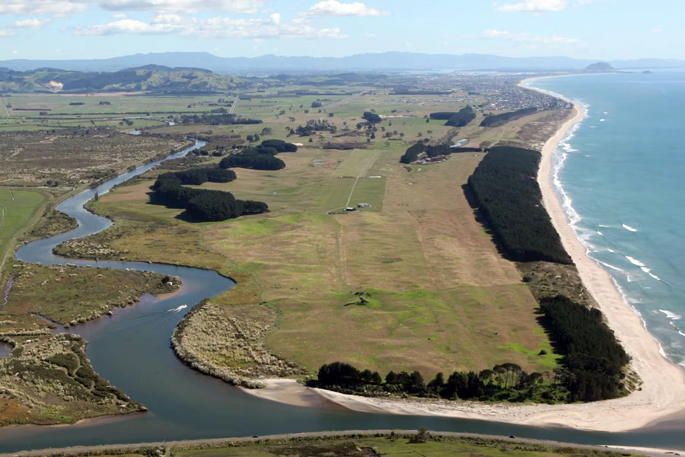
Te Tumu is a 740ha coastal site between Pāpāmoa East and the Kaituna River, earmarked to one day house more than 15,000 people.
Development of the land has been significantly delayed, including because of a lack of infrastructure funding and lengthy court proceedings.
Now Tauranga City Council has voted to progress rezoning Te Tumu under incoming Government planning legislation, rather than seek an exemption to continue under the outgoing Resource Management Act.
This came after the Government ordered councils to stop plan changes unless approved for an exemption - an option council staff said could be inefficient and risk needing rework.
The land blocks making up Te Tumu are owned by Māori trusts and private landowners. The biggest blocks belong to Tumu Kaituna 14 Trust (TK14), Totara Farm Park Joint Venture and Ford Land Company.
Two landowner representatives told the council’s City Futures Committee March 31 meeting they supported waiting for the new Planning Bill over seeking an exemption.
They urged the council to enable infrastructure progress during the legislative transition process to minimise delays.

The 760ha Te Tumu development in Pāpāmoa East is expected to provide housing for 15,500 people. Photo / Tauranga Council
Marcus Hinzack, Ford Land head of strategic asset management and development, said the planning bill, as drafted, could delay delivery on the ground by seven to 10 years.
This was because it said no plan change could be notified until after new regional spatial and land use plans were completed.
“This process would be anticipated to be finished, best case, 2029, meaning 2031 operative zoning or beyond,” Hinzac said.
He said years of spatial planning had already been done for Te Tumu. Landowners were advocating for this sort of work to be recognised in the legislative transition, to avoid a “completely unnecessary delay”.
“Using the new bill with some slight tweaks, that’s what we’re all aligned on.”
“It’ll be the difference between operability beyond 2031 or late 2020s, and not because of planning merit, but because of a system transition technicality.”

Ford Land Company head of strategic asset management and development, Marcus Hinzack. Photo / Supplied
He said the ability for Ford Land to unlock housing was linked to several infrastructure items.
These included the Kaituna Link, which would connect Te Tumu to State Highway 2. He said this was needed to support access to jobs and “get us going down the eastern end”.
“This link is fundamental, and without it we’re constrained for years.”
He asked that the council also address wastewater and stormwater solutions developed for Te Tumu.
Carrus Properties managing director Scott Adams said Te Tumu landowners initially preferred the RMA exemption route, but decided the new legislation offered a faster and simpler track.
“Te Tumu landowners agree with your staff members that TCC should not seek a plan change exemption and instead fully resource the structure planning programme, infrastructure planning, technical assessments, and tangata whenua engagement so Te Tumu becomes shovel-ready as soon as the new system takes effect.”

Carrus Properties Ltd managing director Scott Adams. Photo / Alex Cairns
He said the council needed to “invest in the planning horsepower” to maintain Te Tumu’s status as a priority growth area for the city, “and avoid the multiple years of various delays that have held Te Tumu back to date”.
Negotiating infrastructure corridor agreements with Tumu Kaituna 14 Trust (TK14), which owned the block connecting to Pāpāmoa, was key.
Adams said Carrus had drafted a compensation arrangement with the trust for legal access for a road, which he hoped the council would also sign on to.
Council head of city planning and growth Andy Mead said the council had taken legal advice on its options for the access road through the TK14 block, which the trust wanted to retain ownership of.
Mayor Mahé Drysdale, who was leading the negotiations, said he was confident the council and trust would come to an agreement.

An aerial view of Te Tumu, a future housing development, photo taken in 2022. Photo / Kiri Gillespie
Mead said the council would work with landowners to explore ideas to speed up rezoning through the transition processes, but it anticipated “potential difficulties” arising.
Mead said significant structure planning work would continue on the project, so it was “ready to go” when the new planning system was available.
There was “nothing” stopping landowners from starting a private plan change or applying under the Fast-Track Approvals Act, which could progress the development faster.
He said the Kaituna Link was not necessarily required to develop Te Tumu.
Pāpāmoa ward councillor Steve Morris said his community would disagree, as it did not want the traffic on Te Okuroa Drive.
Tauriko ward councillor Marten Rozeboom had thoughts for Housing Minister Chris Bishop.
“We’ve got a minister who’s flat out bending council’s ear to enable housing growth, meanwhile his legislation and plan stop is putting the handbrake on things, and he hasn’t provided a transition piece of legislation that allows us to progress.”

Housing Minister Chris Bishop. Photo / Mark Mitchell
Bishop told Local Democracy Reporting the plan stop avoided councils wasting time and money on work that likely would not have been finished, or would need changes to comply with new laws.
He said the council had not applied for an RMA exemption, and developers had other options available to them.
“The Te Tumu development is not being held up by the plan stop or RMA reforms, there are pathways available to them.
“I understand the real barrier to getting shovels in the ground on this development is that Te Tumu requires expensive infrastructure solutions, including significant stormwater management issues affecting the wetlands and the local environment.”
Ayla Yeoman is a Local Democracy Reporting journalist based in Tauranga. She holds a Bachelor of Arts majoring in communications, politics and international relations from the University of Auckland, and has been a journalist since 2022.
LDR is local body journalism co-funded by RNZ and NZ On Air.


8 comments
Infrastructure huge cost
Posted on 14-04-2026 09:26 | By Kancho
Tauranga has the most expensive rates in the country and and this article quitev “I understand the real barrier to getting shovels in the ground on this development is that Te Tumu requires expensive infrastructure solutions, including significant stormwater management issues affecting the wetlands and the local environment. So seems to me developers and land owners need to front up with lots of money and not expect rate payers to be further in huge further debt already a the maximum . TCC pull your head in Ratepayers don't want the houses or development to increase your or develops empire and profit. Another " smart growth " nonsense .
Flood plain should not have housing
Posted on 14-04-2026 13:22 | By Rosieterry
This is a ridiculous place to develop. The kaituna river is always flooding. There is nowhere to evacuate in the events of floods or tsunami. Are we learning nothing from recent weather events?
Come on TCC
Posted on 14-04-2026 13:26 | By Come on TCC!
Who in their right mind would want to develop this swampy wasteland in-between the river and the sea!
What happened with councils around the country planning to retreat towns from the sea?
Maybe global warming and rising sea levels won't effect our shoreline?
Surely there is safer land to build on in NZ?
It has been …..
Posted on 14-04-2026 13:49 | By Shadow1
…some 25 years since TCC paid Mr. Adams $20M to halt plans to develop a lifestyle block at Te Tumu. He had about 23 years to buy the property back. We don’t know if he took up that option. In that time, one of the land owners stopped the development. Now they want to start again.
It is a difficult block, low lying and very wet. Plenty of pumping stations would be needed for stormwater, sewerage and water supply. The potential for disastrous spillage is huge. Who needs that? Not us, I’m sure. What we do need is unpolluted wetlands with walkways.
If a design team can come up with a good plan to move the development ahead and councils approve it, why, go ahead. I for one think the cost of the infrastructure should be paid for by the developer.
Shadow1.
Further Obfuscation by TCC
Posted on 14-04-2026 14:44 | By You Must be Joking !
There are only 3 major landowners in the Te Tumu Block, one of which is the TCC that purchased the Hickson owned Totara Farm back in 2006 for $15 Million. The sale agreement allowed the previous owners, who had entered into a Joint Venture with Carrus Corp, to buy back the Land within 10 years, however that agreement was extended until 2026. According to reliable sources the Commissioners have further extended the "sweetheart" deal in the hope that the land can be re-zoned to Residential (before any commitment to reinvest) which would triple the value, of the property and produce a $60 million "windfall" profit. Meanwhile the Partnership have had the benefit of the $15 million "gifted" to them by TCC
There is…..
Posted on 14-04-2026 16:04 | By Shadow1
… plenty of evidence that TCC has been involved in this proposal, mainly, it seems, to save it for residential housing.
As is evident from the previous comments, it would definitely be a disaster in the making and something ratepayers should not be involved in.
BOP Times should commit one of their reporters to investigate the whole proposal if they dare.
Shadow1.
That Land is Basically SWAMP
Posted on 14-04-2026 22:44 | By The Caveman
And should NEVER be used for residential purposes. !!!!
I would never consider
Posted on 15-04-2026 08:39 | By earlybird
living there. It's fairly obvious that weather patterns are changing quite rapidly, so it's more than likely that heavy rain events and major storms will become more prevalent. The Kaituna river will flood badly at some stage and 8000 homes will become unlivable. So the message to council is, don't approve this development. The risk is too great, and ratepayers cannot afford the liability cost. The developers, of course, don't care as they'll be long gone by then.
Leave a Comment
You must be logged in to make a comment.