


Tauranga City Council has spent more than $2 million on costs relating to January’s deadly storm.
It expects to spend millions of dollars more responding to the event over the next year, with a “significant amount” of that on legal costs, according to a new report.
A state of emergency was declared in the Bay of Plenty as the storm advanced on January 21, with record heavy rain falling that night.
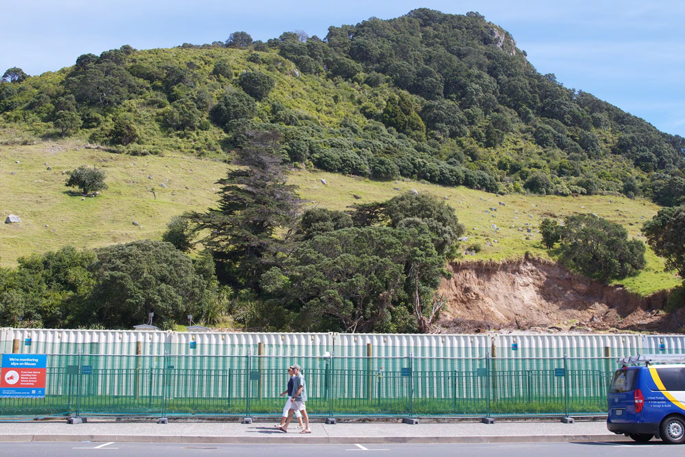
Two people died when a landslide hit a Pāpāmoa residential property in the early hours. Six holidaymakers were killed when a landslide from Mauao hit the council-owned Mount Maunganui Beachside Holiday Park and Mount Hot Pools later that morning.
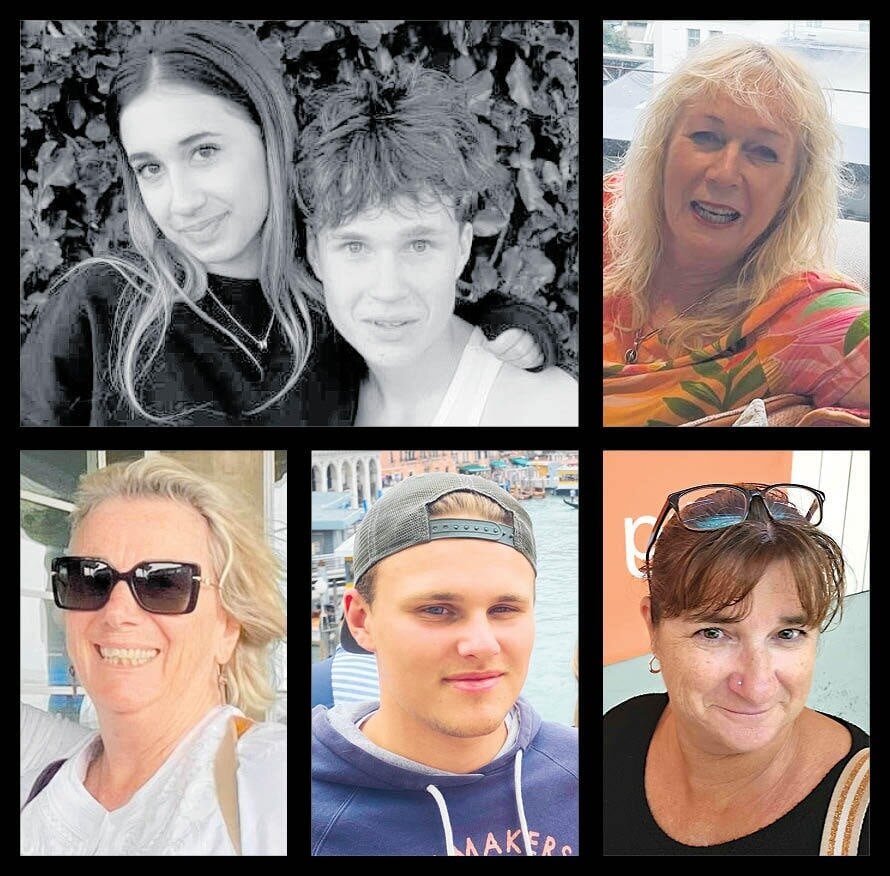
The six people killed in the Mauao landslide were (clockwise from top left) Pakuranga College student couple Sharon Maccanico and Max Furse-Kee, both 15; Rotorua property manager Susan Doreen Knowles, 71; Morrinsville educator Lisa Anne Maclennan, 50; Swedish tourist Måns Loke Bernhardsson, 20; and Rotorua interior design store co-founder Jacqualine Wheeler, 71.
Both facilities, along with Mauao and the Pilot Bay boat ramp, remain closed.
The deaths have prompted several reviews and investigations.
A report by council staff on the financial implications of the storm is on the agenda for discussion in today’s full council meeting.
Elected members will be asked to retrospectively approve some spending and consider further cost forecasts, as well as insurance matters and other funding options.
The report said costs to date related to controlling access to the Mauao site; gathering geotechnical information on damage to Mauao and the landslide risk; setting up monitoring; and welfare response and public safety responses, including establishing He Maimai Aroha community care centre.
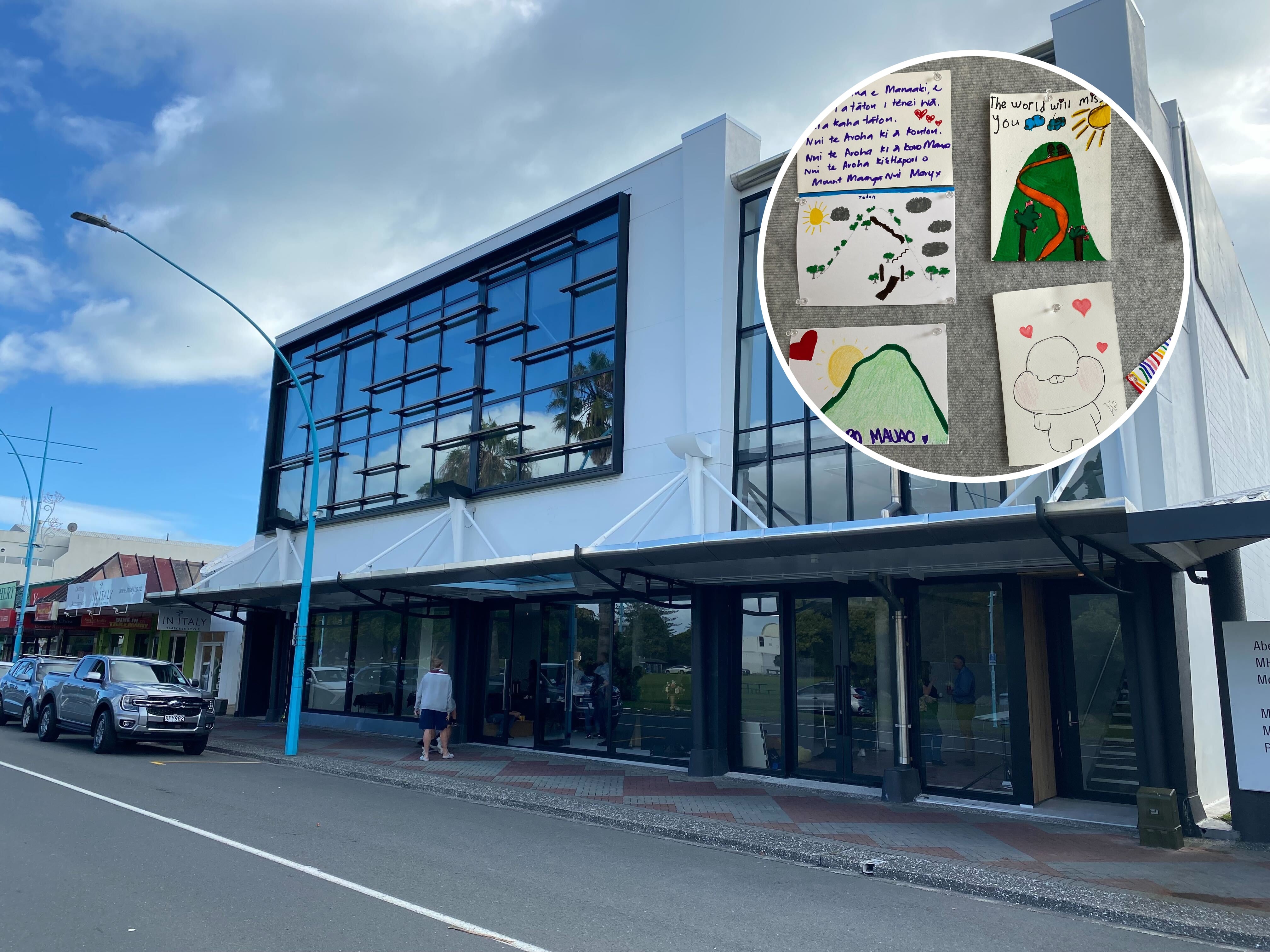
He Maimai Aroha community care centre. Photo / Rosalie Liddle Crawford
In the response phase, more than $600,000 was spent on physical works and about $350,000 on security.
About $2.4m in total spending was committed or expected over the remainder of the current financial year, ending in June.
This figure included the full $650,000 cost for monitoring equipment, which the council expected to co-fund with New Zealand Police and Fire and Emergency New Zealand.
The report estimated $8.575m would be needed for storm recovery-related costs in the next financial year.
This included a $6m placeholder for capital spending, with the rest being operational costs.
The report said a “significant amount of the forecast expenditure this year and for next year” was for “legal review of past documentation technical information, interviews and ongoing legal advice”.
“This work will meet the requirements of the various reviews as well as supporting [Tauranga City Council] future decisions and organisation.”
Inquiries have been opened by the coroner, WorkSafe NZ, NZ Police, Tauranga City Council and central government.
The report said the council has spent almost $500,000 on slip-related legal and professional services to date, with about another $850,000 expected over the remainder of the financial year to June.
Legal and technical support was expected to run to $2m in the following year.
Local Democracy Reporting asked the council which legal firms it had engaged in relation to the landslide, why this was required, and about the process for legal review of the hundreds of related documents it has released to the public on a dedicated Mauao landslide website.
The council referred the questions to a Local Government Official Information Acts and Meetings process, which gives the council 20 working days to respond.
In the agenda for Tuesday’s meeting, staff recommended some costs come out of the council’s risk reserve fund, which had $5m as of mid-2025. This was an alternative to using rates.

The landslide in the Mount Maunganui Beachside Holiday Park. Photo / Cameron Avery
Other costs would be covered by insurance, with $1m already paid to the council in advance recognition of its claim.
The report said the hot pools and campground were insured for material damage – which had a $2m sublimit for landslides – and for loss of profit.
The forecast full-year profit deficit for the holiday park was $689,000, and the council was seeking compensation for this from its insurers.
No formal insurance assessment for damage had been made because the council could not access the sites.
There would be no claim for damage to paths and tracks as “these are not insurable assets”, the report said.
The council planned to submit a claim next month to the National Emergency Management Agency (NEMA) to have all welfare costs reimbursed. Costs to date were about $31,000.
It was “not likely” to meet the threshold to qualify for NEMA funding for other costs of dealing with the event and repairing essential infrastructure, such as water assets. Staff said restoring Mauao would not be considered essential infrastructure.
The council had received $200,000 from NEMA towards its Mayoral Relief Fund, as well as $14,000 from public donations. About $90,000 had been distributed to affected businesses.
Also on the agenda for Tuesday was the council’s draft Annual Plan for 2026/27, including the budget impact of storm-related costs.
Ayla Yeoman is a Local Democracy Reporting journalist based in Tauranga. She holds a Bachelor of Arts majoring in communications, politics and international relations from the University of Auckland, and has been a journalist since 2022.
LDR is local body journalism co-funded by RNZ and NZ On Air.


10 comments
Owners
Posted on 24-03-2026 10:34 | By Yadick
Surely the majority of this cost should be the responsibility of the iwi who own the land that slipped. At the very bare minimum access control should be on the land owners.
If my land slips into the neighbors because I didn't retain it I would bear the costs of neglecting my responsibility. Surely this applies here.
The headline should read: Ratepayers legal costs mounting after landslide.
For Yadick
Posted on 24-03-2026 12:08 | By anotherone2
Mauao is "owned" by Iwi but responsibility for decisions on the control, funding and management on the Mount stayed with TCC.
The Master
Posted on 24-03-2026 12:33 | By Ian Stevenson
@ Yadick
Exactly, paid... all care and no responsibility.
In addition to that, the prime reason the slip/deaths occurred was because the report on serious risk (2023) that was commissioned and paid for by TCC and ratepayers was ignored.
I wonder if TCC will be "accountable" here? Will those who failed here get a promotion, a promotion sideways or what?
Well, chasing the Iwi…
Posted on 24-03-2026 13:14 | By Shadow1
…for the money won’t work as we all know very well. TCC have committed to maintaining the tracks and the Mount itself.
It’s obvious that the repairs and future maintenance will be approached with far too much caution so we may as well write it off for a year or more. Please tell me, council, that you are working on the straight forward repairs and maintaining the undamaged tracks whilst sitting on your hands with the major repairs.
It’s interesting that Council staff don’t regard the using the “risk reserve fund” as using rates funding. I would be pretty sure that any money collected by the council from any field would be ratepayers money.
Shadow1.
Costs related to the mount slip
Posted on 24-03-2026 13:48 | By Leprechaun
Of course the Iwi owners should pay the majority of the cost. But I fear they will duck and dive to avoid it.
The only winners regarding costs will certainly be the lawyers. That’s a given. They will want the major cut of the budget. I’ll be surprised if the Iwi even pay their own legal costs.
Let’s see.
well then anotherone2....
Posted on 24-03-2026 14:39 | By groutby
...how and why did TCC get sucked into that 'deal'??..I certainly agree with Yadick and if you are correct then it looks like this is a 'all rights and no responsibility' type of deal...who else could get away with that eh?
@Everybody
Posted on 24-03-2026 17:05 | By morepork
Before we start the blame game (which achieves nothing unless actual lessons are learned) and holding iwi responsible, let's remember that the title was returned by the Crown to iwi as a gesture of goodwill and consideration for the mana of local tribes.
Maori do not have unlimited rights on the use of this iconic landmark, any more than Council does. (They can't build a restaurant on the top of it or charge for access to it.) Access will be free for the people of Tauranga and visitors, and the paths and tracks will be maintained by the Council. Users are expected to show the respect that it deserves. Any revenues arising from lease of the grazing will be used to offset the costs of maintenance and shared by iwi and Council. It is a very fair (exemplary) arrangement, as I recall from when it was determined.
@Yadick
Posted on 24-03-2026 17:20 | By morepork
As anotherone2 pointed out, Maori technically own the title, but it is still administered by the Crown (actually, TCC). You can't blame iwi or TCC for what the insurer's call an "Act of God". You can hold the administrators culpable for ignoring warnings of pending slips and evacuating people, but the extent of that is yet to be decided in Court.
The "return" of the title was publicly debated in 2008 and the details were passed into Law by parliament, that same year.
It was fair, and I for one, was pleased to see Maori respected and a fair deal brokered.
Since then, there has been no "trouble" and both sides have respected their respective rights and responsibilities, as agreed at the time.
This is NOT the same case as you offered if your land was to slip onto your neighbours. (Hopefully, you'd have that event insured too?)
@Shadow1
Posted on 24-03-2026 17:29 | By morepork
I agree with your clear assessment of the situation. It's sad, but the only people who will benefit here are the Lawyers. I think your guess at the "downtime" might even be a bit short, but I hope you are right.
It isn't strictly true that ALL Council revenue is derived from Ratepayers, (though as a Ratepayer, it sure feels like it...). They benefit from paid services, parking fines, building rental and leases, plus funds from central government for approved projects, (and we won't go into the backscratching and brown paper bags that nobody knows anything about... :-))
@ anotherone2 + Shadow1
Posted on 25-03-2026 08:17 | By Yadick
Thank you both for your comments. I had obviously misunderstood the extent to which TCC had responsibility.
That said, surely iwi could graciously come up with something toward this end of the tragedy even if it was manpower toward restoring tracks or overseeing some crim's doing community work restoring tracks, planting etc thus helping to lower the financial burden.
Leave a Comment
You must be logged in to make a comment.