


A team from Bay of Plenty District Health Board has reviewed 64 separate road crashes in the region in an effort to reduce the number of deaths from trauma.
Trauma is the leading cause of death between the ages of 5 to 45-years-old with about 2500 Kiwis dying a year as a result of trauma.
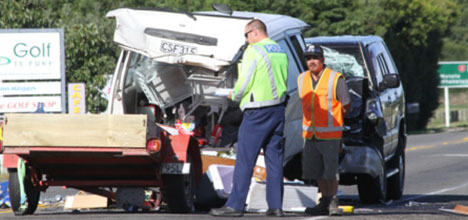
Four people were taken to hospital after a crash on State Highway 2, near Paengaroa in March last year.
More than 25,000 require hospital care for injuries sustained in crashes.
A new trauma team at the Bay of Plenty District Health Board has identified the contributing factors of 64 separate road crashes in the Bay of Plenty from January 1 to November 30, which resulted in a hospital stay of more than 24 hours for the driver or passengers.
'We found driver error remained a significant cause of most crashes from which people were admitted to hospital, while road and weather conditions accounted for a very small percentage of the crashes,” says Bay of Plenty District Health Board's chief operating officer, Phillip Balmer.
Road crashes involving drivers that were under the influence of alcohol or illicit substances were excluded from the review and if included would have trebled the figures.
He says it also excluded crashes that resulted in hospital admissions of less than 24 hours duration.
'Our findings showed driver error combined with excessive speed on open roads were the most common factors contributing towards Bay of Plenty road crashes.
'Drivers' errors included the driver falling asleep at the wheel, excessive speed, inexperience, crossing the centre line, swerving to avoid objects and pulling out in traffic.”
He says while the crashes happened relatively evenly throughout the Bay of Plenty region, they were mainly on the major state highways.
'The review identified the regions' crash hot spot at the intersection of State Highways 2 and 33 at Paengaroa.
'Of the five crashes at this site, four were head on collisions, resulting in multiple victims from each crash coming into hospital.
'The urban areas of Whakatane and Tauranga accounted for two and four crashes respectively causing patients to be admitted to hospital for more than 24 hours.”
The trauma team was established as part of a Ministry of Health supported initiative with the Bay of Plenty District Health Board and other agencies.
The team is tasked with assessing the effectiveness of our trauma systems in saving and salvaging lives and improving this system.
One of the questions being looked at by the trauma review team is where and when road traffic injuries occur and if anything can be done to prevent them.
The Road Safety Committee with representation from police, St Johns, and the council also monitor this.
The review suggests urban road traffic crashes did not result in significant injuries due to low vehicle speed.
There were nine separate motorcyclist crashes, four of which occurred around the Opotiki district.
Phillip says there was no common cause for the motorcyclist crashes as the causes ranged from sun-strike, being hit by a truck, losing control and excessive speed.
Most of the crashes resulting in hospital admissions for more than 24 hours happened between 12pm and 10pm.
Phillip says crash numbers peaked at the high traffic periods.
'That is between 12pm to 1pm, then again at 4pm to 6pm, followed by 7am to 9am.
'Surprisingly, there were only four crashes from 10pm and 7am.”
The information for the review was taken from St John Ambulance records, the Midland DHB's Regional Trauma System data sheets, ACC forms, hospital web based patient administration systems, and from patients themselves.
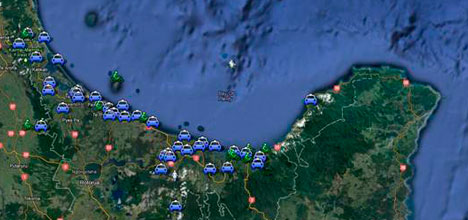
This map shows the crash hot spots around the Bay of Plenty.
Summary of crashes and causes shown in the map:
*64 separate road crashes.
*41 crashes could be contributed to driver error (driver falling asleep at the wheel, excessive speed [more than 100kmh], inexperience, crossing the centre line, swerving to avoid objects and pulling out in traffic.
*11 crashes due to impact with objects (animals, people and stationary object).
*8 crashes consequence of weather conditions.
*4 crashes from road conditions such as loose gravel and pot holes.

5 comments
And now??
Posted on 18-01-2013 10:33 | By Thoughtful
So they have spent time (and maybe money) providing this 'valuable' data for what purpose? What action is being taken and by whom to reduce the numbers of accidents based on this information available?
.
Posted on 18-01-2013 12:28 | By whatsinaname
Thoughtfull. my thoughts exactly. so what are they going to do about it. its driver error mostly so that tells us something, yes. some people shouldnt even be driving....... but you cant stop the weather,, Thats the only thing that can attibute to most of the accidents. The others are driver error and not paying enuff attention to road conditions. etc. Loose gravel and pot holes, Gee thats a joke. how did we get on before when there was only gravel roads and pot holes .
New Zealand drivers
Posted on 18-01-2013 13:08 | By pomfart
are the worst I've ever encountered. The worst seem to be men aged 40+ desperate to show how manly they are. I suppose it's the result of years of giving people a license without testing their competence.
How about?
Posted on 18-01-2013 13:26 | By sojourner
How about drunk driving, driving while high on drugs (rarely mentioned but happens a lot), not paying attention, being on the phone, being a road hog and irritating other drivers into taking overtaking risks,or just being a plain idiot bully to other road users. Many accidents would be avoided if so many drivers had respect for the road, life, and other road users.
Waste of Money
Posted on 18-01-2013 19:22 | By Camand
All this information is available from LTNZ and is collated from the crash reports Police complete for all crashes. Would have been a lot easier just to pull the stats from them and not reinvent the wheel.
Leave a Comment
You must be logged in to make a comment.