


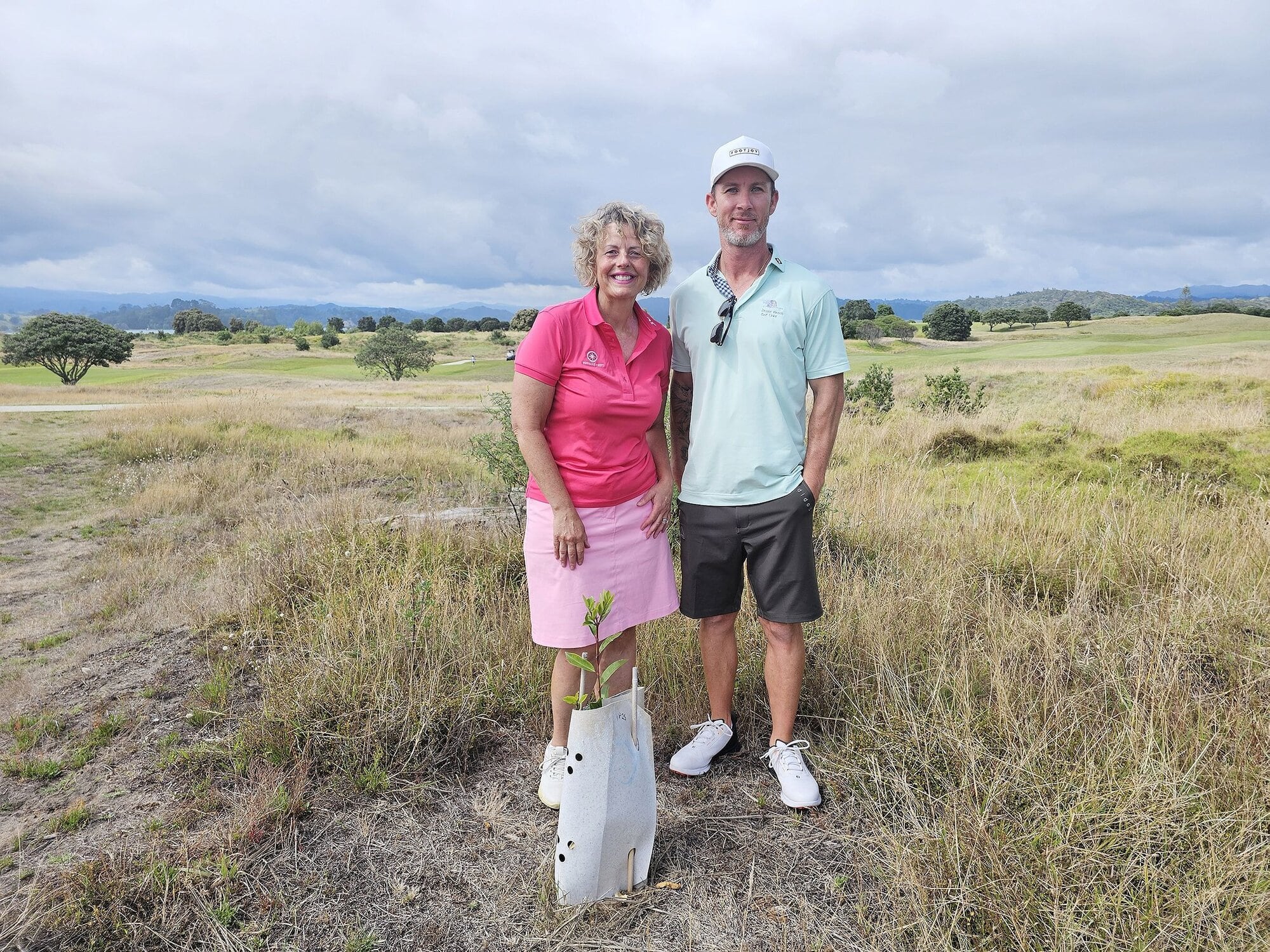

A major native tree replanting project on the Ōhope Spit between Ōhope Beach Golf Links and the ocean is turning a mistake by club volunteers into an opportunity to enhance the area for future generations.
The club has planted 120 native trees and shrubs, including 80 pōhutukawa, among the dunes as part of its first year of remediation work.
“It’s an opportunity to build something that will restore and enhance the spit for generations to come,” said club member Kara Ryall, who leads a team of club members that goes back every month to weed and water the trees.
The club was prosecuted by Whakatāne District Council last year for clearing native trees and shrubs from an area of significant indigenous biodiversity.
The club admitted it made a mistake in cutting down 488 natives during a working bee it organised in August 2023.
The trees were mostly karo (pittosporum), along with eight pōhutukawa, two of which were large specimens that could be seen from several kilometres along the beach. This alerted the public to what had occurred and resulted in the tree removals being reported to the council.
Small numbers of other species cut down included karaka, coprosma and griselinia, along with some weed species, including Banksia, eucalyptus and euonymus.
A court fined the club and ordered it to carry out a remediation plan, which included staged planting of new trees over three years, and monitoring and care of pōhutukawa, rabbit suppression and invasive weed control for 10 years or until plantings reach 2m in height.
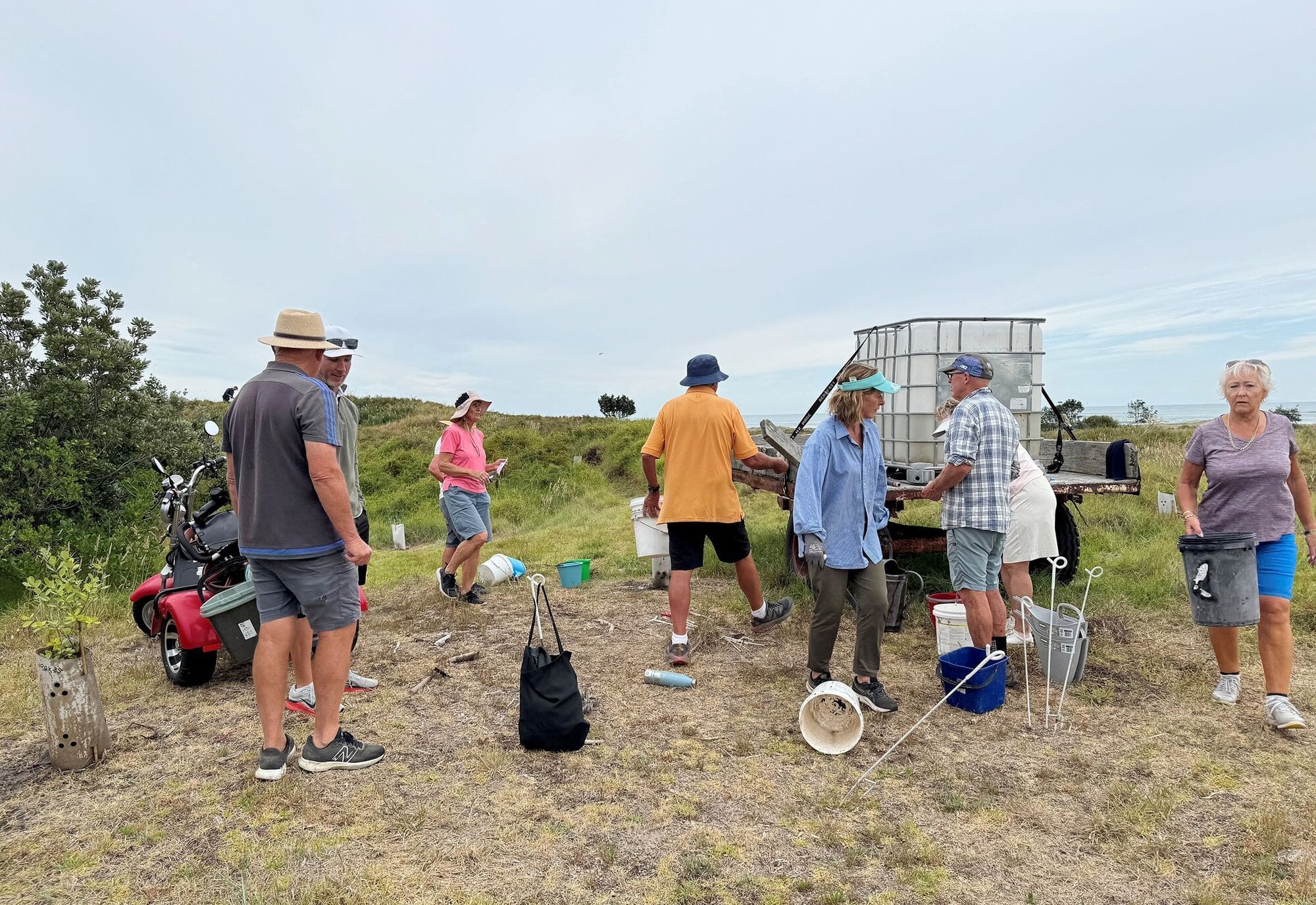
Golf club members take part in a watering day, carrying buckets of water to each of the new trees planted throughout the dunes. Photo / Supplied
As part of the restoration plan, the club must report to council on the work that has been carried out.
Council resource consents manager Mike Avery said the first year of planting under the remediation plan had now been completed.
“Ōhope Golf Club are currently finalising the performance report and plan, covering both 2025 and 2026.”
The club has wholeheartedly embraced the project.
Along with the pōhutukawa, the first year of planting has included 20 karo, nine taupata, nine cabbage trees and nine ngaio.
Ryall has devised a numbering system for the trees, which were connected by tracks, to make sure every tree was accounted for when members were watering and weeding.
The project has been a learning experience for the volunteers.
“We have lost about eight or nine plants in one of the gullies because they were a little bit frost sensitive. Yet up on the top, where they’re really exposed, they’re thriving.
“That was the idea of planting so many, so that we could work out what worked in what area and carry that through to next year’s planting.
“We’ve had so many positive comments from people who are out walking around in the dunes.”
The club’s general manager Ryan Walker said the incident had a negative impact on the club.
“It was absolutely a mistake and we wish it didn’t happen but we want to turn this into a positive outcome,” he said.
“As a club, we are quite passionate about restoring this piece of land.”
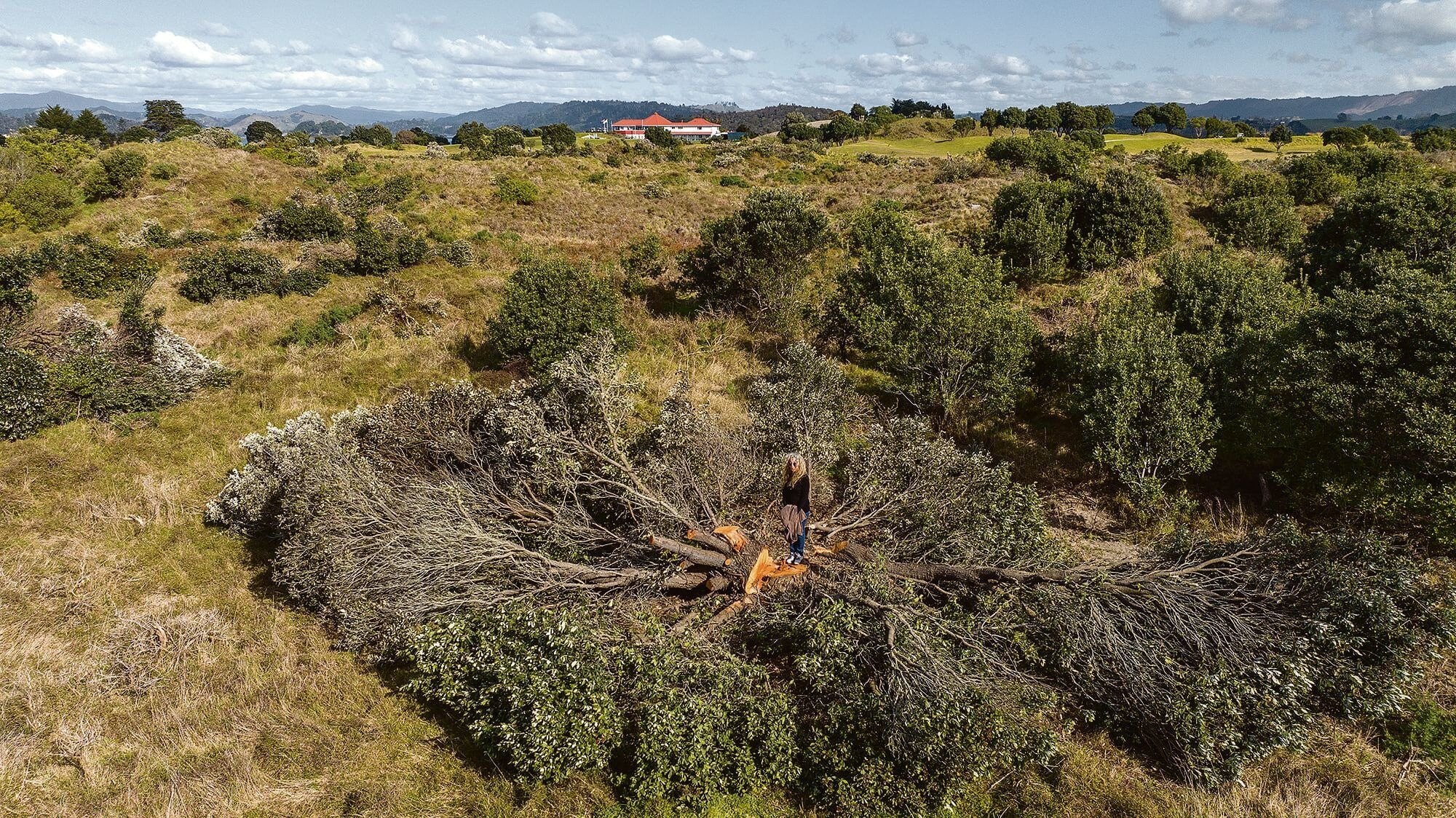
Ōhope resident Jo Steens stands on the fresh stump of one of the pōhutukawa felled in August 2023 during an Ōhope Beach Golf Links working bee. Photo / Troy Baker
Jo Steens, who was reported in the Beacon as being heartbroken at the felling of the larger pōhutukawa, said the progress was positive.
“I’m particularly enamoured of the 80 pōhutukawa being planted. It’s long been my dream to see it planted as a pōhutukawa arboretum … it will be amazing. A fantastic legacy to come out of a destructive event.”
– LDR is local body journalism co-funded by RNZ and NZ On Air.

1 comment
Karo ?
Posted on 09-01-2026 08:47 | By Fred Bear
Not really a good idea to plant karo on dunes. They are really a forest margin tree not found anywhere on dunes - otherwise old trees would already be found there. While taupata is a fairly benign tree providing an abundance of berries for all birdlife (including seagulls), karo are almost like gorse as plantings will soon lead to groves where nothing will grow under them - seed spread by birds will sprout under all the other trees - proceeding to grow straight trunks to the height of power poles. They have a fast growth rate and will smother anything planted adjacent to them - so it's goodbye to nearby taupata, cabbage trees and pohutukawa. The golf club will have to form a Karo Management Team in 25 years time to pull out and cut down karo, as they would if pines invaded.
Leave a Comment
You must be logged in to make a comment.