


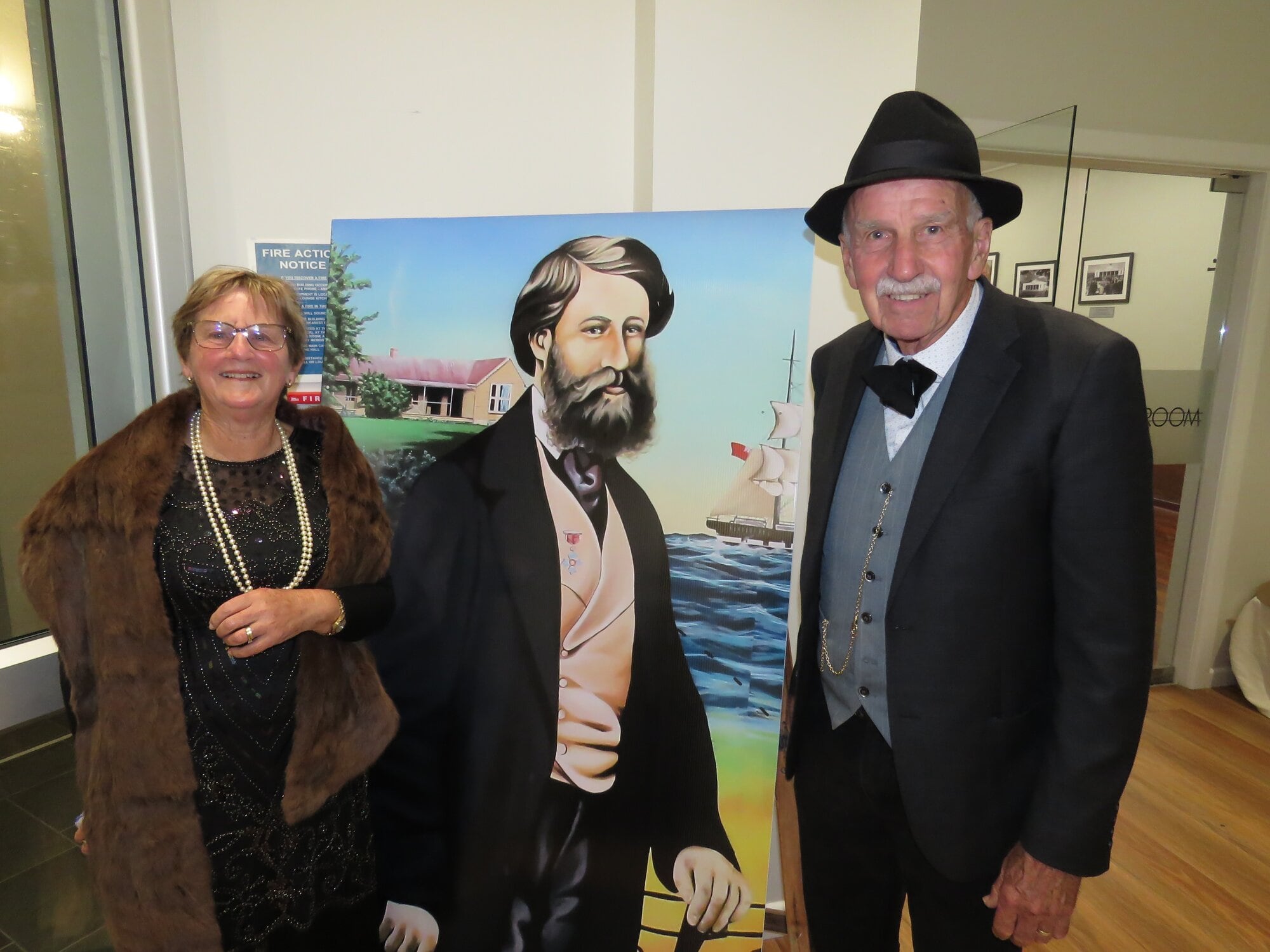
Two direct descendants of Katikati’s first Ulster Irish arrivals – who happen to be married – brought their extended family over the Kaimai Range from Hamilton for the weekend of 150th anniversary events.
Julie Gray (nee Stewart) and husband Peter Gray brought their daughters and partners and four grandchildren to Katikati, with all attending the Settlers’ Dance last Saturday evening to dance the night away.
But for the Gray family, including Julie’s brother Brian Stewart, his son Braxton Stewart and niece Sarah Stevenson, the 150th events were much more than a dance.
“George Vesey Stewart was my great-great-grandfather,” said Julie Gray.
“My husband Peter Gray’s great-grandfather was William John Gray.”
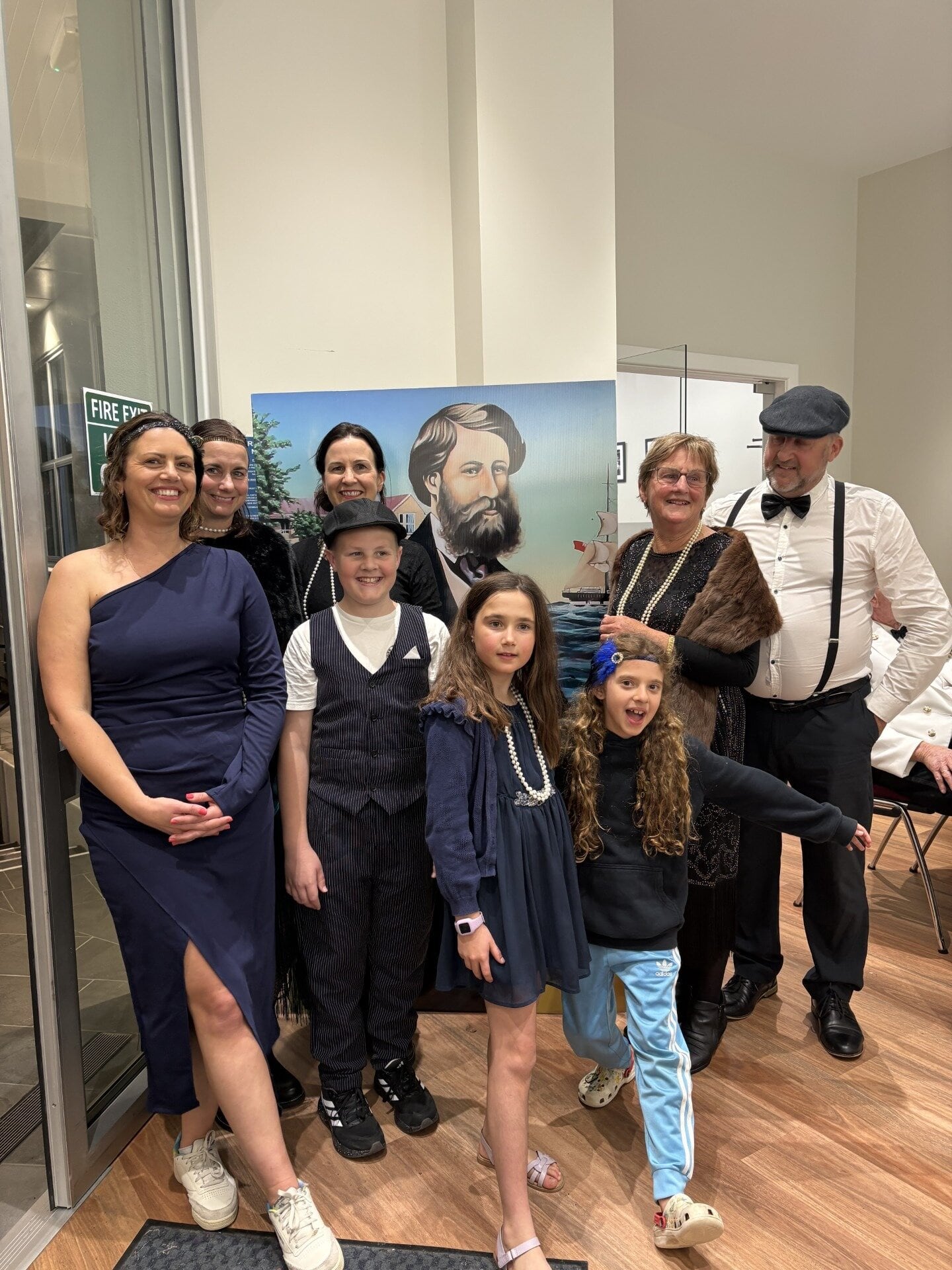
The wider Stewart-Gray family from Hamilton at Katikati’s Settlers’ Dance last Saturday. Photo / Supplied
George Vesey Stewart became known as Katikati’s founder after he brought two ship-loads of settlers to New Zealand, in 1875 and 1878 to settle in Katikati; and was elected Tauranga County’s first mayor in 1882, according to Western Bay of Plenty Community Archives Collection (WBOPCAC).
Often regarded as the second most important settler in Katikati after Stewart, William John Gray emigrated to NZ on his own in 1875. He moved from Ngāruawāhia to Katikati about 1878 and as an engineer constructed bridges on the road to Waihī, according to WBOPCAC.
The late Ellen McCormack
Julie said her great-great-grandfather and her husband’s great-grandfather worked together building Katikati township, which was first named Waterford after a place back home.
“I grew up in Tauranga and my husband Peter grew up in Te Puke. Over the years we’ve had a connection with Katikati, attended events, and have volunteered at Athenree Homestead.”
Julie said Katikati and her family both have a well-researched record of their history thanks to the late Ellen McCormack (nee Macmillan), a much-respected Katikati historian who created the town’s archives – now called the Western Bay of Plenty Community Archives Collection.
She spent almost half a century gathering the history of Katikati and its pioneers, and received the Queen’s Service Medal (QSM) for her work in 2002.
“I think the town is really lucky to have had someone who did so much work – because now it has such a good record of the Ulster history.
“For us personally, we have such a well-researched record of our family history. Every time Ellen would find something on our family, she would call us and send us a copy.”
Julie and Peter brought their daughters and partners, and their four grandchildren to the 150th events “so they can develop their awareness and appreciation of their descendants and their family history”.
“I’ve loved the opportunity to have a dance with my little grandsons – for them to see what dances were like [back then],” said Julie, who thanked the Katikati 150th Anniversary Committee for organising the weekend’s events.
Brave visionary
Looking back on her great-great-grandfather’s life, Julie said her family had been told Stewart was a visionary.
“We went back to Ireland and to his old farm. The people who owned his farm, it had been in their family for 80 years. When we met them they said he was a visionary.
“They told us he had a linen mill and built homes for all the factory’s workers and times were really tough there – and he felt that there were lots of tenant farmers in the area that worked really hard but at the end of their working life they’d have nothing.
“So he wanted to find somewhere that those people could work and end up with land of their own.”
Julie said for some settlers who came out with Stewart, life was tough because they didn’t have much financial support.
“I think some people were unhappy out here, and some people were happy, so when he developed the settlement in Te Puke he realised that people needed more finance/more money behind them.
“So he organised a different group of people there who would be able to afford to get the work done on the land.”
Julie said Stewart brought more than 4000 settlers to NZ.
“He was very brave [to lead people here in those times].”
Stewart’s plans were well thought out in terms of who he brought to NZ too, said Julie.
“He made sure there was doctor, a teacher, a minister in the party. They were young men to help the farmers and young women to help in homes.”
Speaking of the challenges faced by settlers on their arrival, Julie said Peter still holds a diary written by his great-grand-father on his journey to NZ.
“It’s a day-to-day record on the ship. It’s really interesting reading, like there was a measles outbreak on the ship coming out and children died and they just had to throw their bodies overboard and things like that, so the trip out here was challenging before they even got here.
“It makes our lives today seem very easy.”

0 comments
Leave a Comment
You must be logged in to make a comment.