


A seal enjoying a visit to Tauranga’s inner harbour has been spotted in the water near the Hairini Bridge.
A local said the seal has been swimming along the waterfront between the Silver Birch Holiday Park and Turret Rd for the last three days.
“I watched it devour a large eel.”
The months of July to September are when adolescent New Zealand fur seals begin to leave their mothers and explore, sometimes traveling up to 15 km inland.
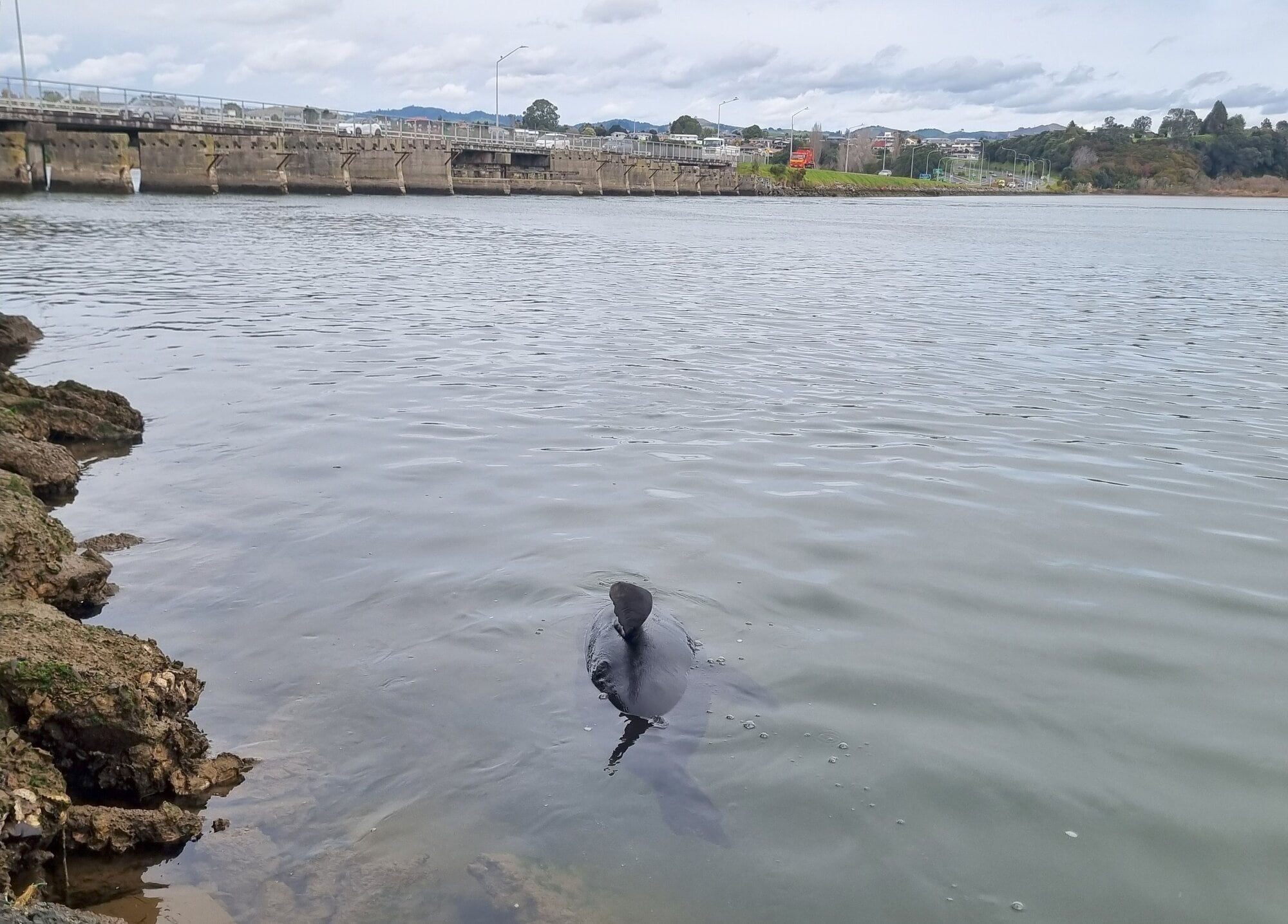
A seal was spotted enjoying Tauranga Harbour near the Hairini Bridge this week. Photo / Supplied.
Known as the ‘silly season’ or ‘seally’ season, these young seals have been spotted before locations such as Gordon Carmichael Reserve and even industrial areas, due to their exploratory nature.
In August 2022, a seal chased a cat into the home of Mount Maunganui marine biologist and University of Waikato researcher Phil Ross.
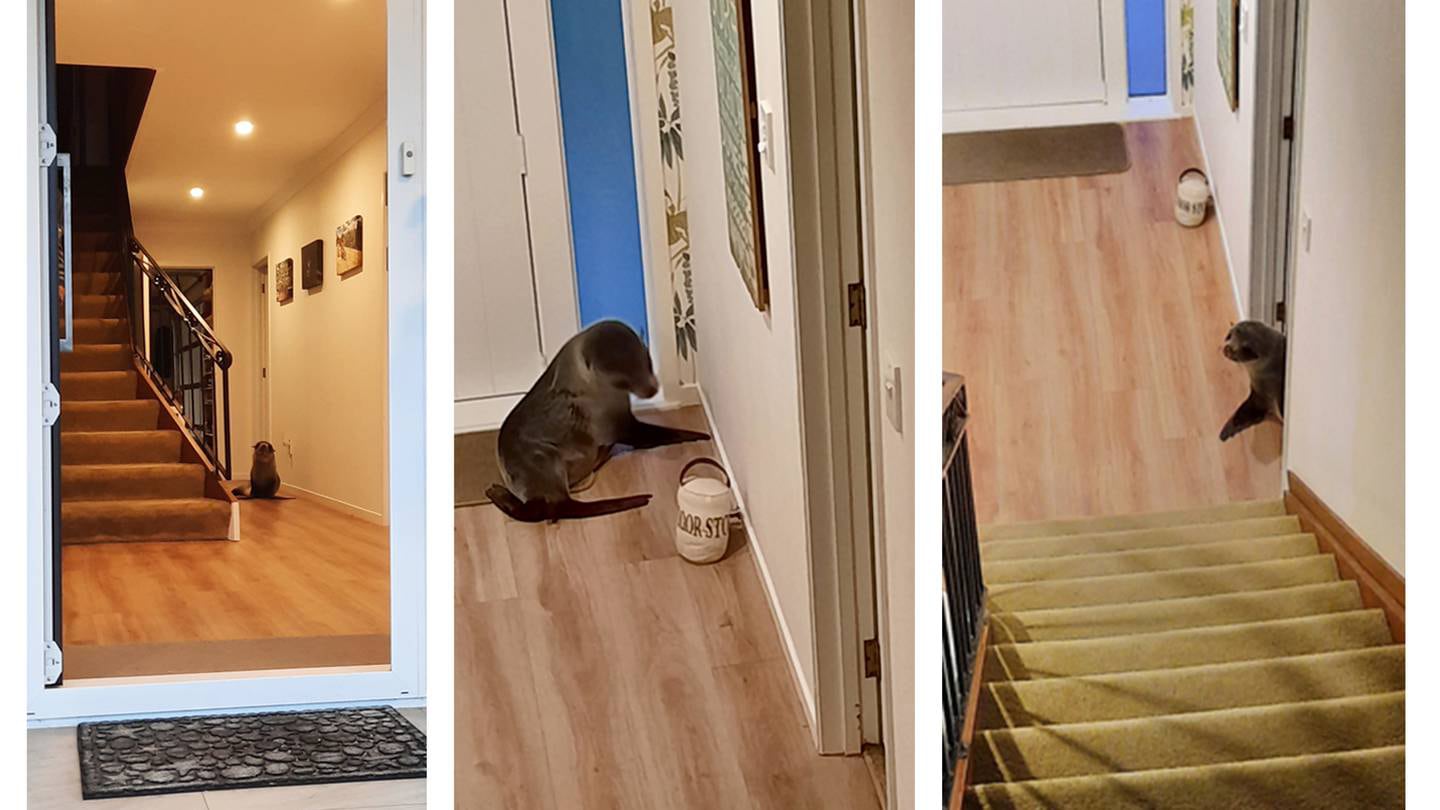
A seal taking a tour downstairs at the Mount Maunganui home of the Ross family in 2022. Photo / Supplied
Although Ross wasn’t around to see it, he said his wife Jenn Ross’ “hilarious” encounter in their lounge was the one kind of family emergency where a marine biologist would have been useful.
“I missed my time to shine,” Phil said.
In July, 2024, a juvenile seal was spotted relaxing in Bethlehem’s Gordon Carmichael reserve about 1km from Tauranga Harbour.
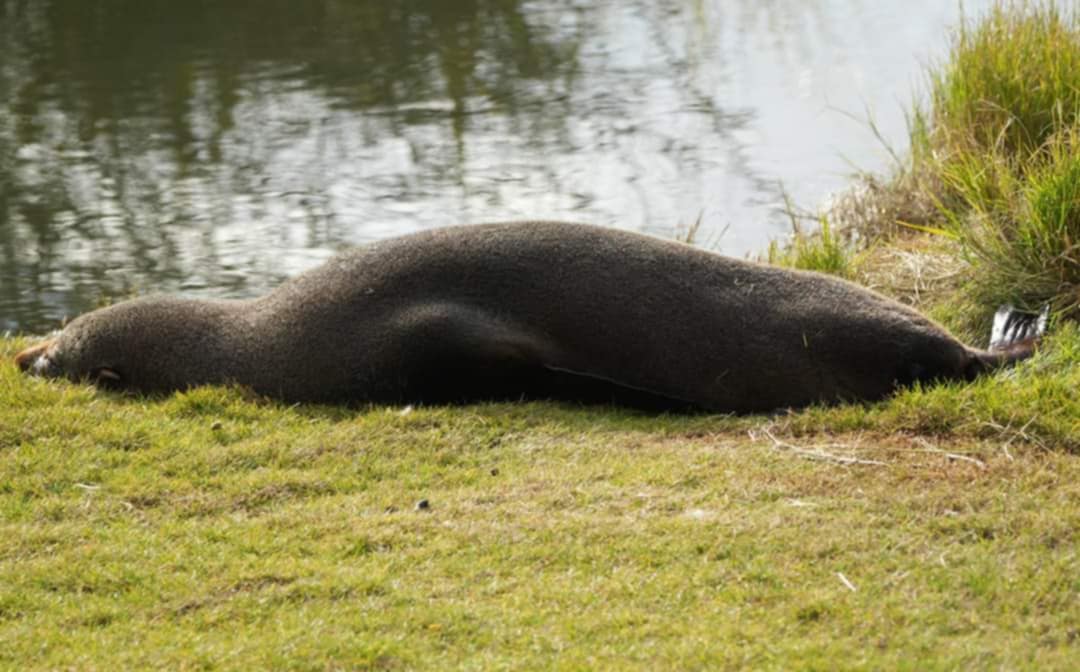
The seal was spotted in the Gordon Carmichael Reserve over the Matariki weekend in July 2024.
Another seal was seen across the Wairoa River the same week, resting on rocks near Station Rd in Te Puna.
The Department of Conservation (DoC) calls the months from June to September “seal silly season,” as it is the time of year when juvenile seals begin venturing further afield from their mothers.
“From June – September we start to see young seals begin to explore their environment, often showing up in unexpected places,” said DoC marine science adviser Dr Jody Weir.
“Kekeno, or New Zealand fur seals, are marine mammals that spend considerable time on land, typically resting but occasionally exploring.
“Although they are usually found on rocky shores, their natural curiosity sometimes leads them several kilometres inland,” Weir said.
“Young seals, still dependent on their mother’s milk, tend to venture further afield during this period. It’s common to find them on roads, in backyards, or even on living room sofas.”
Hairini Bridge is also a popular spot for photographers and bird enthusiasts who come from all over the country and further afield to get up-close photos of the white-fronted tern colony.
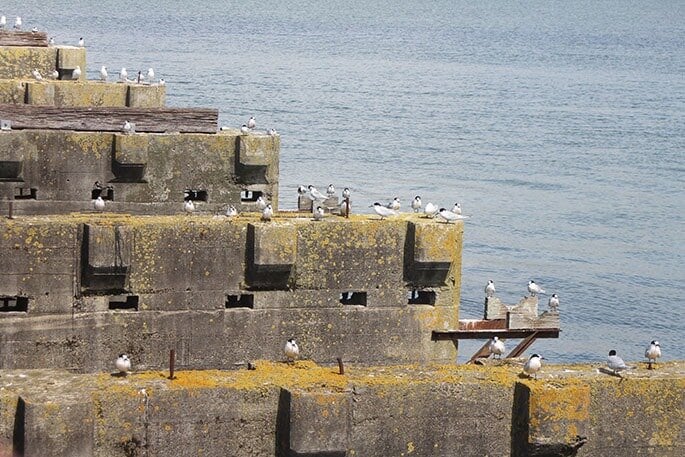
A white-fronted tern colony is resident on the Hairini Bridge in Tauranga. Photo / Rosalie Liddle Crawford
The bridge is home to about 50 white-fronted terns, along with a small flock of red-billed gulls and the occasional white-faced heron.
Tern colonies usually nest on offshore rocky stacks, and it’s unusual for them to nest in an estuary so close to people.
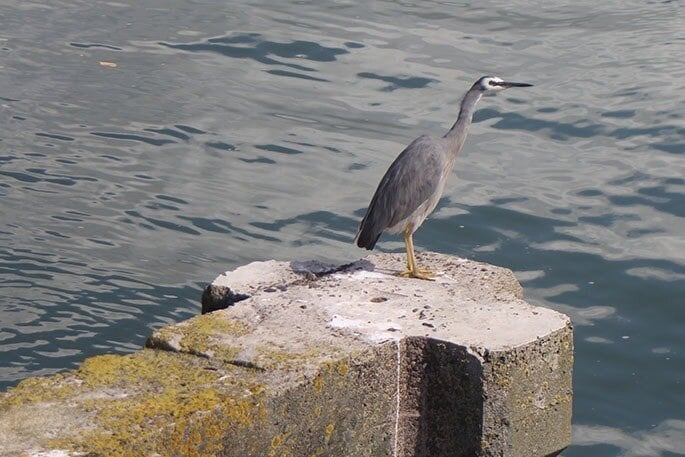
A white-faced heron on the Hairini Bridge. Photo / Rosalie Liddle Crawford
Locals watching the seal near Hairini Bridge think it was interested in feeding on eels in the water.
“It looks like it might be heading back out towards the sea now,” a SunLive reader, watching from the camping ground, said.

0 comments
Leave a Comment
You must be logged in to make a comment.