


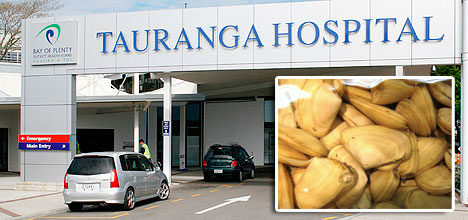
The number of people suffering from paralytic shellfish poisoning is continuing to rise with six new reported cases.
The total number of people who have been poisoned by toxic shellfish is now 26 – up six from the 20 reported by the Bay of Plenty District Health Board on Tuesday.
A total of 26 people have become ill with paralytic shellfish poisoning.
Of the 26 people, 12 have required hospital care with three being put into the Intensive Care Unit.
BOPDHB communications manager Diana Marriott says the 42-year-old woman and 60-year-old man admitted to the ICU in Tauranga Hospital are improving and now in a ward.
A 71-year-old man remains in ICU in Whakatane Hospital.
Since December 12 a total of 26 people have now fallen ill with 25 of those from shellfish, mostly tuatua, collected in the Tauranga and Mount Maunganui area.
One other person became ill after collecting shellfish from Maketu.
All have reported suffering symptoms of paralytic poisoning ranging from tingling of the face and hands to difficulty walking and breathing.
A total of 18 people suffering from the Bay of Plenty with a further six from the Lakes District and two other people visiting from the Hawke's Bay became ill.
A hospital spokesperson says the pair have since returned home to the Hawke's Bay.
The outbreak of shellfish poisoning has been described as the worst in the region's history.
Medical officer of health Neil De Wet says the toxic levels are well above the acceptable.
Since August 2012 high levels of paralytic shellfish poison have been found in shellfish along a significant stretch of coastline.
A health warning is already in place advising against the collection of shellfish from Tairua on the east coast of the Coromandel Peninsula, south to Waihi Beach and along the Bay of Plenty coast to Whakatane Heads in the Eastern Bay of Plenty.
The warning includes Tairua Harbour as well as Tauranga Harbour, Maketu and Waihi estuaries, Matakana and Motiti islands, and all other inshore islands along this coastline.
The health warning applies to all bi-valve shellfish including mussels, pipi, tuatua, cockles, oysters, scallops as well as cat's-eyes and kina (sea urchin).
Shellfish in the affected area should not be taken or consumed. Paua, crayfish and crabs can still be taken but as always, the gut should be removed before cooking.
Consumption of shellfish affected by the paralytic shellfish toxin can cause numbness and tingling around the mouth, face or extremities; difficulty swallowing or breathing; dizziness; double vision; and in severe cases, paralysis and respiratory failure.
These symptoms usually occur within 12 hours of a person consuming affected shellfish. Anyone suffering illness after eating shellfish should seek medical attention.
For up to date information on health warnings in Bay of Plenty go to www.ttophs.govt.nz and click on health warnings. Or call 0800 221 555 and select option 6 to speak to the on call Health Protection Officer.

5 comments
.
Posted on 20-12-2012 12:25 | By whatsinaname
when will people learn NOT to eat shellfish from these areas.
Are they STUPID ????
Posted on 20-12-2012 14:05 | By xenasdad
The warnings are up there, and have been for months, so why take poisonous shellfish ?????? Charge full medical care costs to these wasters of hospital resources for their self inflicted stupid actions.
because its their right
Posted on 20-12-2012 15:05 | By Mr bay
Thats why they take these shelfish oh and yes they be stupid.
PEOPLE COME ON
Posted on 20-12-2012 16:27 | By gail_c40
Man people think about it we have had a major SHIPWRECK here and the SEA, SAND is still holding onto a lot of the oil and other toxins that came from the RENA get real realize that it is going to take a few more years for the Sea And Sand to heal
Think about it
Posted on 20-12-2012 17:08 | By xenasdad
Read the article gail-c40, what has the Rena got to do with it ??? Dummies are eating the same toxins these shellfish produce from time to time, just like shellfish did YEARS before the Rena. The very name for it, "Paralytic SHELLFISH toxin" should give you a clue that it is a specific biological product, not BP's best crude, or anything else that folk just decide should be called "Toxins".
Leave a Comment
You must be logged in to make a comment.