


Working families are increasingly needing help to put food on the table as the cost of living and inflation remains high.
Foodbanks across the North Island are finding their pantries empty amid a shortage in donations and many are finding people do not have the same capacity to donate as they once did.
Urban marae have been working tirelessly for their communities over the past few years, with previous Covid-19 lockdowns adding to the cost of living pressures.
Chief executive of Papakura Marae Tony Kake says his marae's foodbank is also struggling to feed everyone asking for help.
Kake told Morning Report the marae gives out about 300 food parcels per week, with Mondays and Fridays the busiest days.
About 75 per cent of the whānau they help are regulars - but they welcome anyone who needs help to the marae for support.
The "working poor" are coming through more often, he says.
Kake says they try to make the marae an oasis - a place with no judgement and where people are treated with dignity and pride.
An assessment is completed for anyone who needs help, and they also try to lend them a hand with budgeting services or finding employment.
Kake says the donations the marae received for the foodbank is completely donated from organisation such as Auckland City Mission and KiwiHarvest.
"We are really grateful for ... what we do get through donations."
Auckland City Missioner and chairperson of the Zero Hunger Collective Helen Robinson says "hundreds of thousands" of New Zealanders simply do not have enough money for food.
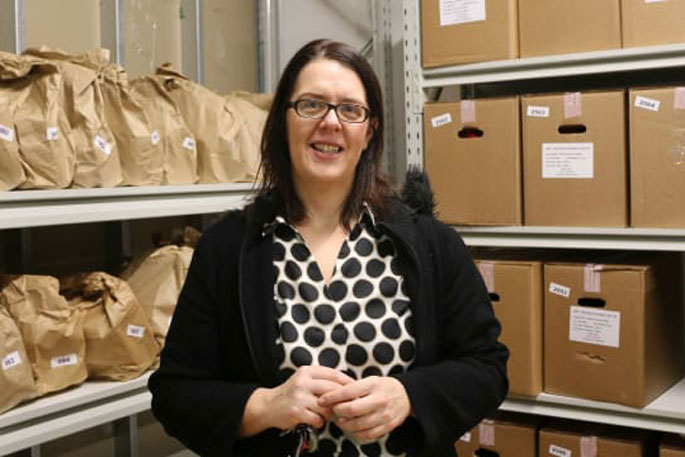 Auckland City Missioner Helen Robinson. Photo: RNZ Insight / Sarah Robson.
"Food and security was a reality that existed before Covid but it's certainly being exacerbated by Covid and certainly now with the high cost of living and inflationary pressures," Robinson told Morning Report.
"It is really, really difficult for thousands of New Zealanders."
Robinson says a whole range of people are going to the city mission for support.
People will pay the mortgage or rent, make sure their kids got to school, to the doctor and that there is enough for transport to work.
But what is left over "is simply not enough so people are coming to us for food".
This includes people who are working in casual or part-time employment, receive low wages or are on benefits.
Robinson says she has been working at the city mission for 10 years, and when she started, 10,000 food parcels were being distributed a year.
In the 2022 calendar year, just under 50,000 parcels were distributed, she says.
"This is a real crisis in our country that is growing and growing significantly and has been for some years."
She says $22 million was allocated to the city mission through this year's Budget to use over two years. While she is very grateful for the funding, it's simply not enough.
"Because there is a lack of funding available throughout our country, we rely heavily on organisations and individuals to donate food.
"What we saw is 2-3 years ago, particularly before Covid, there was significant donations of food and we really have to acknowledge the generosity of New Zealand, both individuals and companies who continue to give very generously, and I think after the floods and cyclones most recently, people do keep giving and it all adds up but it's simply not enough."
More and more people are coming to the city mission for help - but it did not have enough food or money to give out to meet the level of need.
Robinson says there's a growing group of organisations looking at what the key drivers of food and security are - and it needs to look to a reality where the country is fed, and fed well, into the future.

2 comments
A question.
Posted on 24-05-2023 10:34 | By The Professor
How many of these families have mobile phones, subscriptions to Netflix, Sky, Amazon etc...? Not all maybe - but a large majority I bet. People need to make choices in life and sometimes, during tough times, they need to ditch the luxuries in life. We have become more and more entitled over recent decades.
@The Professor.
Posted on 25-05-2023 12:52 | By morepork
You make a fair point and it is similar to the cases where received benefits are spent in the Bar and the TAB. This DOES happen, but should we dismiss the cases of real hardship where it DOESN'T happen, because there are some where it does? I believe there is an increasing number of real cases where people are struggling to feed their kids, and, in a food-producing nation that is not only shameful, it SHOULD be unacceptable.
Leave a Comment
You must be logged in to make a comment.