


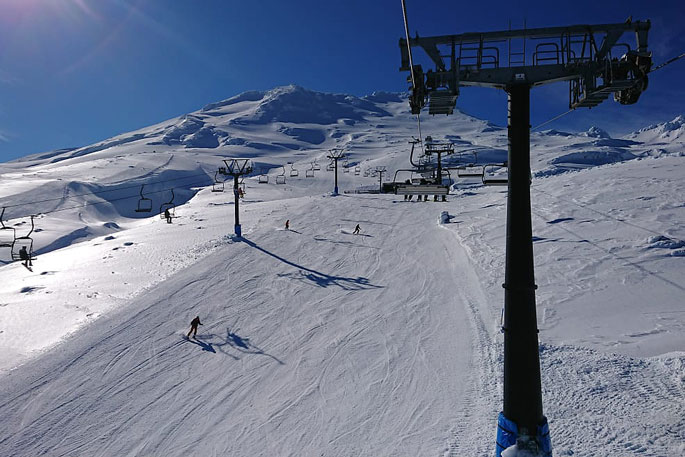
The future of the troubled Ruapehu Alpine Lifts company is still up in the air - but whether it reopens this season or closes permanently, it's likely to cost taxpayers.
After a couple of poor seasons and Covid-19 disruption, the company, which ran the Whakapapa and Turoa skifields, went into voluntary administration in October owing tens of millions of dollars.
Voluntary administrator John Fisk from PWC told Nine to Noon he's "optimistic" it will open for business this season but there's a lot of work to do yet.
Kānoa, the government's Regional Economic Development and Investment Unit, is reviewing four bids finalised last week.
Fisk says cabinet will need to sign off on any deal and Kānoa has advised that can't happen before May 11.
"The problem with that is that we are required to hold a watershed meeting with creditors by May 9, so because of that we are working this week on an application to the High Court to delay that watershed meeting."
Realistically, the extension would be until the end of the year, although PWC hoped to have a deal for creditors to consider much earlier than that, he says.
Once a front-runner is confirmed and creditors have approved a deal in principal, negotiations can start with the Department of Conservation, iwi and other parties.
Due to the complexities it's unlikely a new operator will be in a position to take over before the winter season.
Meanwhile, PWC is prepared to operate the skifield as it did with the Turoa business in 2000, Fisk says.
"But we would need an underwrite from government to do that, because don't have the funds to be able to cover any losses that might happen if there are losses, and there would obviously be costs involved in that process.
"Alternatively we could just agree that the company would go into liquidation."
Liquidating the business does not rule out a future sale, "but it does become harder", he says.
Closing the business permanently and handing the land back to the Department of Conservation will also cost taxpayers.
Estimates for removing the lifts and other infrastructure are around $50 million, while ski club buildings will cost at least $30m to demolish.
Even putting the business in "hibernation" will cost significant money, with ongoing maintenance required in the harsh environment.
All in all, there are strong economic arguments for the government to invest in keeping it operating, says Fisk.
Independent analysis shows Ruapehu Alpine Lifts provided about five per cent of jobs in the district.
"That's the same importance that Tiwai Point is to Southland. It would be an average of about 326 jobs lost if the mountain were to close."
Long-term, it was obvious the business would need to diversify to weather the impact of climate change, he concedes.
"Whether that money comes from shareholders or the government is another complication that needs to be addressed."
Furthermore, there's "divergence of opinion" among iwi over what should happen on the mountain, with arguments about economic development and prosperity pitted against the maunga's sacred status.
"Some believe it shouldn't have activities like skiing on it at all."

0 comments
Leave a Comment
You must be logged in to make a comment.