


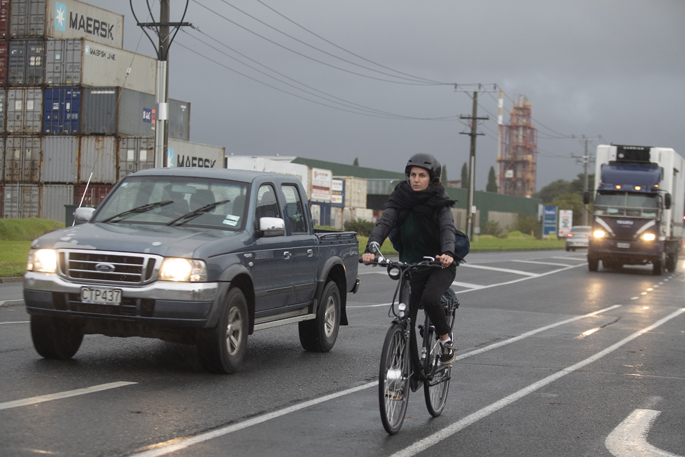
An alternative transport challenge that received more than $400,000 in funding from councils is kicking off for 2023 despite reduced funding.
The Wednesday Challenge launched last year with the goal of getting people out of cars and using other modes of transport every Wednesday for a year.
Participants opt to bus, bike, scooter, run, walk, skateboard or carpool wherever they are going on a Wednesday and earn points and rewards for doing so.
The initiative received $300,573 from the Bay of Plenty Regional Council and $146,000 from Tauranga City Council in 2022.
Tauranga City Council is not funding the challenge this year because of similarities with the work the council's travel safe team is doing to promote active and sustainable travel in schools and the community, says infrastructure general manager Nic Johansson.
'We see a need to continue to invest in our own programme in 2023,” he says.
'We're always looking to support innovative initiatives that encourage people to walk, cycle and use public transport and we're happy that we had a role in helping this pilot get off the ground.”
The regional council will provide up to $40,000 to the programme in 2023 for the school component says regional council interim transport operations manager Chris Brewer.
Wednesday Challenge national project coordinator Heidi Hughes says the funding from the regional council was not a reduction in funding but is bridging funding.
'The problem is that the project is out of sync with the annual plan funding rounds, so the council funds in both BOPRC and TCC were already allocated,” says Heidi.
'It's important not to draw a comparison between last year's funding and this bridging funding because it isn't for a full year.”
Hughes says they have applied to Bay Trust and the Tauranga Energy Consumer Trust (TECT) for funding.
They are also working on a business case to apply for funding through the land transport plan, she says.
The current funding enables the challenge to work across schools encouraging kids and some minimal touch points with businesses, says Heidi.
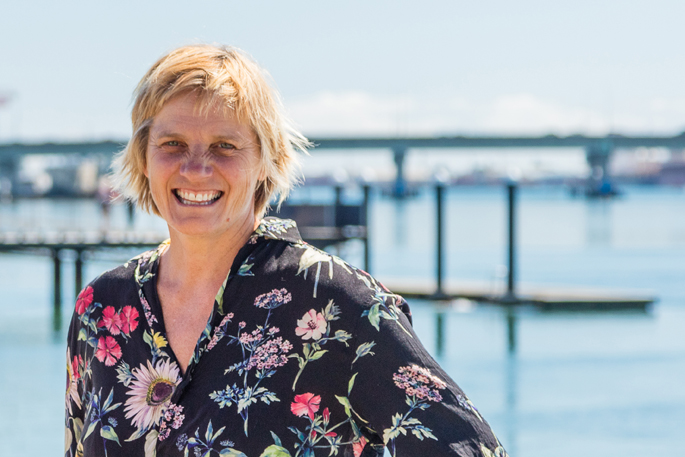 Wednesday Challenge national project coordinator Heidi Hughes. Photo: Chris Parker Photographics.
She is pleased with the results of last year's challenge.
In 2022 the programme saw around 15,000 participants log more than 224,000 journeys.
The most popular mode of transport was walking with 25 per cent of the trips taken on foot.
Cycling came in second with 11 per cent of the journeys on a bike and 7 per cent of trips were done on a scooter.
'There was great engagement across Tauranga despite being, a challenging year due to the omicron outbreak that put many schools and organisations under a lot of extra pressure,” says Heidi.
'And the bus driver shortage that impacted the bus service provision for the year.”
'We'd been hoping to have a really marked impact on filling our busses but are hoping we can do more in that space this year.”
The driver shortage meant buses ran on a reduced Saturday timetable for most of last year.
'In a city which has the lowest uptake of alternative modes in the country at under 5 per cent, ten per cent participating was a big thing,”
Asked if the regional council was happy with its investment, Chris replied: 'Bay of Plenty Regional Council is committed to getting more people regularly walking, riding and catching public transport.”
'While there is no conclusive evidence that patronage on the bus network has increased following the Wednesday Challenge, patronage was highest on a Wednesday 48 per cent of the time during the initiative.”
Heidi wants to build on last year's success and says the challenge's goal was 20 per cent mode shift, which means getting people out of cars and using alternate modes of transport.
'Last year's pilot programme demonstrated what could be achieved when Tauranga people work together for common good.
'This year is about building on the momentum we started and seeing a real change in the way people travel about the city.”
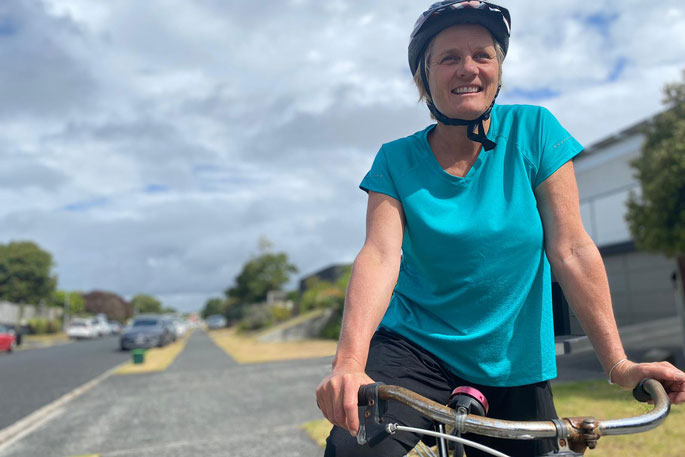 Heidi Hughes setting an example by getting out on her bike. Photo: Supplied.
If 20 per cent mode shift could be achieved, Heidi s says: 'It would have a noticeable impact on our streets.”
'It would reduce carbon emissions, fill our busses, and make our streets safer by having more pedestrians and cyclists sharing the streets with cars, which has been well proven to make cars slow down and become more aware.
She is realistic about the target audience: 'We fully recognise that for many people, the car is the only option for them in our current transport system.”
'When you have small kids, live rural or have to haul things or have health issues there are not many viable alternatives, so those people are not our targets for this challenge.
'But for many, it is a habit and we've just become accustomed to the increasingly negative impacts on our health, environment and the functionality of our city.”
Participants log their journeys through the Wednesday Challenge website www.wednesdaychallenge.co.nz
Heidi wants as many people as possible to join this year.
'We've zeroed all the points that people accrued last year, and the challenge begins again.
'We have rewards and prizes up for grabs and of course the pride of seeing your school, business, organisation or neighbourhood at the top of the monthly leader boards.
'It's a movement for change and we can't wait to see what we can achieve in our second year on the challenge.”
Public Interest Journalism funded through NZ On Air


4 comments
Not really going to happen
Posted on 24-02-2023 17:50 | By Kancho
That amount of money could be divided into substantial bribes to pay people to travel differently. For me and many others even that wouldn't work . The bus routes only work if you invest lots of extra time to get where you want to go and that's not down town. Walking is limited , bikes too expensive and dangerous . So car the only option , so at least travel with some comfort, safety and be able to shop for frozen foods etc near impossible by other means.
Disgraceful
Posted on 24-02-2023 18:35 | By The Professor
What a complete waste of ratepayers money during a so-called cost of living crisis!!! When will Councils and NZTA realise that people will NOT give up their warm, dry, comfortable cars, which will get them from point A to point B whenever they want....a.k.a convenience. So wasting our money and stop trying to dicate to us.
More idealistic nonsense
Posted on 25-02-2023 15:12 | By Let's get real
Ask any parent what the first thing their kids want at the age of 16 and I'd be very surprised to hear any of them saying a bus card, a new scooter or a new pushbike. Our youth don't want to be on a bus (loser cruiser) they want independence and they want to get away from dependency on others. We will see them out on the streets, during school hours, demonstrating about how we are all destroying their future (because that is what they are being told) but at the very first opportunity they will grab the keys to the family car out of your hands. Idealism is extremely costly and just doesn't allow for common sense.
@ let's get real
Posted on 26-02-2023 08:25 | By Kancho
Ah the elephant in the room, more vehicles inevitable and no matter what kind . Climate change probably, cyclical historically accurate, mankind's activities perhaps. BUT with population doubling in the last fifty years and expected to continue all using resources and energy then nothing will stop any affect we are making . Nor the tiny efforts we make in NZ making any global difference apart from feel good illusions and crippling cost. Planting line trees not going so well either. Burn coal and oil in another country to continue to manufacture what we all want too. How long will extinction be put off
Leave a Comment
You must be logged in to make a comment.