


Following the announcement of the Emissions Trading Scheme, a tax on greenhouse gas production at processor level to meet the 2050 goal of zero carbon emissions under the Climate Change Response (Zero Carbon) Amendment Act 2019, the industry responded with the formation of the He Waka Eke Noa Primary Sector Climate Action Partnership.
This collaboration of 13 industry and government partners has developed and submitted a proposed farm level split gas emissions pricing scheme to the government for its consideration as an alternative to being included in the ETS.
In an October 2022 announcement the government has proposed bringing in split-gas farm-level emissions pricing from 2025 in a world-first scheme.
As the farm-level scheme may not be ready by 2025, they proposed a processor-level levy as a backstop alternative to the ETS, which was a complete counter proposal to HWEN.
This has caused widespread concern and encountered much discussion from within our agricultural industry.
Coast & Country News caught up with three affected people to gage their thoughts.
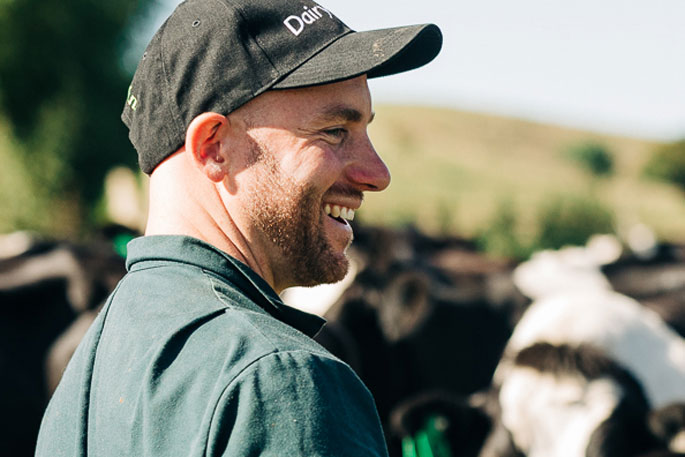
Andrew Lord from Te Pahu is a system five dairy farmer on 200 hectares and milking 800 cows.
His initial thought of the government's counter proposal was: "Why on earth are you trying to make changes to what was agreed with the sector”?
'They had been sitting around the table designing HWEN with the sector.
'There seemed to be broad agreement. They had something that nobody was really happy with, but everyone could live with, that would have actually driven some positive outcomes.”
Andrew says they should have locked that in and banked the environmental gains.
He says removing a lot of the recognition for planting on farms is a real slap in the face for farmers.
'Across the country, there must be hundreds of millions of dollars and hours of work put in by farmers that the government is giving no credit for.
'That planting does more than just sequester atmospheric carbon, it has many other environmental benefits like contributing to cleaner waterways and increased biodiversity.”
Andrew says HWEN was already a pretty tough pill to swallow for a lot of farmers.
He says it's another cost to pay when farm costs are already going up.
'We were going to be the first farmers in the world to pay for emissions. As farmers we know we need to do something and it seemed like a way forward.
'I'm unsure as to how the government expects to create better environmental outcomes when they've removed the ability for farmers to be rebated (compensated) for the measures taken to reduce their personal carbon footprint. The carrot has gone to Bugs Bunny and we farmers are looking at the ol' familiar stick!”
The fundamental difference between the two proposals is that He Waka Eke Noa was designed to recycle the emissions tax take directly back into achieving better outcomes through incentives, research, and development.

Every farmer will pay thousands in tax on their emissions, the government has been quite clear that they intend the cost of it to put around 1 in 5 of my sheep and beef neighbours out of business, or pushed into planting whole areas into exotic pine plantations.
The impact on these small rural communities will be nothing short of devastating!
Andrew says sheep and beef will be hit hard under the government proposal, but it will also be tough for dairy farmers who generally carry a lot more debt.
He says people also forget that while the dairy price may look pretty good today, that could all change overnight, and our costs of production are going up at an alarming rate.
'All New Zealanders are struggling with the high inflation and commodity prices we're currently experiencing when we see our weekly grocery bill.
'My biggest concern is that they're driving a lot of division in the rural community. Farmers don't want a solution that will work for one sector at the expense of the other.
'We want something that will work for all of us - that's why HWEN would have worked. As a sector we need to stay tight together. A fragmented primary industry will find it far more difficult to achieve an equitable outcome for farmers or to achieve any real environmental gains at a national scale.
'I'm also really concerned that the government's proposal strays from the fundamental ideals of what was agreed to in the Paris Agreement in that world food production was not to be greatly reduced in an effort to reduce GHG emissions, but that appears to be the approach we are heading towards.
'Ultimately, we cannot prioritise minor reductions in GHG emissions over world hunger. If food is not produced here in New Zealand which is actually the most efficient food producer per kg of GHG emissions in the world at the moment, it will come from somewhere else.
This will result in a net gain in global emissions, for a small gain in New Zealand's green image.”
Pete Morgan, from Pokuru, is a system two dairy farmer on 240 hectares and milking 600 cows.
He feels the government announcement 'sounds like it's trying to please everyone but I treat it as a stage in negotiating how to move forward accepting we need a solid framework to tackle the issue of climate change”.
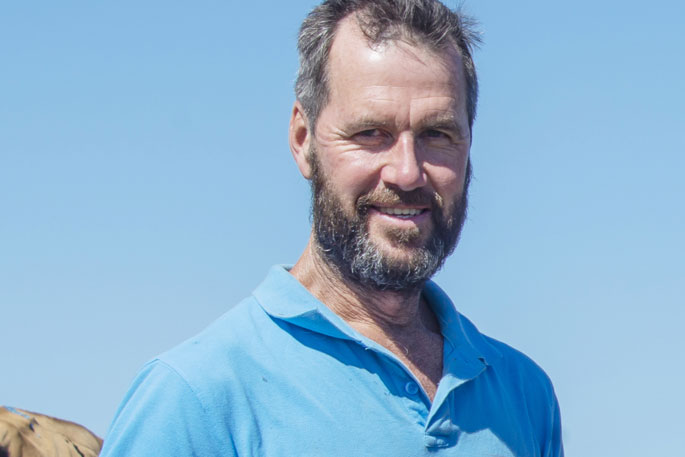 Pete Morgan. Photo: Catherine Fry.
Most farmers he knows are highly motivated to find solutions going forward.
He says they are science and fact driven, have been aware of the climate projections for decades, and already experience first-hand the early effects of climate change.
'We all know that the 2.8 degrees Celsius current predicted rise will be catastrophic,” says Pete.
'HWEN is a significant feat, bringing our wider industry to the table. The announcement contained the threat of dumping us into the ETS if we don't agree with their current plans. 'While I don't appreciate this, I realise every carrot needs a stick for balance as long as its implied use is handled carefully lest it causes more division.”
Pete says they need to understand and manage the impact it will have on all sectors.
He says HWEN is a sound starting point for agriculture and must be built on to take us all along rather than compromised for political gain in the election countdown.
'We know it is challenging to account for sequestration and all our planting, but every tree planted is going to help and we must develop at scale plant propagation and fencing, planting, release and weed control support needed to normalise it at an annual practice.
'The current rhetoric does little to encourage good practice.
'There is further frustration as we become familiar with our emission numbers, that there are so few mitigation tools in development that show practical promise. More progressive use of gene editing solutions may only get looked at seriously once we are brave enough to overcome our outdated paranoia.
'We have real concerns over HWEN cost rises that may escalate in future, but know we need it as a driver for change and to fund solutions. We are challenged to know what the model of our farming system will need to be to adapt so we can make a start now, beyond increasing the efficiencies, particularly feed use.”
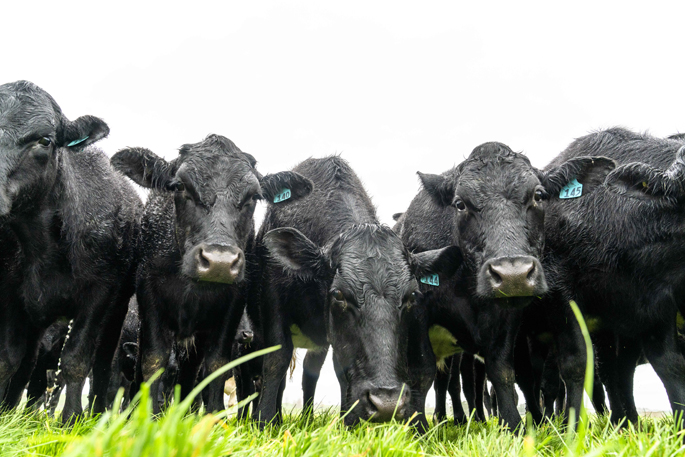
Pete says challenges to the viability of farming will risk individual businesses, significant and potentially irreversible changes in land use and reduce food production efficiency.
He says they often quote their low food carbon footprint and surely this should discourage any approach that reduces food production in New Zealand.
'I feel we need to be modelling of all the downstream effects on farm businesses, communities and food prices, and sharing this information globally.
'Nitrogen caps and better understanding of how N can be is used efficiently will be more effective than introducing a N charge that will have unintended consequences in sourcing of emission and cost efficient feed.
'Emission reduction pain will be experienced in farming through the next decades but if we act now we can make a difference.
'We as a country get to choose if changes are managed and constructive, with workable pricing and taxing and if not, we will be at the mercy of critically damaging our industry as well as the impacts of changing climate.”
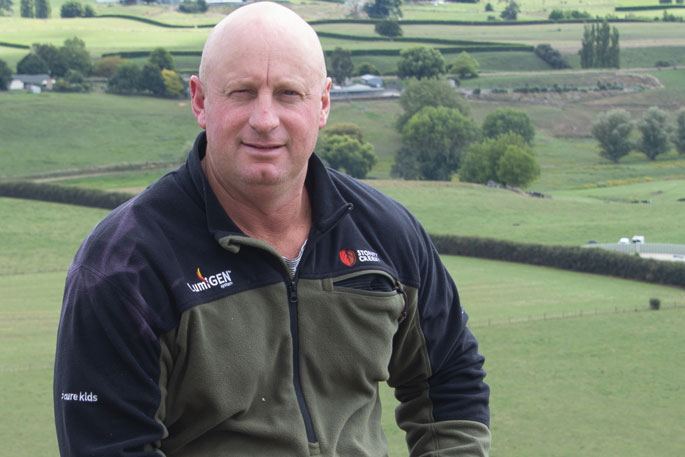 John Hayward.
John Hayward, a system three dairy farmer on 240 hectares milking 380 cows in Puahue, thinks that if you cut emissions by cutting productivity, then 'our own people will suffer financially, as other countries will simply lift their production with a greater environmental footprint than New Zealand”.
He says so much work and input from different areas went into HWEN.
'The sector was happy to get a result for everybody and it was workable and achievable. Throughout the sector as a whole, in the last 12 months, our emissions have already dropped as people fine tune their operations.
'It's very disappointing that when it was taken back to the government, they are still considering stifling production to get a drop in emissions.
'So much money has already been spent in riparian planting on New Zealand farms and they have already made a difference with carbon sequestration.
'It is disappointing that the government doesn't seem to recognise this, especially as good agricultural land was fenced off and used as the margins at a massive cost to farmers.”
John says their philosophy has always been to look beyond what you can see and with forward thinking you don't cut corners with the environment.
He says they have tried to future proof their farm and have a closed system with all drystock remaining on the farm.
'We moved to autumn calving and dropped 100 cows out of our system, while maintaining our cash flow. Our waterways are planted and fenced and we've invested in manuka plantations.
'We were the Supreme Winners at the 2016 Balance Farm Environment Awards, and have been Climate Change Ambassadors for DairyNZ, so we've already put in a lot of work to lower our GHGs and reduce our carbon emissions per hectare.
'We aim to be one of the most sustainable farms in the country but we know that change comes at a cost and society needs to be willing to adapt.
'Personally, I'm not too stressed but I'm very concerned for the industry as a whole - this could drive people out of farming.”
John says multiple factors affect the price of food.
Fertiliser prices are up, fuel prices are up, staffing costs are up…. a whole range of factors already affect us, and the Emissions Plan will just be another cost.
'As farmers we get smashed from all angles and yet we are needed on a daily basis.
'As most of our product goes to export, our sector is driven by the world market prices. If the payout drops, we still have to keep going and we absorb the costs. We are all trying to keep farming profitable.
'The other day I was in a food hall in a shopping mall and I sat and watched the amount of single use plastic items being used for around 10 minutes each and then being thrown away.
'They're not even recycled but end up in landfill, and we as farmers are being judged for feeding the world. So much more could be done in other areas to help with climate change without jeopardising food production.
'Under HWEN it was proposed that the money collected would be used to further benefit the environment. A tax won't fix anything - it's how that tax is used that can make a difference.”

0 comments
Leave a Comment
You must be logged in to make a comment.