


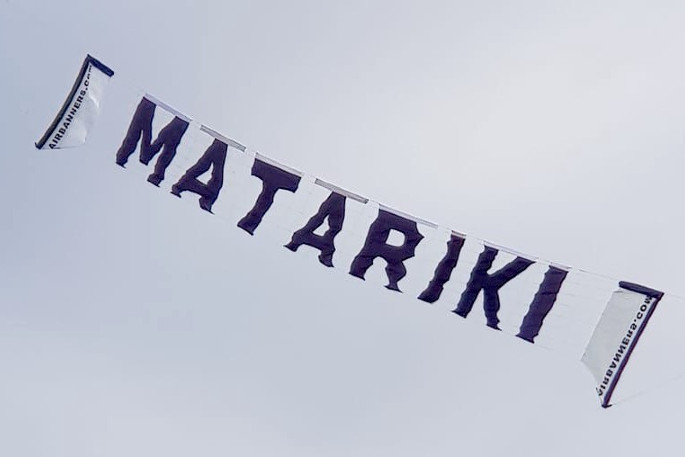
Matariki which runs from June 7 to July 11 this year, has a large number of events and activities that most anyone can participate in.
There are also exhibitions, workshops, art hunts, a panel discussion and story telling which can be found on the www.mymatariki.co.nz website.
Matariki is the Maori name for the star cluster also known as the Pleiades. While it comprises over 300 stars, only seven are typically seen. Towards the end of June this year, we can observe Matariki rise in the north-eastern horizon just before dawn. The first new moon following the rise of Matariki is called ‘Te Tahi o Pipiri' or the first day of Pipiri, Maori New Year's Day.
Tomorrow at Tauranga Historic Village the inaugural Matariki Village Market will be held from 9am – 2pm, rain or shine, with a range of stall holders from local to further afield celebrating kaupapa Maori and sustainability. Entry is free and there will be live music throughout the day.
Matariki is a time for remembering the dead and celebrating new life. Matariki was a season for manaakitanga or hospitality that brought communities together. Visitors were showered with gifts of specially preserved food and other delicacies. Throughout Matariki, Maori learnt from each other, which ensured that traditions like arts, weaving, waiata, performances, wananga and whakapapa were passed from one generation to the next.
Maori beliefs hold that Nga-Mahi-a-te-Rehia, the "arts of pleasure", originated with Raukatauri, Raukatamea, Marere-o-tonga, Takatakaputea, and other such persons who are associated in Maori mythology with singing, dancing and other such performing arts. The arts of pleasure, which include – weaving, carving, akotanga, oration, problem solving (tupea), singing, dancing, story telling, feasting and game playing - would be practiced prolifically during Matariki festivals.
Matariki Kite Day
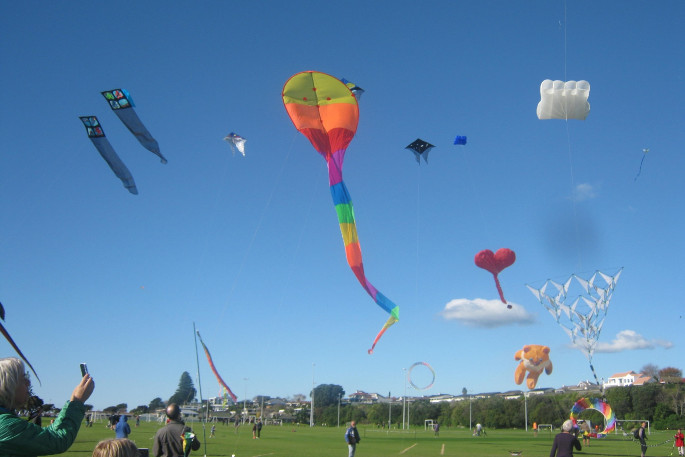
Next Sunday the sky around Matua will be filled with kites of all shapes, colours and sizes in celebration of Matariki.
Ancient Maori kite flying traditions have a highly symbolic connection to Matariki – the two were historically inseparable. Kites were seen as connectors between the heavens and earth.
During this period of joyful abundance of Matariki, tribes throughout New Zealand, without exception, historically placed their greatest emphasis on kite flying.

Kite or Manu mythology is prolific in Maori folklore. Legends tell of Tawhaki trying vainly to follow Tangotango to heaven on a kite; of Rahi using a kite in pursuit of Te Ara and of Maui using kites to fly over landforms. Stories also focus on Matariki – one tells of Ranginui lifting up out of the eastern horizon at the start of the Maori New Year, marked out with Matariki, Puanga, Takura (Sirius) and Tautoru (Orion's Belt).
Ancient Maori were expert kite makers and flight controllers. Their kites were usually "tail-less", were gaily decorated, of varied sizes, shapes, names and purposes – from those used for light-hearted entertainment to kites used for highly significant spiritual rituals. Children and adults made kites - to practice whanaungatanga - social relationships, to reinforce tikanga/kawa - tribal lore; to produce artwork, to perfection aerial movements, to test skills in competitions and for fun, to add their "touch" of vibrancy to the sky.
The most common kites were constructed from toe toe, manuka, harakeke, raupo and aute bark.
Kites were also believed to be messengers. Like birds, they were considered as having spiritual connections, hence the ambitious cloud piercing kites requiring several people to operate, and using kilometre long ropes.
Tohunga - a priest, or man of knowledge - saw kites as a metaphysical means to communicate and see beyond the real world. Their sacred kites, Manu Whara, were constructed according to strictly guarded protocols, with flights that required chanting of sacred karakia in tandem with karere.
Manu Tangata were used to physically pickup people – in addition to Matariki displays they are recalled as having been used by attackers to gain entry to pa fortifications and also as a means of escape from besiegement.
Matariki can be appreciated therefore as a popular kite flying time and as an important period for kite development and proto-type testing.

Of the several thousand kites flown during early colonial times, decorated with shells, feathers, foliage, Matariki, tukutuku, artefacts and carvings, none exist today. Nearly all old-time Maori practices and games were abandoned soon after the arrival of the early missionaries. By 1840, when The Treaty of Waitangi was signed, the grand Matariki celebrations were an obsolete practice. With the abandonment of this tradition, magnificent tribal kite collections disappeared, as did the most important period of the year dedicated to traditional kite making technology.
The return of "Manu Tukutuku" has been given extra impetus as Maori New Year / Matariki celebrations have also become more widespread. New Zealand skies have once again host to the colour and pageantry that is traditional Maori kite flying.
Starting at noon, world-class kite flyers from the New Zealand Kitefliers Association will have their magnificent kites on display at Fergusson Park.
'Wrap up warm and bring your whanau – a kite of your own if you like,” says a spokesperson for the event.
The Matariki Kite Day will also feature food and beverage vendors, selling burgers, coffee, icecream and much more.
The Matariki Kite Day will be held at Fergusson Park on Sunday July 4 from 12pm – 4pm.
More events celebrating Matariki can be found at https://www.mytauranga.co.nz/matariki and the full Matariki Online Booklet can be downloaded here

0 comments
Leave a Comment
You must be logged in to make a comment.