


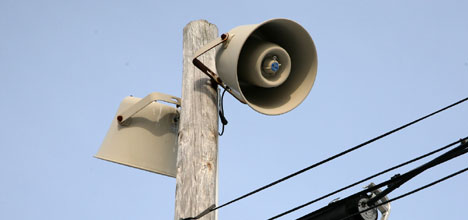
The rollout of the Eastern Coromandel Tsunami Strategy is to be extended to Pauanui and Tairua.
The news comes after this week's major earthquakes in Asia sparked fears of a repeat of the 2004 Boxing Day Tsunami.
The Eastern Coromandel Tsunami Strategy is a partnership between the regional council and Thames-Coromandel District Council, and involves local agencies and communities.
The project was initiated after new research showed a higher risk than previously understood to the Waikato region's east coast from major tsunami generated by big earthquakes in the Tonga-Kermadec trench to New Zealand's north-east.
According to the research, there is also a risk to the east coast from tsunami generated by local sources, such as offshore volcanoes, and from distant sources, such as big earthquakes in South America.
The strategy has initially focused on Whitianga, the areas seen as most at risk from the impacts of tsunami, and has led to Whitianga taking or contemplating a range of measures to reduce risk to people and property.
A report to the committee said tsunami risk in Pauanui and Tairua would now be addressed as a joint project under the strategy.
'Many of the learnings and processes that resulted from the Whitianga phase of the project will be adopted in this next stage to ensure time and cost efficiencies and economies of scale are maximized,” the report said.
Pauanui and Tairua has been chosen as the next centres for work under the strategy due to factors such as the availability of detailed land and seafloor information and their demonstrated willingness to address tsunami risk through the installation of warning sirens.

2 comments
Tsunami Survival
Posted on 15-04-2012 14:14 | By Pamax
Tsunami paranoia seems to be the flavour of the month along our east coast, with pole mounted sirens being the "alert" option of choice. These don't come cheap, TCC have allocated $797,000 for their installation at Papamoa, plus a further $70,000/pa for "development and ongoing training". No allowance is quoted for periodic inspections or ongoing maintenance,(you pick a number). The best advise from Civil Defense is that time lags from a"tsunami event" until the sirens are activated is 2 hours, if the tsunami is in the Kermadec trench it will reach NZ about the same time as the sirens are activated. Go figure. This siren technology dates from the 1930's, the same period as "Dads Army". Perhaps we should all be issued tin hats and a 303 rifle just to keep up the farce. Reality is, the world is connected via cellphone and their use is spreading exponentially. The first tsunami alert will be a cellphone call "within minutes of the event" from a loved one somewhere else in the world, giving you and your family the maximum possible time to seek higher ground. High speed broadband is virtually here and the "cellphone connected world" is the best, most efficient, most widely spread,cheapest and most reliable early warning system available. The authorities who have recommended these expensive obsolete pole mounted sirens have failed to do their homework and are totally out of date. Pandering to local hysteria is not a rational way to safeguard citizens living along the east coast. Max Lewis, Mt Maunganui
Pamax
Posted on 16-04-2012 05:42 | By Hector
I totally agree, in this age of technology, why the hell would you want a siren on a pole, most people are being bombarded with all sorts of media releases, and it only makes sense to use this source as our defense, it just makes you wonder with all the technological advancements, why we are resorting to a system so old, even I cannot remember when it was first used, and what about the deaf, is the Council going to employ someone to drive around knocking on doors, ( oops that will not work either), you really have to wonder at the intellect level of some making these decisions.
Leave a Comment
You must be logged in to make a comment.