


Change the context and you change the concept – or teach a young man to fish and he's no longer interested in petty crime.
It's a supported bail programme that is having success and producing some unusual results, like the traditional crayfish pot Rangi Ahipene is planning to begin seasoning this weekend by dropping it into the upper harbour.
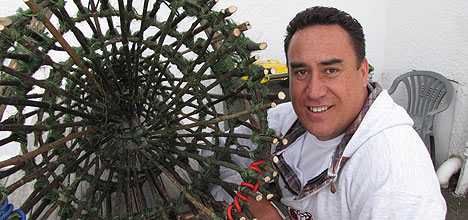
Rangi's craypot ready for action.
It's first working test will be sometime over Easter when a fisherman mate will place the pot over a reef.
The traditional conic pot is built of supplejack and sisal.
The sisal came from the local hardware shop.
'That was just to save time,” says Rangi.
'I could have done it with flax but it would have taken hours and hours.”
The idea for the traditional cray pot came out of the rainy day side of a supported bail programme being run with a young offender.
Rangi's developed the programmes for the young offenders around his own interests, outdoor fishing and sports.
This particular community work programme involved taking the young offender fishing and teaching him how to catch, gut and fillet a snapper, and then distribute the catch in the community.
'For a young person who doesn't go fishing much, it can have a high impact.”
But it can't all be fish, fish, fish.
'With young people you have to create variety or they get bored, plus it was an ideal project for doing inside.
'The programme succeeded because he expressed an interest in working in a rural environment and he's now doing a farming course.
'He's attending every day and loving it.”
The young fella has also started making his own sustainable cray pot at home, says Rangi.
He says they collected the supplejack from the bush in the traditional manner with karakia.
'So it's from Tane to Tangaroa, so to speak.”
It's a traditional but not Maori design. The Maori cray pots were circular basket shapes.
'I didn't go for the more traditional Maori cray pot because of the time it would take.
'This was a design that could be done a bit quicker. A young person needs to see progress.”
The cone shaped trap has a built in rock to weigh it down, the triangular frame stops it rolling, and there are regulation gaps in the sides to make it legal under fisheries regulations.

0 comments
Leave a Comment
You must be logged in to make a comment.