


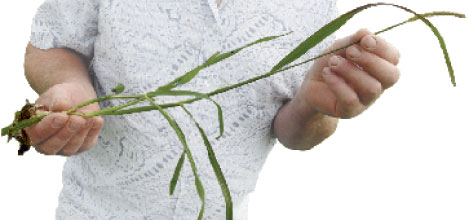
Originally thought of as an isolated Waikato problem, Yellow Bristle Grass is rapidly spreading to wherever it can hitch a ride.
It has already shown up in Taranaki, and research on its climate preferences elsewhere in the world have shown that it could potentially grow anywhere in New Zealand apart from the Southern Alps.
An annual, YBG is a member of the C4 group of species; it starts germinating about October and produces copious seed heads with large seeds from January to March.
Each seed head can contain up to 500 seeds and these drop to the ground about a week after the bristles turn brown. At this time, they aren't mature, but carry on getting there until spring comes again, when they all turn into plants, particularly where there are gaps in pasture.
Originally found mainly in roadside verges, it is thought to have ‘jumped the fence' into pasture when the cost of weed control by councils saw a change from long-acting herbicides to, more often, glyphosate alone, which is often applied too early in spring to affect YBG germination.
It's a grass and cows will eat it, at least until seed heads appear, so what is the problem? It's not the quantity, it's the quality and as the season progresses; its metabolisable energy drops to the point that cows eating 25 per cent of their diet in YBG reduce milk production by 11 per cent, which lowers the vat level a bit!
Note that ‘summer grass', which is also quick to fill empty spaces, has the same problem, causing the same result. And when both die, they leave spaces for winter weeds to grow madly.
If cows have been grazing on YBG-infested pasture and are then moved to ‘clean' pasture, the seeds get carried along in the rumen and deposited in dung at the new site. And existing plants will produce new seedheads just 21 days after being grazed.
Since the publication of the original Ute Guide to YBG in 2006, the Yellow Bristle Grass Action Committee has been researching ways to both cope with it and get rid of it. At a recent field day near Matamata, AgResearch scientist Trevor James initially announced 'We have a cure” – but then went on to explain that, in fact, the cure wasn't available just yet.
Apparently Bayer has a herbicide called Puma S, but so far it's not registered for pasture –they are working on it. This stuff is selective for YBG, but will have a 42-day non-grazing period after spraying, which makes things tricky for grazing rounds in late summer. At present, the best time to spray is two weeks before Christmas.
The researchers are also attempting to persuade councils to defer spraying affected areas on roadsides until December this year.
So what can farmers do about it? For bad infestations, you may need to cut your stocking rate. For small infestations – which are hard to spot until the seed heads appear and it's too late – you can fence it off and spot treat it or pull it. If it's inadvertently made into maize or wrapped grass silage, research to date has shown it probably takes at least three months for the seed to be killed within it.
Get hold of the second edition of the YBG Ute Guide from MAF and start swotting up.

0 comments
Leave a Comment
You must be logged in to make a comment.