


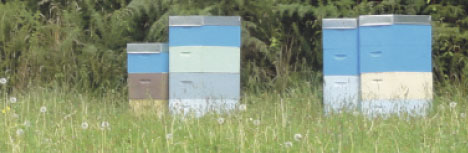
While the scientists and the sceptics continue to ask for ‘proof' on how ‘biological farming', focused on soil health, can work better than chemicals, yet another good news story on it popped up this month – fat bees.
We've written before about Jeff and Fiona Graham's biological dairy goat farm at Pukeatua Peak with its amazing mixed pasture of 11 species, and no ryegrass in the new areas.
Well now a local apiarist, Barbara Cahalane, is using the farm to fatten up some of her bees – up to 60 hives at a time – when she brings them back from other areas when the hives are ‘split' and the bees need a boost.
Because there are so many food and pollen sources on the farm, Barbara calls it ‘bee heaven' and thinks her bees 'just roll out of bed there, drag out their picnic rug and snack just outside their door, it's just so lush”.
With the amazing variety of bee foods – dandelion, honeysuckle, barberry, hawthorn, gorse, vinca major, clover (red and white and Persian), lucerne, chicory, kamahi, rewarewa and other ‘bush stuff – there's always something all year to help honey and brood production and the bees don't have to fly far from the hives to get it. In other places, there is always a six week period when there isn't enough food for bees. At this time they stop work and require supplementary feeds to get them started again.
There aren't too many women apiarists around, so I asked Barbara how she became one. After years of working in education, she decided a change was needed. Her father had been a hobbyist beekeeper and she had also spent many weekends ‘helping' a beekeeper friend in Auckland and had fallen in love with bees.
So she asked a local beekeeper about part-time work and promptly was appointed to a full time post as a queen raiser. She stayed for two years and learned a lot, despite the fact that the other workers thought she'd last about a week, as the work is hard and heavy.
Four seasons ago, she set up her own round with a business partner, which is now about 600 hives, spread from Northland to the Central Plateau. The bees are wintered around Maungatautari Mountain and moved to mainly manuka sites in spring.
The amazing season this year has kept her busy racing round adding boxes frequently to many hives to make more space for the bees, and is about to begin the honey harvest, assisted by friends and relations.
No doubt if they find any bees needing a ‘plumping' holiday, they'll end up at Pukeatua Peak.

0 comments
Leave a Comment
You must be logged in to make a comment.