


Toi Te Ora is warning parents to keep a close eye on their children's hair for headlice, especially with students preparing to go back to school.
Medical Officer of Health Dr Phil Shoemack says anyone can get headlice, as they have no preference for cleanliness, hair colour, hair type or age.
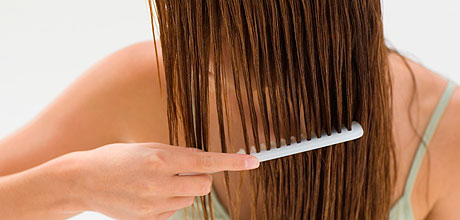
Brushing hair when went is a best method to eliminate headlice.
'They need close head-to-head contact to spread from one person to another.
'You can't get headlice just by standing next to someone with headlice.”
Phil says children are more commonly affected because of contact at school and during activities.
Headlice, also known as nits, kutu bugs or headlouse, occur commonly all over the world.
They are tiny egg laying insects about 2-3mm long which breed all year round.
'The human scalp provides food and warmth for their eggs to hatch.
'They must feed on human blood every six hours or else they die from dehydration.”
Phil says they can't jump, fly or swim.
He says they move from one person to another by swinging from hair to hair.
'They don't carry any disease. They are a nuisance but not a health hazard.
'Eggs are small and hard and are normally a pale grey colour until they hatch and then the empty cases are white.”
Females lay 7-10 eggs per night, close to the scalp. They hatch about 8-9 days later and louse can live for 40 days.
'Headlice are common in the community and it's impossible to completely prevent their spread, however methods to reduce their spread include brushing hair every evening, don't share brushes/combs, towels, hats or helmets.
'People with long hair should tie it up and checking for headlice weekly is recommended when hair is wet and using a fine tooth comb.”
Phil says parents or caregivers shouldn't use flyspray, kerosene or animal remedies as these may harm children.
He says ordinary shampoo or soap will not kill headlice.
'Treat members of the family if you find live insects or eggs within 1cm of the scalp: it is recommended that you use the conditioner and combing technique (wet-combing) as a treatment alone.
'You may wish to use a chemical treatment in between wet combing. Your pharmacist/doctor/practice nurse will be able to advise what treatment to use and how to use it.”
Phil says people must check for effectiveness after use of each product.
'Dead eggs need to be manually removed, as dead eggs will move further away from the scalp as the hair grows.”
For further information go to NZ Ministry of health - Headlice fact sheet,

1 comment
This idea doesn't suck
Posted on 22-01-2012 16:48 | By MrsT
Well, actually it kind of does, but in a good way. Use a vaccum cleaner nozzle to suck up the crawlers. Be thorough and consistent in doing this morning and night and after the eggs have hatched, the lice will be history - as are fleas from carpet using the same method.
Leave a Comment
You must be logged in to make a comment.