


An outbreak of the highly invasive Asian pest plant giant knotweed is confirmed on four adjoining properties in Waihi.
Waikato Regional Council contractor Heidi Pene was tipped off by a resident who had been unsuccessfully trying to deal with the weed themselves.
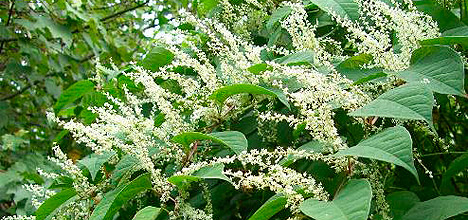
Giant knotweed.
'This weed is a serious threat as it can grow rapidly and it takes over where it gets established,” says biosecurity officer Wendy Mead.
'Knotweeds are very hard to eradicate and have been known to grow through roads and house foundations in England.”
Giant knotweed, originally from Japan and eastern Asia, is a many stemmed shrub which grows to four metres tall and over summer has attractive panicles of white flowers.
It also has large leaves and hollow stems which have a zig zag form.
It is related to the more common Japanese knotweed which is a very serious pest in parts of Europe.
Giant knotweed is listed as an eradication pest plant under the Waikato Regional Pest Management Strategy and the council has taken responsibility for its control. 'Arrangements are being made for contractors to control the giant knotweed in Waihi and the council would like people to be on the lookout for any more infestations of this plant,” says Wendy.
There is only one other known infestation of giant knotweed in the region; this is at Waikino and a control programme is in place to eradicate it.
Knotweeds are spread by the movement of root fragments.
It is not known where the Waihi infestation originated, but most knotweed infestations occur through movement of contaminated machinery or dumping of garden waste.
Dumping of garden waste on roadsides, down gullies or on sand dunes is a serious problem in New Zealand and results in many garden plants escaping, some of which can be highly invasive and displace native vegetation.

0 comments
Leave a Comment
You must be logged in to make a comment.