


An overhaul of the rules on paper that govern the coastal marine area is being undertaken by the Bay of Plenty Regional Council.
The current rules are in several layers including the New Zealand Coastal Policy Statement 2010, the regional council's Regional Policy Statement, the Regional Coastal Environment Plan, and the local authority planning statements from the regions territorial authorities.
The Regional Policy Statement sets rules on activities in the coastal marine area and contains policy for this area and land dominated by the coast.
Local authorities in the Bay of Plenty are required to give effect to the Regional Policy Statement in their planning and policy documents.
The current Regional Policy Statement is out of alignment with the government's national policy statement.
A new Regional Policy Statement was released for public submissions in November 2010.
All submissions have now been heard, and the Hearing Committee is making decisions on the content of the new RPS.
The present Regional Coastal Environment Plan has been operative since July 2003 and also requires updating.
'The proposed RPS pre-dates the New Zealand Coastal Policy Statement 2010, and the two documents are not entirely consistent,” says Regional Council Planning Frameworks Manager David Phizacklea.
'Some submitters to the proposed RPS raised these inconsistencies, but even if we were to give effect to all of these submissions, a number of areas in the proposed RPS would still be inconsistent, so a formal variation is required.”
The two plan processes will initially run in parallel. Changes to the Regional Policy Statement will be incorporated using a variation process well before the full review of the Regional Coastal Environment Plan is complete.
'What we are now doing is trying to align that new RPS with the direction given by the government in its National Coastal Policy Statement,” says David.
'That's one project. The other one is our coastal plan which sets the rules for activities in our coastal marine area.”
Under Resource Management Act the regional council is responsible for the coastal marine environment, as well as setting plans for what happens on the coastal part of the land area.
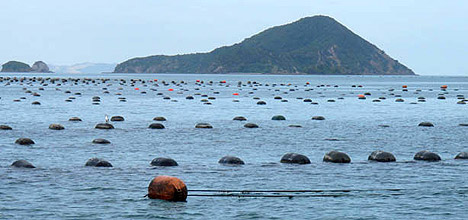
Sea walls, aquaculture, port dredging all require RMA consents, which come under the RCEP.
The RPS concerns policies that the plans are required to give effect to, everything from geothermal activity to water and air quality.
A lot of new issues have arisen since the plan was developed in the 90s, says David. Mangroves, for example. The plan currently requires a resource consent for removing mangroves, but that may be altered to allow pulling seedlings without a consent, or making it easier to obtain consents for larger area.
Government direction through the national policy statement means new provisions must be made for aquaculture and ports.
Tsunamis also now need to be managed within the policy and planning documents.
'We may need to identify, map and protect important features, so we will be consulting with a number of people as this part of the review is likely to generate public interest.
'We may need to consider how truly integrated our management of activities in the coastal environment is, and how different agency requirements can be accommodated.
'The NZCPS requires more integrated planning, identifying areas inappropriate for development on our coast, while enabling activities such as aquaculture and providing for ports as part of the region's infrastructure network.
'We also need to better prescribe recreational use and access, and look at restoration of natural character and improving water quality.”
Both plan processes concern the coastal environment, and their scope overlaps. In the first phase of consultation, key stakeholders will be asked for preliminary comments and meetings will be held in February 2012, says David.
The variation to the Regional Policy Statement is expected to be notified in May next year for public submissions.
Consultation on the Regional Coastal Environment Plan will be undertaken at the same time in early 2012, with a final review report in June.
If the Regional Council decides to replace the current plan then a new plan will be notified for public submission following further input from stakeholders and the public.

3 comments
Disband the whole regional farce.
Posted on 31-12-2011 11:00 | By CC8
The layer of bureaucracy that needs removing is the Regional Council(s). Along with the RMA they are just another job creation scheme, where the hand wringers in society have a forum , other than central government, to whinge and moan and make unnecessary rules and regulations. They make otherwise productive people jump through hoops to comply with the aforementioned rules and then do NOTHING to ensure that continuing compliance is met. As long as the stupid rules are met, on paper, when the consents are made and at a (maybe) first inspection.Then they are assumed to be compliant for all time....what a waste of time and money.
YOU GOT IT CC8
Posted on 31-12-2011 13:18 | By MASSA KISSED
Clear from above they are all doing there own thing, even in sorting the mess out requires employing more to 'think' about what, just just delete all but one policy. Agree on Reg Council + RMW, that is a fact, however based on the current preformance of TCC they are not exactly a good alternate option!
BELIEVERS!
Posted on 31-12-2011 21:24 | By DRONE
Easy to see why the rates bills are jsut rocketing out of this world so fast, there si no connection between an efficient result and the cost to get it. In the real they would al be in the dole line collecting that. The cost to us all would be heaps less as a result.
Leave a Comment
You must be logged in to make a comment.