


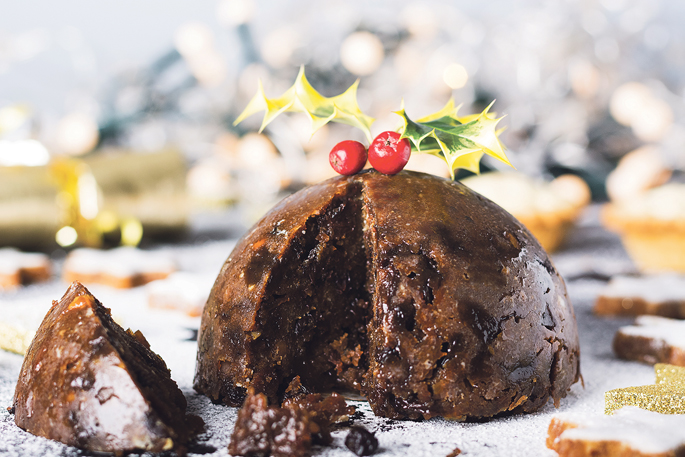
I loved the rigmarole. It would start in October, when Mary Winifred – her Christian names – or nana, bless her, started squirreling fruit and nuts for her Christmas pudding. A bag of raisins here, a bag of candied orange and lemon peel there, sultanas and glacé cherries.
And the nuts - toasted hazelnuts, pecans and almonds.
Then, after several tram trips from the Andy Bay terminus to the Four Square store, she had all the components for another memorable Christmas scoff.
And you knew the fat man in the red suit was definitely en route when Mary Winifred pulled all the ingredients from her pantry. They were lined up, weighed and weighed again. Then there were eggs, butter, flour, mixed spice, golden syrup, suet – a recipe done from memory and by instinct.
Of course, there was the brandy decanter. It sat in the pantry from one Christmas to the next. And Nana would take a sly sip straight from the decanter before adding a slug, or two, to the fruit.
And Cointreau - don't forget the Cointreau. 'Of course you don't need the brandy or Cointreau, but then you don't need any of the best things in life,” she'd say, before taking another sip.
She would fuss and fidget and, eventually, all the fruit would end up in a muslin cloth, suspended by a string from a wooden spoon straddling a basin. We never understood why, but it all added to the mystique. As kids, we loved the unexplained.
Some days later, all of the ingredients would end up in Nana's ceramic mixing bowl. It was huge, and could have doubled as a full immersion baptism font. To continue the ritual, we all lined up and had a turn at working Mary Winifred's wooden spoon through the mix. Something about good luck, she said.
There was another nod to good fortune when we kids had to scrub 18 thruppeny bits, or pre-decimal currency three pence coins, for the pud. They had to be scrubbed because Nana said they could have been in a greengrocer's ear. Why would the greengrocer put money in his ear? The coins were then blended into the batter.
So when batter became pudding, when the holy sprig sat atop the blanket of custard (did you know the holly represents Christ's crown of thorns?), four boys went open cast mining for coins. Because threepence had good buying power in those days.
One year I recovered ten coins – half a crown's worth, two shillings and sixpence or 25 cents worth. That would buy the biggest block of Cadburys, a week's bus concession ticket, three pieces of fish and more chips than a casino, or a pack of 20 Matinee fags.
Before threepences, a dried pea or bean was baked in the cake, and whoever got it was king or queen for the night. It dates back to Edward II in the early 1300s. Peas and beans didn't become thruppences until after World War One.
Originally, Christmas pudding was called frumenty – a 14th century pottage and a thick boiled grain dish made interesting with beef and mutton, raisins, currants, prunes, wines and spices.
By 1595, frumenty was slowly changing into a plum pudding, having been thickened with eggs, breadcrumbs, dried fruit and given more flavor with the addition of beer and spirits. It became the customary Christmas dessert around 1650.
Christmas pudding comes with lashings of custard and equal amounts of superstition. One superstition is that puddings should be made with 13 ingredients to represent Jesus and His Disciples. And every member of the family should stir the pudding with a wooden spoon in honour of the Wise Men.
So there you go - there's the answer. Mary Winifred knew what to do, she just didn't know why she did it.
And the brandy flambé, the flaming pud at the table, is always a good act. But why set fire to the brandy? It burns off the alcohol and intensifies the brandy flavor. What about the symbolism?
No point asking Mary Winifred, but it's said to represent Jesus' love and power.

0 comments
Leave a Comment
You must be logged in to make a comment.