


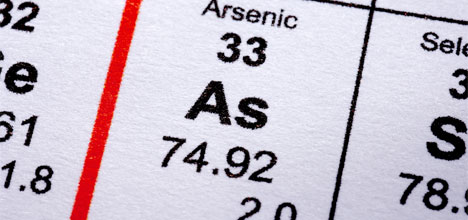
Arsenic poisoning concerns are being shared by the Waikato Regional Council, Thames-Coromandel District Council and the government.
Hundreds of Thames residents may have to be tested for arsenic poisoning after contaminated soil on 212 properties was located.
These properties each contained up to 235 times the safe limit of arsenic.
Arsenic deposits are believed to have come from mine tailings used as landfill for the Moanataiari subdivision more than 100 years ago.
The affected suburb, on the northern edge of Thames, includes a childcare centre and primary school where last night the Thames-Coromandel District Council sent contractors to remove a mound of dirt.
Environment Minister Nick Smith says the government has a contestable fund the Waikato Regional Council and Thames-Coromandel District Council can apply to for further testing of contaminants at the Moanataiari subdivision in Thames.
'The government shares the concerns of residents and the local Thames community at the levels of arsenic recorded in soil samples at Moanataiari,” says Nick.
'I urge residents to heed the precautionary advice of the councils and health authorities to protect their health while more detailed testing is undertaken and a long-term plan implemented to address the contamination.”
Moanataiari is built on land reclaimed from the Firth of Thames.
The area was filled with mine tailings, mine waste, and clean fill subdivided in the 1960s and houses built in the 1970s.
'Undertaking a subdivision in this way would be unacceptable today.
'In May this year I announced a new National Environmental Standard for situations like Moanataiari.
'The standard applies to proposed developments on reclaimed land and land that has been used for certain activities or industries.”
Nick says if the land is found to be contaminated, steps must be taken to cleanse the soil or contain the contamination, to make it safe for human use before development.
'The government has a constructive work programme with the Green Party on addressing contaminated sites.
'We have developed a comprehensive clean-up of the Tui Mine at Te Aroha launched in October.
'We are committed to working with the Thames-Coromandel District Council and the Waikato Regional Council on developing a clean-up plan for the Moanataiari community once we know the extent and scale of the contamination.”
Nick says residents of Moanataiari need certainty and it's important testing gets underway as soon as practicable.
'The Ministry for the Environment will work closely with the Waikato Regional Council and the Thames-Coromandel District Council to ensure their funding application is completed and determined urgently.”

1 comment
Sensational Distortion of the truth!!
Posted on 24-11-2011 16:06 | By xenasdad
So "These properties each contained up to 235 times the safe limit of arsenic." Well having actually read the report, I will let on that a lot of properties contained NO Arsenic at all, the school grounds being one for starters. Many others were just above the "recommended level". Also be aware that arsenic itself is a metalloid, and NOT found a such in nature, but locked up in in minerals. Wikipedia notes that "In the Victorian era, "arsenic" ("white arsenic" trioxide) was mixed with vinegar and chalk and eaten by women to improve the complexion of their faces, making their skin paler to show they did not work in the fields. Arsenic was also rubbed into the faces and arms of women to "improve their complexion". I don't remember seeing records of massive poisoning as a result. Keep it all in proportion folk.
Leave a Comment
You must be logged in to make a comment.