


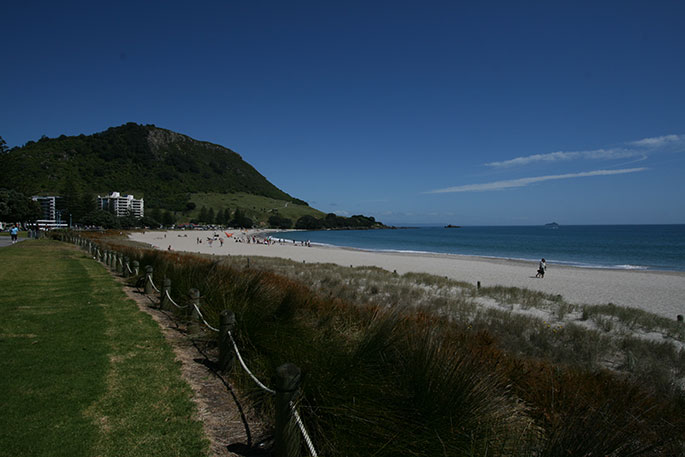
Unlocking secrets within Tauranga and Bay of Plenty's coastlines will be the task at hand for a handful of students from six Tauranga secondary schools.
In a collaboration between the University's Faculty of Science and Engineering, Tauranga iwi, and with facilitation support from Manaaki Te Awanui, The Science of Māui is an upcoming programme which will see rangatahi working alongside lab and field scientists.
The programme has been catered to year 10 rangatahi Māori from local colleges and kura kaupapa, who have been invited to participate in the day of science at the University of Waikato Coastal Marine Field Station on Thursday 26 July.
Participating schools include Aquinas College Otumoetai College Tauranga Boys' College Tauranga Girls' College Te Kaupapa Māori o te Kura Kokiri Te Wharekura o Mauao
The programme includes a glimpse into the history of Tauranga Moana, with practical work undertaken to uncover some of the consequences of climate change – specifically, ocean acidification and how crustaceans are adapting to our changing waterways.
Coastal Marine Field Station scientist, Dr Phil Ross is looking forward to sharing his knowledge and his passion for our coastal environment:
'This is a great opportunity to get our young people involved in science. Everyone has an interest in the health of our environment and in this wānanga we'll be teaching the skills needed to delve into the environmental history of Tauranga Harbour and to plan for its sustainable future.
'My University of Waikato colleagues and I are also looking forward to giving the students a tour of the field station and hopefully encouraging some to consider becoming scientists themselves.”
Tauranga iwi are very much part of the organisation behind the event, with Buddy Mikaere from Ngāi Tamarāwaho supporting the planning for the initiative.
'It is a subject which the hapū believes makes best use of location, local hapū and iwi traditional knowledge and, of course, the expertise that the university brings.
'We look forward to the initiative becoming a pathway for our rangatahi to a greater participation in environmental science and biodiversity studies which is clearly an area of study for future expansion.
'It is especially important to Tauranga Moana because of our coastal location and the need to ensure that the continuing expansion of the city is not at the expense of our environment and of our traditional cultural values.”
Ngāi Tamarāwaho's views are upheld by members of the Ngāi Te Rangi iwi whose spokesperson, Whaea Kataraina Dickson emphasises the importance of reaching rangatahi at an early age.
'We have seen first-hand through our taiao and mātauranga focused rangatahi programme, ‘Koi Ora' that our kids are passionate and keen to learn more. There is certainly a lot of potential for rangatahi of Tauranga Moana to follow marine and environmental science careers.
'Creating the pathways in science is a key initiative that provides our rangatahi with high quality local options for tertiary study once they complete their college years.
'For logistical reasons, The Science of Māui pilot programme has had to be limited to six schools, but the university and iwi are hopeful that the programme will expand and similar opportunities will be enjoyed by more Bay of Plenty rangatahi in the near future.”

1 comment
I wonder.....
Posted on 22-07-2018 10:51 | By Captain Sensible
I wonder if the "findings" will be so biased so as to suggest untruths?
Leave a Comment
You must be logged in to make a comment.