


December's warm dry weather in the Bay of Plenty is likely to continue until Autumn, say NIWA climate scientists.
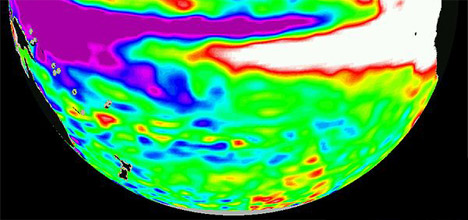
The El Nino weather pattern is well-established in the equatorial Pacific, and likely to persist through the rest of summer before weakening during the autumn.
File Graphic.
National Climate Centre scientists say that means more of the same for the next three months for most of the country.
For Northland, Auckland and the Bay of Plenty it means temperatures are likely to be near average. Rain is likely to be less than normal, along with river flows and soil moisture levels.
Mean sea level pressures are likely to continue to be higher than normal to the north of the country and lower than normal to the south, resulting in stronger than normal westerlies over New Zealand.
The National Climate Centre says late summer rainfall from January to March is likely to be in the below normal range in the north and east of the North Island, normal or below normal in Nelson-Marlborough, and normal in other regions.
Cooler than average temperatures are likely in all regions for the three month period. There will still be warm spells at times, especially in eastern regions in north-westerly wind conditions.
River flows and soil moisture levels are likely to be below normal in the north and east of both islands, but in the normal range in western regions.
Dry soil conditions are likely to continue in the north and east of the North Island, and in much of the eastern South Island, along with below normal stream flows.
The El Niño pattern is well-established, showing typical features of a mature event: weakened Trade Winds, enhanced tropical rainfall near the Date Line, and increased surface and sub-surface ocean temperatures from the Date Line eastwards across the equatorial Pacific. Almost all of the El Niño forecast models predict the El Niño event to peak over summer before declining in autumn.
El Niño events often lead to dry conditions in eastern and northern parts of New Zealand over the summer. Soil moistures are already very low at the start of January through most of the north and east of the North Island, and the eastern South Island.
Conditions have been particularly dry lately in Northland, the Bay of Plenty, and Central Otago. The latest guidance suggests drier conditions are likely in the north and east of both islands over the January-March 2010 period.

0 comments
Leave a Comment
You must be logged in to make a comment.