


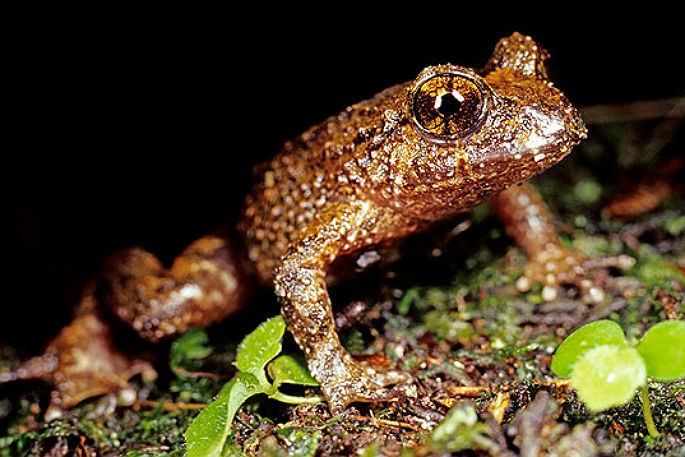
A unique native frog now has a safe space in the Western Bay of Plenty.
The Order in Council upgrading the status of public conservation land, which contains a population of rare Hochstetter frogs, was gazetted early this month and became official today.
The 400-hectare Otawa Sanctuary Area has been the subject of much debate over the past 20 years. In 1992, the first frog in Otawa was discovered by a volunteer on a Forest & Bird walk.
Since then, members of the Tauranga and Te Puke branches have spent years, and thousands of dollars, advocating for the frogs' protection. The area had been mined since the ‘60s, which posed a major threat to the habitat.
The mining ceased in 2009 but the land is still unstable and human disturbance is an issue. The tiny frogs can easily be crushed by walkers, horses or passing vehicles. Despite all these hardships, the population of frogs has persisted.
Hochstetter frogs are as unique to New Zealand as the kiwi and kakapo. They belong to an ancient genus called Leiopelma, which split off from other frog species around the time of the dinosaurs. Thus they exhibit many strange and primitive traits such as being voiceless, lacking external ears and giving birth to tiny froglets instead of tadpoles.
Hochstetter frogs are divided into 19 genetically distinct populations. The Otawa population is believed to be the smallest, at possibly just 200 individuals, and has been identified as nationally critical – one step off extinction.
In 2015 Forest & Bird hosted a meeting in Te Puke to launch the campaign to save the frogs and ask the public to make submissions requesting that the area be protected. A community driven, voluntary committee, named Te Whakakaha Conservation Trust, was established to allow discussions about restoration of the quarried area.
Now, after years of collaboration between the Department of Conservation, tangata whenua, the two Forest & Bird branches and the Trust, the land status has been successfully changed from stewardship area to sanctuary area.
'The frogs now have a chance and the sanctuary land status provides an opportunity for DOC and the community to restore the frogs' habitat, protect it from animal pests and ensure access for the public is restricted to give priority to the frogs' recovery and protection,” says trustee Carole Long.

1 comment
Well done
Posted on 31-12-2016 10:18 | By Wingnut
to the people that worked hard to make this sanctuary happen. Our native frogs are deserving of their place in the world. They've been here for a lot longer than us humans.
Leave a Comment
You must be logged in to make a comment.