


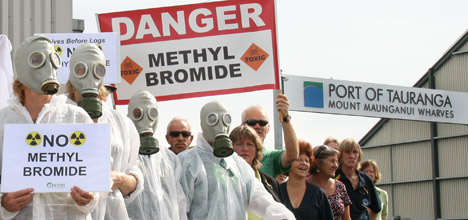
Protestors, many wearing gas masks, picketed the Port of Tauranga's Hull Road gate to protest the port's continued use of methyl bromide gas.
Methyl bromide's main use is to fumigate export log cargoes and the port is the largest single user of methyl bromide in the country, says Green party MP Sue Kedgley.
Methyl bromide protesters at the Mount.
"At the port they use about one third of all methyl bromide used in New Zealand," says Sue.
"It's highly toxic. It affects the lungs, the nervous system, and it can damage the ozone layer."
New Zealand signed the Montreal protocol to reduce its methyl bromide use in 1987, but has since then increased its use by 500 per cent, says Sue.
In 2009, New Zealand used 300 tonnes - about 100 tonnes in Tauranga.
"In Tauranga it's used in a very primitive way," says Sue.
"They take piles of logs, put a tarp on, spray the methyl bromide, leave it for a time, then remove the tarp. It's a heavy gas and depending on the wind it can drift. It has no smell."
"It's irresponsible of the port to be using it in this primitive method," says Sue, as it puts residential areas at risk in certain wind conditions.
Methyl bromide fumigation is banned in Europe and is currently being removed from agricultural use in the United States due to its range of toxic effects and ozone depletion. The Environmental Risk Management Authority (Erma) has received 92 submissions to its methyl bromide reassessment process and intends to hold five hearings in Wellington, then Nelson, Picton/Blenheim, Tauranga, and Auckland next month.
The Coalition against the use of Methyl Bromide includes Soil and Health, Combined Trade Unions, Guardians of the Sounds, the Green Party, Maritime Union of NZ, the Rail and Maritime Transport Union, Pesticide Action Network Aotearoa New Zealand, Safe Food Campaign, Marlborough Environment Centre, Alliance Party and others.

3 comments
Posted on 28-04-2010 17:17 | By The author of this comment has been removed.
Methyl bromide has been associated with 6 deaths from Motor Neurone disease in Nelson and is listed in the Class 1 most highly toxic category by the EPA. And are you trying to say that destruction of the protective ozone layer is not dangerous to the public? One thing I do agree with you on Raz: the public need the full story!
good on ya
Posted on 28-04-2010 20:43 | By johnrugbynz
well done
Drama Queens
Posted on 29-04-2010 08:41 | By RawPrawn
ERMA alreay has this in hand with its proposed five hearings where, no doubt, the Coalition will have its full say. This demo is simply more typical Greenie grandstanding
Leave a Comment
You must be logged in to make a comment.