


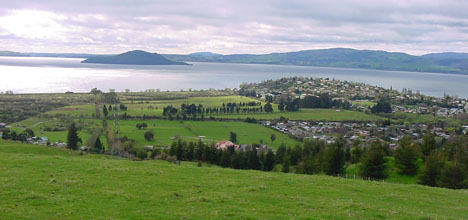
A live monitoring buoy sitting quietly in Lake Rotorua is providing comprehensive information on lake conditions and an insight into climatic factors that may be influencing algal bloom developing there.
The buoy, near Mokoia Island, is operated by the University of Waikato and provides continuous monitoring of a variety of lake conditions, supplementing Bay of Plenty Regional Council's lakes monitoring programme.
Council scientists have analysed a late season algal bloom and found it to be the same late-blooming Microcystis species, a blue-green algae that has caused problems in the lake in recent seasons.
Council environmental scientist Matt Bloxham says previous tests have shown the species to be non-toxic, but he plans to test samples again for toxins as a precaution.
The buoy provides continuous information about wind speed and direction, air temperature, barometric pressure, humidity, rain and water temperature at a dozen different depths. Probes have been added to measure bloom-causing cyanobacteria.
'Having the live monitoring buoy is particularly useful because it allows us to investigate which climatic factors align with any particular bloom event,” says Matt.
Water temperatures have been exceptionally warm, and the buoy has recorded periods of unusually calm weather and warm temperatures over the last six weeks that have promoted the development of the current blue-green algal bloom.
At this time of year fewer people are swimming or water skiing so public exposure to the algal bloom is likely to be lower than in summer months. However, people using the lake should avoid contact with the scums, and if contemplating a swim they shouldn't wait for warning signs to appear.
'Data collected from the buoy enhances our knowledge of the lake.
'Professor David Hamilton's University of Waikato team is also building a 3D computer model using some of the buoy data, which will improve our knowledge of the mechanisms controlling bloom development.”
Toi Te Ora Public Health Service medical officer of health Dr Jim Miller says people should use their judgement about using the water.
'If there's a smell, the water looks murky or there's a scum on the surface you shouldn't go in, and keep pets away from algae on the shore.
'We'll be keeping an eye on things and people can check www.toiteorapublichealth.govt.nz for regular updates, as we can't put signs up everywhere.”

0 comments
Leave a Comment
You must be logged in to make a comment.