


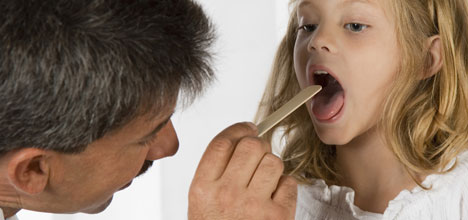
Children living in the Opotiki area are less likely to develop rheumatic fever due to the implementation of school-based throat swabbing by Te Ao Hou Trust and Whakatohea Iwi Social and Health Services.
'By detecting and treating ‘strep sore throat' infection amongst Opotiki school children, rheumatic fever is less likely to develop,” says Toi Te Ora Public Health medical officer of health Dr Phil Shoemack.
'The success of the Opotiki project has resulted in similar campaigns being established in the communities of Kawerau and Murupara, which also experience high rates of rheumatic fever.
'The Kawerau project led by Eastern Bay Primary Health Alliance (EBPHA) began school-based throat swabbing in February 2011.
'The Murupara project led by Te Ika Whenua Hauora is due to commence throat swabbing in May 2011.”
EBPHA rheumatic fever clinical lead coordinator Sandra Ball provides clinical advice and oversight for the school based rheumatic fever projects in all three communities.
The campaign was launched in response to a 2008 report which found that the rate of rheumatic fever in the Bay of Plenty was three times higher than the New Zealand rate. Those most at risk of developing rheumatic fever are Maori children aged 5-14 years. The Bay of Plenty District Health Board prioritised this issue and put its support and funding behind the prevention campaign.
Toi Te Ora – Public Health is running an awareness campaign across the Bay of Plenty promoting the key messages of ‘Sore Throats Matter' and ‘Sore Throats Can Break a Heart.'
These messages highlight the fact that a ‘strep sore throat' can lead to rheumatic fever which can cause permanent heart damage (rheumatic heart disease).
A child diagnosed with rheumatic fever requires long-term follow up including monthly injections of penicillin to stop further attacks.
Rheumatic fever often starts with a sore throat (a streptococcal infection).
A few weeks later the child may develop sore or swollen joints, skin rash, fever, stomach pain and jerky movements.
Although these symptoms may disappear, the heart valves may be damaged and this damage may be permanent.
'Fortunately, rheumatic fever is preventable, provided sore throats are treated correctly. If your child complains of a sore throat take them to the local health centre to be checked,” says Phil.
'If a ‘strep throat' is diagnosed, the doctor will usually prescribe a 10 day course of antibiotics.”
Taking sore throats seriously will help prevent life long illness and suffering for our tamariki. For more information, visit www.toiteorapublichealth.govt.nz/rheumatic_fever

0 comments
Leave a Comment
You must be logged in to make a comment.