


Eating more fruit and vegetables is among the solutions to the world-wide epidemic of chronic health problems caused by increasing consumption of ultra-processed foods, Professor Jaap Seidell from Vrije Universiteit in Amsterdam.
'An epidemic of chronic non-communicable diseases is sweeping the globe,” he told delegates at the the first ever International Symposium on Kiwifruit and Health in Tauranga yesterday.
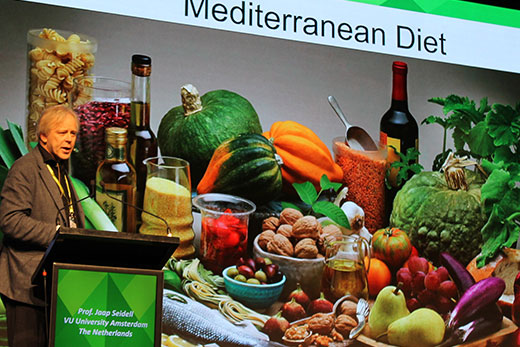
Professor Jaap Seidell says the Mediterranean diet is an example of a balanced diet which can help in diseases such as diabetes. Photo: Elaine Fisher
'The high and increasing intake of ultra-processed foods leads to an increase in the intakes of sugar, salts and trans fatty acids. Energy dense, nutrient poor foods are the most attractive option to many consumers in terms of price, convenience, taste and availability.
'This is at the expense of minimally processed or unprocessed basic foods such as fruit and vegetables.
'Today, there is general consensus that for much of the world, nutrient-poor food is a key driver in escalating rates of obesity and related chronic disease.
'Improved health outcomes are associated with diets high in nutrient-rich, low energy-dense fruit – such as kiwifruit,” says Japp who is the Netherlands' foremost obesity specialist.
The diet-related health problems faced by millions can be prevented or postponed by healthier lifestyles, including a balanced diet such as the Mediterranean Diet, with a focus on fruits and vegetables, whole grains, legumes and nut, fish and healthy fats like olive oil, he says.
However, to make that change happen, creating environments that make healthier choice the easiest choice is necessary.
'This requires regulation of the food industry environment by national and local governments as well as voluntary inputs by agriculture, the food industry and consumers,” he told the 200 delegates from around the world attending the conference.
Jaap says not all fruit are equal with some like pineapple and banana being high in sugars which can spike blood sugar levels. Green kiwifruit is among the fruit which people should eat more of because it is a low sugar fruit.
Research shows children between the ages of two and 18 are now eating more fruit, but not more vegetables. Parents have the biggest influence on their children's diet. 'Health eating habits are established early in life, and the most important time is the first 1000 days after conception.”
Close to 350 million people in the world have diabetes and Jaap says Type 2 diabetes is among the diseases which can respond to changes in diet and increased physical activity.
The World Health Organization warns that diabetes will be the seventh leading cause of death by 2030, and United Nations Secretary-General Ban Ki-moon says people must take steps towards leading healthy lives while governments create conditions to stem the global epidemic.
'Multiple actions can be taken to reduce the impact of diabetes, through adopting healthy lifestyles, such as partaking in physical activity and healthy diets, to government action on curbing the marketing of unhealthy foods and ensuring health systems provide the required services and care for people living with the disease,” he says.
Jaap agrees governments have a vital role to play and told SunLive government intervention in New Zealand, including in the form of a tax on sugary drinks, shouldn't be seen as 'Nanny state” but instead as responsible measures to improve the health of the nation.
He isn't a fan of fruit juices as a convenient way to get children to consume more fruit either, as they contain high levels of sugar without the other attributes found in whole fruits.
Fruit and vegetables provided free to school children, and school gardens which enable children to connect with their food are important steps to changing habits.
However, Japp says making major changes in diet and lifestyle aren't easy. Other factors such as poverty, poor housing, inadequate food and nutrition, lack of education, unemployment, poor housing and environmental health hazards all contribute to unhealthy lifestyles and diet.
Processed and unhealthy foods may appear cheap to the consumer but Japp says their true cost is far more than the retail price, especially when it comes to health.
He believes it wouldn't be hard for supermarkets to influence the increased consumption of fresh fruit and vegetables, by decreasing their cost and increasing the price of processed foods.
Buying habits are already influenced by the way products in supermarkets are placed and displayed and consumers can influence how that's done by should telling supermarkets what they want, he says.

3 comments
Overit
Posted on 14-04-2016 18:10 | By overit
This is not rocket science.Just look at the queues at McDonalds, BurgerKing and Kentucky Fried. We have a large vegetable garden, a young orchard and steer clear of processed foods. We are not fat or unhealthy, work hard and cycle.
Obesity
Posted on 15-04-2016 07:59 | By Amnesia Oasis
85% of Taurangans are obese. If you think I am exaggerating, just stand on any street corner and observe. Despite the warnings of people such as Professor Seidell, the majority of the population take no heed and continue stuffing themselves with short life expectancy junk food. Just observe the eating habits in any shopping mall food court on the weekend to get the full picture.
Preaching to the converted
Posted on 15-04-2016 15:59 | By astex
The opinions of the professor and all the other health groups is a complete waste of time if no-one is listening. The people with the problem will not be at the meetings or reading the paper as they will be planning which fast food outlet to get dinner at tonight.
Leave a Comment
You must be logged in to make a comment.