


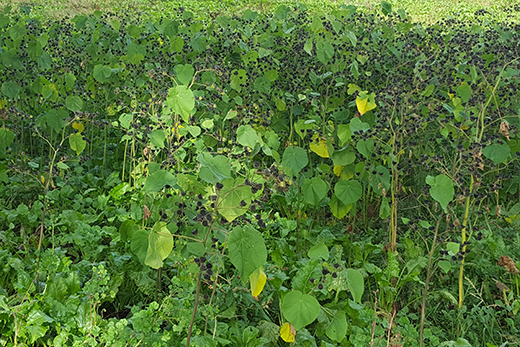
The Waikato Regional Council is working with the Ministry of Primary Industries to contain and eradicate two new outbreaks of pest plant ‘velvetleaf' in the region.
The outbreaks at Matamata and Piopio have been linked to potentially contaminated imported fodder beet seed which is believed to have led to a number of velvetleaf finds in the South Island.
Unwanted pest plant velvetleaf has been discovered in Matamata and Piopio. Photo: WRC
WRC pest plants team leader Darion Embling explains velvetleaf is a prolific seeder which kills off crops that it infests and is an unwanted organism under the Biosecurity Act.
'We recently became aware of the new infestation sites in the Waikato and we're supporting the ministry in its efforts to respond to them,” he says.
Velvetleaf was first discovered in Waikato in 2011 when it was detected in maize on a number of farms mostly in Matamata-Piako district. The source of this outbreak is unknown.
Darion says the regional council contained this outbreak and is working towards complete eradication.
'We're keen to help ensure the new outbreaks at Matamata and Piopio also don't lead to widespread problems,” he says.
NZ First primary industries spokesperson Richard Prosser is questioning MPI Biosecurity's lack of resources and the Government's 'faulty and incompetent approach”.
He believes the outbreak adds more salt to the wound for farmers already dealing with low payouts this season and is calling for Government compensation for farmers.
'Farmers have laid down winter feed crops using expensive imported seeds, only to discover they now have a devastating plant pest on their hands,” says Richard.
'Does this government require absolutely no testing of imported seeds? Surely seeds are the riskiest of risk items and this shows there's been no learning whatsoever.
'Farmers need to ask Minister Guy tomorrow where the additional spending on biosecurity is from National's much trumpeted biosecurity levy, or holiday tax. Given it was really a dollar-for-dollar replacement for biosecurity funding cuts, farmers are right to be disappointed.”
Ricard says the velvetleaf outbreak is another 'biosecurity cockup” by the Government who he believes should compensate farmers accordingly.
Farmers are urged to keep an eye out for velvetleaf and to check sites where they've used fodder beet seeds in the last few years. They are also advised to photograph any plants and mark their location so they can be found again easily.
The ministry warns against pulling up plants and says a technical expert will visit and carefully remove any plants to make sure velvetleaf seed, if present, is not spread.
For more information about velvet leaf visit the Ministry for Primary industries website at: www.mpi.govt.nz/alerts
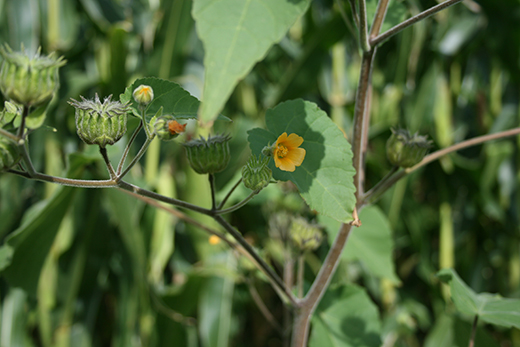
Velvetleaf flowering. Photo: WRC

2 comments
Smoke in mirrors
Posted on 21-03-2016 11:02 | By Towball
National news coverage on TV has already identified the issue with consignments entering our ports with minimal and often no intervention from authorities as to the sheer volumes being handled which is obviously impacting on our economy with significant implications. Is the need for profit so important that it out measures responsibility and implemented guidelines that currently exist as opposed to another review ? . Surely room for additional employment without impacting on the choking profits these companies are privy to along with Government taxes duty etc. The consumer gets hit yet again with no accountability from the mentioned so when farmers for example have no farms you will have nothing to ship or un load equally. Hit back NZ. minority governing Majority ridiculous this is happening let alone being supported Nationally.
TOOO MANY COWS
Posted on 21-03-2016 22:59 | By The Caveman
and the farms are not capable of producing the required grass and other crops to feed the grossly overstocked farms/animals . CHEAP answer, IMPORT cheap contaminated feed (including palm kernel and grain products) from overseas. While the source of the current problem is
Leave a Comment
You must be logged in to make a comment.