


Tauranga Police have been cleared for using reasonable force to restrain a man during an arrest on September 4, 2014.
However, the Independent Police Conduct Authority found that police failed to fulfil their duty of care towards the man once he was in custody.
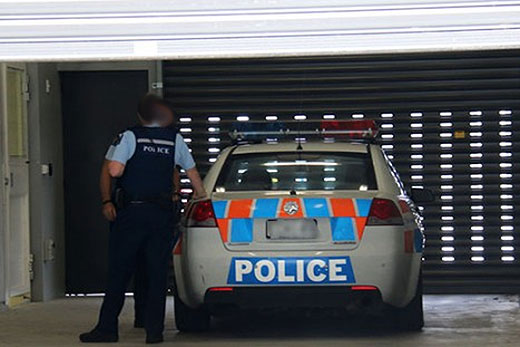
The Independent Police Conduct Authority found that police failed to fulfil their duty of care towards a man once he was in custody last year. Photo: File.
In a report released today, Judge Sir David Carruthers says the man, referred to as Mr X, told the authority that while he was being transported to the police station, a police officer kneed him in the stomach and punched him repeatedly in the face until he lost consciousness.
Police were called to attend a fight outside an address in Gate Pa. When officers arrived at the scene they saw a group of four men fighting.
Mr X was arrested for disorderly behaviour and escorted by police to the patrol car, during which time he actively resisted and refused to stand up and walk.
'Officers noticed that Mr X was bleeding from the mouth and had blood around his left eye, as well as redness and swelling to his face,” says the report.
'They also noted that Mr X was very agitated and suspected he was affected by drugs. Officers had to forcibly place Mr X in the patrol car, and said while being transported to Tauranga Police Station Mr X continued to struggle violently.”
The officer in the back seat with Mr X stated that Mr X bit him on the forearm and kicked him in the chest multiple times.
The officer said that he attempted to defend himself against Mr X's assaults by punching Mr X twice in the solar plexus and three or four times in the face before using his body weight to pin Mr X against the door.
The man subsequently pleaded guilty to disorderly behaviour, resisting arrest and assaulting police.
In his report, Judge Sir David Carruthers says the authority is satisfied that, due to Mr X's continued and violent resistance, the officers involved used reasonable force during the arrest and when transporting him to the police station.
'While in the police car, on the way to the station, one of the officers used force, which was justified in the circumstance,” he explains. 'The officer acted in self-defence and in response to Mr X's own actions.
'The officer was stuck in a confined space in the back of a moving police car. He used reasonable force to protect himself and subdue Mr X's continued violent resistance to his arrest.”
In conducting its investigation into this incident, the authority also considered whether police fulfilled their duty of care towards Mr X when he arrived at the police station.
CCTV footage from the station shows an officer pulling Mr X from the back seat of the car and letting him fall to the floor, hitting his shoulder and head.
It then shows the same officer appearing to deliberately scuff the back of Mr X's shoulder with his foot. Mr X was motionless and unresponsive and was not providing any resistance at this point.
Police policy requires that an ambulance should be called for semi-conscious, intoxicated prisoners, and that a prisoner assessed ‘in need of care' – as Mr X was – must be examined by a health professional as soon as practical.
Sir David says police knew Mr X had facial injuries, had been fighting before his arrest, that force had been used on him in the police car and that he was likely affected by alcohol and drugs.
'Despite some officers recognising that Mr X needed medical care, police did not call a doctor or paramedic to examine him for the nine hours he was in custody,” the report states.
'In addition, police failed to comply with policy in relation to conducting a timely risk assessment of Mr X.”
While acknowledging the stressful and violent circumstances of the journey to the station, the authority found that more care should have been taken when Mr X was removed from the police car.
'Furthermore, police did not fulfil their duty of care towards Mr X while he was in custody,” says Sir David.
'Despite him being at various times clearly unresponsive, incapacitated and perhaps semi-conscious, police did not seek medical attention for him and did not conduct a formal risk assessment as soon as possible.”
Western Bay of Plenty area commander Inspector Clifford Paxton says police accept the findings of the authority.
'The officers had dealt with a challenging and volatile situation with one officer being assaulted and suffering an injury as a result,” says Clifford.
'However, we accept the IPCA conclusion that a risk assessment needs to be conducted sooner and medical attention sought; not withstanding that he was offered and declined medical assistance.
'We have debriefed the officers involved and carried out a review and we will look to implement any learnings that come out of that review.”

0 comments
Leave a Comment
You must be logged in to make a comment.