


The Waikato Regional Council is facing a range of environmental and production pest challenges this year following a busy 12 months controlling unwanted animals and plants.
They include the Mediterranean fanworm threatening Coromandel mussel farms and wallabies spreading from the Bay of Plenty further into the Waikato region.
A recreational boat heavily fouled with Mediterranean fanworm which was discovered in the Coromandel Harbour in June of this year. Photo: File
A report tabled at council's Integrated Catchment Management Committee meeting today outlines highlights of pest management operations during 2014-15, which has cost a total of $6.2 million.
Committee chairman Stuart Husband said pest control work was a core part of the council's work to support the environment, communities, businesses and farmers.
'We've had some good successes in the last year and we want to keep up the momentum we've generated,” says Stuart.
'Pest animals and plants have the potential to significantly damage our native species and special places, and interfere with our economic well-being, particularly by the threat they pose to farming and cropping, as well as the marine environment.”
Stuart adds: 'For its part, the council is committed to energetically staying on top of pest threats and working closely with partner agencies, iwi and the wider community to achieve our goals.”
A further $1.3m budgeted for last year will be applied this financial year, while the new budget for this year is $7.4m.
This year's funding includes an extra $250,000 to tackle Mediterranean fanworm on the Coromandel, a pest which can cause production problems on marine farms and damage the natural marine environment.
Developing effective surveillance and control techniques for wallabies is another challenge.
'The animals are slowly expanding their range from the Bay of Plenty into the Waikato between the Kaimai-Mamaku ranges and the Waikite Valley towards Taupo. Wallabies can damage pasture, crops and native plants.”
Other challenges include keeping on top of kauri dieback after it was discovered on the Coromandel and implementing various new rules and policies.
REPORT HIGHLIGHTS:
- 47 hectares of control on alligator weed which can significantly hurt farm production and create environmental problems
- Extensive control of other types of pest plants, including a new eradication programme for lantana
- Excellent results in priority possum control areas thanks to a strong performance by contractors and staff
- Excellent results in the rat and possum pest control carried out under Project Halo, designed to increase the numbers of native birds breeding and living in Hamilton
- A continuation of the award-winning koi carp trap and digester trials involving turning this pest fish into fertiliser.
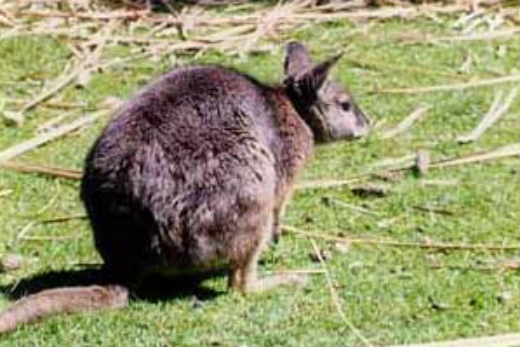
The Waikato Regional Council says wallabies are spreading from the Bay of Plenty further into the Waikato region. Photo: WRC

1 comment
Wallabies
Posted on 12-08-2015 15:47 | By Crash test dummies
Send them home, they cant really play rugby anyway, besides it will lift the IQ on both sides of the Tasman.
Leave a Comment
You must be logged in to make a comment.