


Summer shark scare stories appearing in Bay of Plenty media as the peak holiday season approaches are being slammed by two Tauranga marine conservationists.
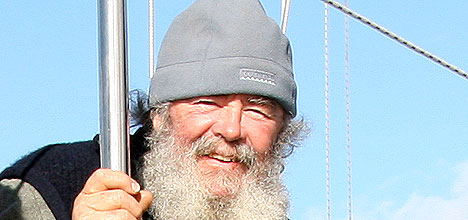
Tauranga tourism operator Graeme Butler is labelling media reports of shark danger in the Bay of Plenty as 'demonising”.
Gemini Galaxsea skipper Graeme Butler and internationally recognised wildlife photographer Kim Westerskov say there are far more sharks in the sea than are ever seen along the beaches.
Melanoma and drunk drivers are far more dangerous than sharks, says Graeme.
'There's always sharks in the ocean and there are always sharks out here in the Bay of Plenty,” says Graeme.
'I think the last fatal shark attack was in 1971 in these waters. It came about because the guy had been spear fishing way back in the early days when people made wetsuits out of tractor tyres.
'He was spear fishing and tying his catch to his belt through the gills. He was swimming along with half dead fish bleeding and dripping on his side so at the end of the day he couldn't expect not to get a shark.”
Over the years he's tried to get people in the water with local sharks, but it has proved nearly impossible. Sharks mostly swim away from people.
'While people demonise certain sea creatures, then the whole ocean ecosystem is unsafe,” says Graeme.
'It makes it okay for people to go out there and harass big animals like sharks, and a lot of them are actually quite rare these days.
'A lot of them are very similar to warm blooded animals. They give birth to live young, some of them, and they are also extremely intelligent.
'I feel a little bit gutted when I see all this hype against some of these creatures that I really cherish.
'The animals are unsafe enough now without them being demonised.
'It's just about respect of the ocean. We've seen lots of sharks and we have never had any incident of any shark harassing anybody or harassing any boat.
'If you wanted to go and find a shark to swim with or go and take photographs of, you would be struggling, I think.”
The large bronze whalers often seen along the ocean beach during summer months are not a danger to people, says Kim Westerskov.
'The bronze whalers we get here, I don't think they have one serious attack to their name,” says Kim.
'If you look at their mouths and look at their teeth, they are not designed for eating big things, they are designed for catching small things. They look kind of scary because they are big and they are a shark, but the chances of them attacking are pretty minimal. I feel pretty good in the water with sharks.”
There are always sharks in the Bay of Plenty says Kim.
Most sharks are smaller than people and generally don't attack targets larger than they are.
'They are a predator and they know about predation, and if they see something bigger than them, they bugger off,” says Kim.
'People are probably more solid than the average shark, most are not as big as a three metre bronze whaler, but a lot of the sharks are only about two metres and quite slim.
If not bigger than them, we are big enough, I mean they don't do a great deal of thinking. 'They have got very primitive brains, basically they have a few instincts that have been working for hundreds of millions of years and that includes, if there's something big they go somewhere else – and keep out of trouble.”
Kim's comfortable swimming in the water with sharks. There are two basic shark swimming styles, the normal languid glide – and a more jerky spasmodic style that if you see, you get out of the water.
Or, if you are a photographer you swim towards them. It triggers another instinctive response, says Kim.
There was a blue shark in Tonga that swam straight at Kim and bumped into his camera lens before swimming off.
'It's part of how they check out if something's worth eating,” says Kim.
'Their eyesight's not good. They have a bit of a smell, they come in and can give it a nudge.
'If it's soft and squishy it might be worth eating. If it's hard like Westerskov's camera then it's not worth eating.”

6 comments
Sharks
Posted on 23-12-2010 12:04 | By IanS
As a member of the local dive club, we regularly have encounters with sharks. On a couple of occasions they have taken speared fish from the floats of spearos and on other occasions they have just swum in to check us out. At the Poor Knight Island we often snorkel with the Bronze Whales and enjoy their company. So I agree the problems are in people heads not the sharks.
Not so sure
Posted on 23-12-2010 12:42 | By morepork
Sharks, to me are fearsome, beautiful, creatures that are an end product of Evolution, being perfectly adapted to their environment. I accept they have more right to be in the Ocean than I have, and while it is nice to hear experts telling us they are not really dangerous, I am mindful of the fact that there has never been a shark attack recorded against a Human who was on dry land...
Leave sharks alone
Posted on 23-12-2010 15:47 | By nightbeat
Butler and Westerskov know what they're talking about: instead of arousing public hysteria against these beautiful animals the media should be targeting the real enemies, such as boy racers and P addicts
Out of sight out...
Posted on 23-12-2010 21:44 | By Gary gc
They are always there and harmless but shark stories sell papers. If we clear beaches will we clear the pubs and roads at night as a precautionary action also?
Nothing new
Posted on 24-12-2010 09:57 | By The author of this comment has been removed.
Sharks are nothing new. This is a media beat up by a sad and tired paper. The shark sighting that clauses the main beach was actually on the pilot bay side. There are always sharks in the harbour. Hunters creek is full of them but you hardly ever see. But just pilots who fly over there.
yip
Posted on 24-12-2010 23:46 | By Capt_Kaveman
i have seen a many shark in shallow water as 2 meters along the Omanu and Arataki beach and yet with so many people in the water in both directions i yet to here of and attack
Leave a Comment
You must be logged in to make a comment.