


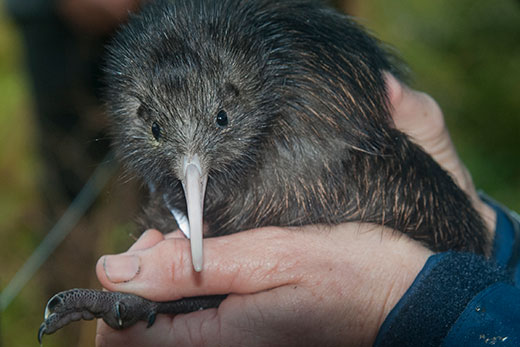
A crisis faces the kiwi – there's less than 70,000 birds in the wild and population numbers are dwindling by two per cent every year.
To save our national bird and taonga from extinction the Government has pledged $11.2 million from Budget 2015 to turn the two per cent annual loss into at least a two per cent annual increase.
The Government has announced it will invest $11.2 million dollars to help save the kiwi. Photos: File
Announced this week, the $11.2m will be spread over four years and be distributed to local protection groups by the Department of Conservation and independent trust Kiwis for Kiwi.
Kiwi breeding programmes on public and private land will be scaled up, with New Zealanders encouraged to use their farming skills to raise and release many more kiwi into the wild.
This extra fund will also enable conservationists around the country to adopt new technologies and techniques in an effort to combat predators in their local communities.
In order to get a portion of the $11.2m, each protection groups will need to make an application for funding to DOC and Kiwis for Kiwi.
Whenuakite Kiwi Care chairman Arthur Hinds is welcoming the decision, saying extra help for local protection groups would go a long way.
'Our group puts in about 1,800 hours of volunteer work a year,” says Arthur. 'We also employ an operations manager to coordinate the whole outfit and that's a crucial part of our operation.
'The guy's really dedicated, he's been with us seven years now and even though we're not fully funding him he still goes above and beyond what's asked of him simply to protect kiwi.”
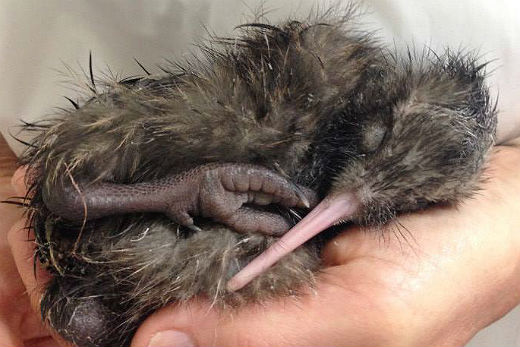
About 150 locals, landowners, volunteers and sponsors belong to the Whenuakite Kiwi Care group which was established as a trust in 2000.
At the heart of the trust there is 'a hardcore group” of up to seven people who run and manage the operation.
It aims to promote the welfare of kiwi and their habitat on conservation and private land which covers some 4000 ha, between Tairua and Hot Water Beach.
Arthur says along with monitoring kiwi, coordinating volunteers and compiling monthly reports, the group's operation manager also services and checks about 540 traps spread over 100km of trap line.
'Without this role we would struggle, he's been a big part of our success. We would like to employ him for 100 hours a month, but at the moment we struggle to get funding for 50 hours a month.”
But the numbers truly speak for themselves.
Arthur says when the group was established 15 years ago there were about 29 kiwi in their patch. A call count survey carried out in 2010 discovered 98 kiwi, while this year's survey found 150 kiwi.
'We don't handle our birds at all, we rely on a kiwi count call,” explains Arthur. 'From that about 65 per cent of the kiwi call which gives you an indication that numbers are increasing.
'But numbers are increasing in areas of the country where predator control is carried out.”
DOC will also double the area of public conservation land it actively manages for kiwi, scaling up pest control and using the latest acoustic monitoring technology to keep track of populations.
The department will now be able to employ ten more staff to work on kiwi protection including nine rangers and a science advisor to oversee monitoring and data collection.
Kiwis for Kiwi executive director Michelle Impey says the $11.2m investment sends a strong signal the Government sees the plight currently facing kiwi today.
'The timing is very good they are just about to assess the applications we've received this year,” says Michelle. 'It'll be a little bit of ‘status quo' for us this year in that we will continue to support existing groups as we can because it's important to keep their work going.
'But what it will allow us to do in the future is it to start directing the work. So if we see gaps in what's being done on the ground we can help to initiate work to help plug those holes.
'It's a really exciting position for us.”
For more information about Kiwis for Kiwi and local protection groups visit: www.kiwisforkiwi.org

0 comments
Leave a Comment
You must be logged in to make a comment.