


Last year will be remembered for being somewhat back-to-front according to MetService meteorologist John Law.
That's because September in Tauranga was the warmest on record, while 2014 began and ended on a cooler note.
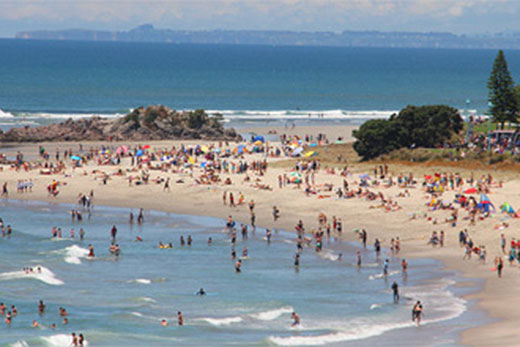
2014 saw the warmest September on record for Tauranga.
'With a cooler than usual start and finish to the year for much of the country, the middle months were very mild,” says John
'January was unusually cold across much of New Zealand, leaving many people wondering when summer would arrive. In contrast, April and June were extremely mild, with Kiwis questioning where winter was.”
May temperatures were above average for the South Island, while numerous temperature records were broken right across the country in April and June.
Nationally, it was the warmest June since records began, while September temperatures were also above average for the North Island and the warmest on record for Tauranga.
In contrast, October saw frequent southwesterlies and several significant snowfall events.
Notably, November refused to warm up for most regions-it was unusually chilly for western and inland areas, with frequent hail events across the country, and extremely late frosts for many.
Cooler temperatures continued into December, but were rapidly replaced by warmer northerlies over the country.
'Overall, 2014 ended up looking 'about average' with respect to temperature, for many parts of the country,” says John.
'The exception was north-eastern parts of both Islands, which were warmer than usual, as well as between Whanganui and Wellington. Tauranga, Napier and Nelson experienced their third warmest year.
'But the year was actually a roller-coaster of temperatures-swinging from unusually cold to extremely warm, and back again.”
With regards to rainfall, 2014 exhibited large swings between very dry periods and extremely wet ones.
'This reflected the weather patterns flip-flopping between highs parked over the country, north Tasman lows that resulted in wet conditions for northern New Zealand, and cold, stormy southwesterlies,” adds John.
It was a drier than normal year for much of the country. The exceptions were Northland, Gisborne, Oamaru and the southwest of the South Island, as well as Auckland and Wellington, where near normal annual rainfall was observed.
In the case of Northland, north Tasman lows produced several deluges, while southern New Zealand was battered by southwesterlies on occasion.
'True to form, rainfall in 2014 yo-yoed between extended dry periods and extreme wet spells,” says John.
'This would rate up there as a very challenging year for the farmers and growers around the country.”
The most damaging weather events of the year included Cyclone Ita in April, which brought heavy rain and gales from Northland down to Nelson and punishing winds to the West Coast, as well as a rapidly developing low near Whangarei which produced heavy rain and severe gales in June and the Canterbury floods of March.

0 comments
Leave a Comment
You must be logged in to make a comment.