


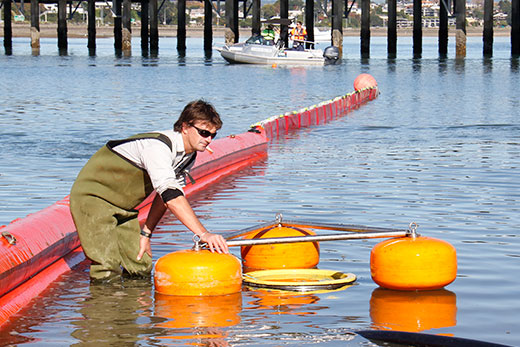
Responding to an oil spill like the Rena takes skills and practise; and that's exactly what response volunteers got yesterday when they hit the water to refresh their training.
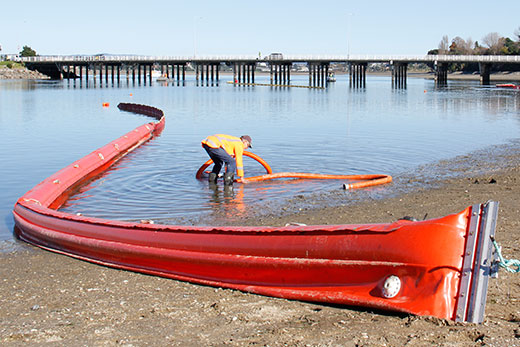
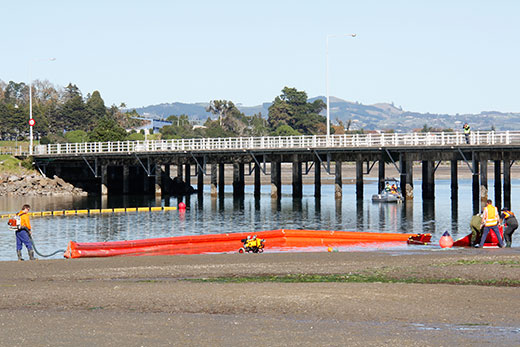
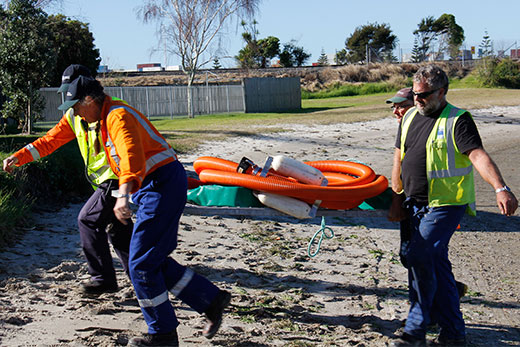
About 20 volunteers were out in the Tauranga Harbour deploying booms as part of the regional council's oil spill response training.
A weir skimmer which collects and pumps oil out of the water was one of the pieces of equipment used in the exercise yesterday.
Along with Regional Council staff, Maritime New Zealand National On Scene Commander and exercise leader Mick Courtnell says personnel who took part ranged from the Cook Island harbourmaster to a couple of Port of Tauranga employees.
'What happened is that the regional council response team are out here re-validating their oil spill recovering skills.
'Their initial training would have been undertaken by Maritime New Zealand some years ago and these folks are just revalidating the skills.
'It's a good day out on the ground and their getting hands-on with the equipment again.”
On display was a good amount of teamwork, says Mick, along with good skill retention with the equipment and planning requirement.
'So all in all, it's been a useful day for them.
'The equipment they are using is part of the standard stock pile used around the country.”
The equipment, including the use of oil-trapping booms, is used across the board in oil spills, such as the one that resulted when the Rena hit the Astrolabe Reef off the coast of Tauranga in October 2011.
About 350 tonnes of heavy fuel oil leaked from the ship that grounded on the morning of October 5.
'In the earlier part of the Rena response most of this equipment was used, it was then supported by other equipment stockpiles from around the country, including the MNZ national held stockpile of equipment.
'The stockpile here in Tauranga is around about 2000m with a variety of types of boom, but essentially it gives ability to contain any spills around a ship or to contain, and deflect oil that has been through the harbour.” He says this equipment is kept in a fairly high state of readiness so that it can be deployed at short notice.
'Within a couple of hours some obvious response mechanism would be in place to a spill.
'Vessels that would require this equipment are ships at a wharf loading and unloading and small fishing vessels carrying diesel. Ships running aground on a reef a less frequent.”
Training is an on-going process, says Mick, and anyone keen get involved in this sort of training should contact Tauranga Council direct and put their name forward.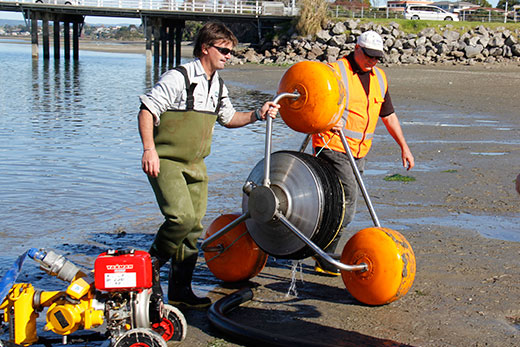

0 comments
Leave a Comment
You must be logged in to make a comment.