


Bay of Plenty orchardists are hoping the inspection of a further 162 fruit fly traps in Whangarei today doesn't turn up any more of the unwanted pest.
Ministry for Primary Industries staff are today checking the traps in 'Zone B” - a circle covering 1401 properties, extending 1500 metres from where the single male fly was discovered on Tuesday, January 21.
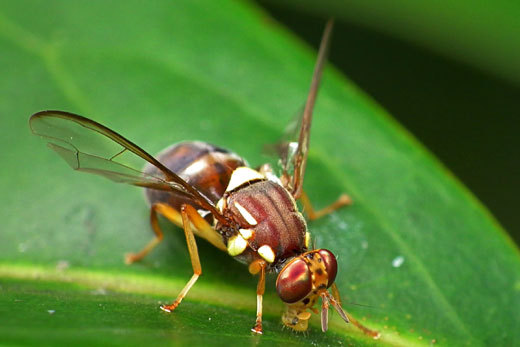
The Queensland Fruit Fly. Photo: Wikipedia.
So far, inspection of 90 lure traps inside the restricted areas close to the original find have failed to turn up any more of the insects.
Today approximately 70 personnel from MPI and operations service provider AsureQuality are inspecting gardens and rubbish bins for any signs of fruit flies and collecting and re-setting traps to detect any flies present. They are also collecting fruit and vegetables from home gardens and also from disposal bins for analysis.
While the detection of the first fly is cause for concern, the MPI says it does not constitute an outbreak of the insect and so far New Zealand's trading partners have not taken any action to stop the importation of fruit from this country.
However, should a breeding population of insects be found, it could change.
The absence of fruit flies in NZ allows for fresh export produce to be certified as free of infestation and exported to areas where fruit flies do not occur.
Many countries are likely to close their borders to New Zealand produce if a fruit fly outbreak was detected.
When fruit fly was discovered in Auckland in 1996, China shut its doors to New Zealand exports for two years.
The absence of the pest also means the kinds of crops the insect prefers can be produced in NZ without a need for the management of fruit fly damage, which results in savings in terms of pest management inputs.
Its potential adverse impact on the economy is the reason MPI spends $1.4million per annum on a monitoring programme that includes 7500 traps set up and maintained from September to June of each year.
Traps are placed in grids, concentrating in populated areas, which are centres for tourism and trade; areas of significant horticultural activity and areas specified as being climatically conducive to the establishment of fruit flies
When an insect is found, as in the Whangaeri case, the response steps up significantly. Restricted zones around the initial find were put in place early last week, personnel were sent intothe area and a field laboratory set up to examine fruit and vegetable samples collected from within the affected area and to identify any suspect insects collected.
The first trapping results for Queensland fruit fly in Whangarei detected no suspect flies in all 83 traps collected from Zone A and in all 90 lure traps from outside the Controlled Area.
The Controlled Area was put in place on Thursday, January 23 with the issuing of a Controlled Area Notice. This restricts the movement of fruit and some vegetables out of the specified area
All properties within the entire controlled area have been visited and residents provided with full information about the fruit fly. All these properties have also been inspected for the presence of fruit trees and vegetable gardens with host plants for the fruit fly.
A total of 211 wheelie disposal bins are in place at private homes and key locations throughout the Controlled Area so residents can dispose of any fruit or vegetables or produce waste. MPI is collecting these, taking some material for analysis and safely disposing of the material.
Twelve boundary road signs are in place marking the controlled area.
MPI has staff present at the Countdown supermarket within the area, and is handing out information leaflets and informing customers about restrictions on fruit movement out of the zone.
Staff are in continual contact with other retailers in the area to liaise and ensure that they and their customers are aware of the restrictions.

0 comments
Leave a Comment
You must be logged in to make a comment.