


Fire safety warnings seem to be going up in smoke with statistics showing less than half of New Zealanders regularly check their smoke alarms are working.
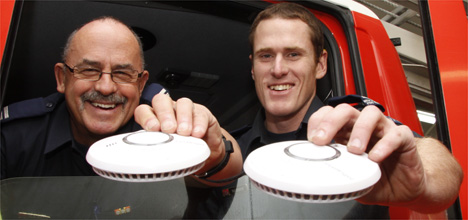
Tauranga Station senior firefighters Robert Pinkerton and Sam Behrent with smoke alarms. Photo by Tracy Hardy.
An AA Insurance home safety survey, polling 1500 Kiwi home owners and renters aged 18 years and older, shows despite 91 per cent equipping their homes with smoke alarms, 44 per cent check them regularly and 49 per cent only check them when they beep.
Six per cent do not check them at all.
Smoke alarms were not installed or not working in 80 per cent of fatal fires the New Zealand Fire Service attended this so far year.
So far this year AA has received claims totalling $2million for home fires. The average claim is about $56,000 for the home itself – not including damage to household belongings.
AA Insurance head of consumer relations Suzanne Wolton says the statistics prove a wake-up call is needed when it comes to smoke alarms.
'This is especially important when survey results show 15 per cent of New Zealanders have had some form of fire, with the majority in the kitchen (48 per cent) and North Islanders reporting twice as many kitchen fires as South Islanders (52 per cent versus 26 per cent).”
While kitchens rate as the leading fire hot spot in the home, other main causes include electrical (18 per cent), heaters and open fires (six per cent), and ashes from open fires (five per cent).
New Zealand Fire Service national Commander and chief executive Paul Baxter says working smoke alarms are a family's best chance of getting out alive if there is a fire in their home.
'Fire moves incredibly fast, so if you are asleep or out of the room where the fire starts, you need that warning to escape."
Long-life smoke alarms lasting up to 10 years are recommended, but if using ordinary smoke alarms it is vital batteries are tested every month before being changed for a new one every six months, he says.
In the last year, 20 people have died in avoidable house fires because there was no working smoke alarm to provide sufficient warning.
The most common causes of the deaths were drinking and cooking, faulty appliances or electrical wiring, items too close to a heater, and people smoking and their clothing or bedding catching fire.
Paul says it appears people who are elderly, disabled, impaired by alcohol, and living in rental or care housing are more at risk.
'We are concerned that older or impaired people make up many of these deaths. Five were in their 70s and 80s, eight in their 50s and 60s and two people had disabilities.
'However, this year, as in previous years, there were no working smoke alarms in 80 per cent of the homes where these people died. Smoke alarms save lives and should be installed in the middle of the ceiling of every bedroom in your house.”
Household fire safety tips:
- If you haven't got smoke alarms, buy and install them immediately. Also test them regularly to ensure they operate effectively.
- Get a fire extinguisher and learn how to use it. Already have one? Check it each year to see that it's in good working order.
- Don't overload multi-boards and always untangle appliance cords to make sure there's no fraying.
- Keep looking when you're cooking – a frying pan of oil can ignite in under 60 seconds.
- Turn off all non-essential electrical appliances at the wall before you go to bed or work.
- Always turn off your electric blanket before getting into bed
- Remember the heater-metre rule. Keep furniture, clothing, curtains and toys a metre away from heaters and fireplaces.
- Have your chimney swept regularly and use a steel bin for disposing of the ashes.

1 comment
.
Posted on 21-07-2013 20:05 | By whatsinaname
people need to be more aware. and take more care. not the attitude. It will never happen to me. turn off appliances etc when not using them etc
Leave a Comment
You must be logged in to make a comment.