


Marine biologists are giving the Astrolabe Reef a cautious, qualified, clean bill of health after the cargo ship Rena struck the reef in October 2011, and subsequently broke up.
Keith Gregor and Phil Ross made the announcement in a seminar at the Bay of Plenty Polytechnic yesterday where the pair shared findings collected from a two-day dive around the Rena wreck conducted by scientists and divers in August 2012.
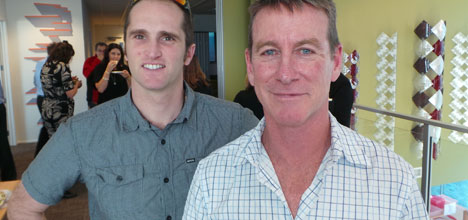
Marine scientists Phil Ross and Keith Gregor.
'The prognosis is preliminary only and made from limited sampling,” says Phil.
'There's no way are we able to grasp the whole impact of the Rena, all we are trying to do at this stage is get an indication.”
Discussed during the 20 minute seminar was the fact scientists were not able to take samples off the reef until August 2012 – more than a year after the wreck occurred.
Video and photos also taken over the two days of diving show the reef near the wreck was still in recovery, but marine life has picked up away from the debris field.
'By the time you get 100 metres from the wreck there's kelp, sponges and invertebrates on the reef, so it's not looking too bad,” says Phil.
'But that's preliminary data from limited sampling.”
Phil says scientists scrambled to get baseline data in the days immediately after the wreck and before the oil began to pollute local seawater.
They visited all nearby islands and reefs, taking samples of kelp, brown algae and sea urchins for refrigeration to be used later as the standard the pollution would be measured by.
The seminar was part of the polytechnic's annual research symposium.

3 comments
LOL
Posted on 15-06-2013 09:13 | By Capt_Kaveman
i guess they get a bonus for telling lies at what point is a sunken ship safe
Capt_Kaveman
Posted on 16-06-2013 07:26 | By Murray.Guy
... is totally inappropriate with the comment made, clearly uninformed rhetoric looking for opportunities to further milk the incident. The Pacific must have many hundreds (1000's) of ship wrecks in close proximity to and within land forms that were unplanned and loaded fuel oils, with all manner of potentially toxic and hazardous armaments that have never been removed - still belching oil occasionally. Doesn't it seem strange that scientists and the authorities are not already fully aware of the impact on the marine environment?
mr
Posted on 16-06-2013 12:06 | By pamken
nature will take care of it, like it has for the hundreds of ships that have sunk
Leave a Comment
You must be logged in to make a comment.