


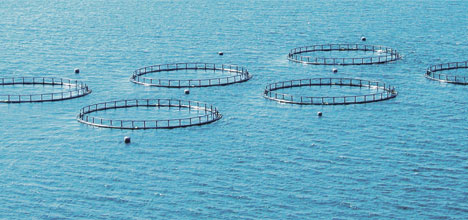
Aquaculture could transform local communities and become a major player in the wider Bay of Plenty economy but an ‘aquaculture revolution' is needed to fully realise its economic potential, says Bay of Connections Regional Aquaculture Organisation chairman Graeme Coates.
Aquaculture could turn local communities and become a major player in the wider Bay of Plenty economy.
"Aquaculture is the fastest growing seafood sector in the world and with wild fisheries at or beyond sustainable catch levels and increasing pressure on productive land areas, aquaculture presents as a huge opportunity for the region.
"We need to change our thinking from just a hunter/gatherer fishing mind-set, to one of farming fish and shellfish for the benefit of the entire region, including residents, businesses and larger industry.
"There is huge potential in the wider Bay of Plenty for growing, processing and exporting high quality aquaculture products to the rest of New Zealand and the world.
"We have some of the best water assets in New Zealand, in terms of water quality and combined with excellent land-based infrastructure, including a major port, this puts our region in a very strong position to develop a profitable aquaculture industry."
The RAO advocates for and supports the development of a sustainable aquaculture industry across the wider Bay of Plenty region, with the goal to grow an integrated and sustainable industry with export sales of $250 million by 2025.
The Bay of Connections Aquaculture Strategy was first launched in 2009, but has recently been updated by the RAO, with the possible use of geothermal energy sources just one of several opportunities the group will focus on in the next three years.
It will also look at new species that could be farmed, as well as new technology and how that could be used across the wider Bay of Plenty.
Graeme says the potential use of geothermal energy in aquaculture developments offers a key competitive advantage.
"This region has a distinct point of difference due to its geographic location and resulting access to freshwater and geothermal resources.
"In addition, the aquaculture industry as a whole presents a real opportunity to turn around local economies in this region.”
Graeme says Havelock and Takaka in the South Island, as well as Coromandel in the North Island are coastal towns which were going backwards, but are now flourishing as a result of increased business prompted by the development of aquaculture activities.
"Already we have a 3800hectare marine farm off the coast of Opotiki and while there is a need for some infrastructure, there's no reason why it could not become as successful as Havelock."
The iwi-led mussel farm off the Opotiki coast has the potential to contribute $40 million per year to the export sales target set by the region. There is currently a shortage of mussels, a $350 million export industry with the potential to grow.
The Opotiki marine farm is conducting commercial mussel trials and there are other trials in progress for geoduck, flat oysters and sea cucumber plus investigations into freshwater species like trout and eel.
"We can't do prawns, catfish, salmon and the like because we don't have the right climate for them - shellfish will be our niche.
'A key point of difference is that our water is so clean we will be able to produce high quality shellfish.
"We need to look at what species grow well locally and go from there. We believe there is also real potential here for the development of nutraceutical products – developing extracts from shellfish or shells for health products."
Nutraceutical experts are among many parties actively involved in the Bay of Connections' aquaculture action group which has, among other achievements in the past three year, completed an infrastructure needs audit and successfully lobbied for aquaculture courses at the University of Waikato and Bay of Plenty Polytechnic.
Over the next three years the ROA will focus on four key areas:
1. Leadership through advocacy, collaboration and communication with stakeholders including government, Maori, industry and other regions.
2. Investigating new opportunities including new species, new technology and the use of geothermal energy sources.
3. Marine science, technology, education and training, including investigating bio fuel production opportunities.
4. Infrastructure support for marine and aquaculture industries.
The Bay of Connections is the wider Bay of Plenty's regional economic development strategy which has several sector strategies and advisory groups, including forestry, energy, aquaculture and freight logistics.
The region includes Eastern and Western Bay of Plenty, Rotorua, and Taupo.

1 comment
Paralytic Idea???
Posted on 01-04-2013 08:35 | By peecee09
How does the ROA intend dealing with the shellfish toxin currently affecting the BOP for almost 12 months?
Leave a Comment
You must be logged in to make a comment.