


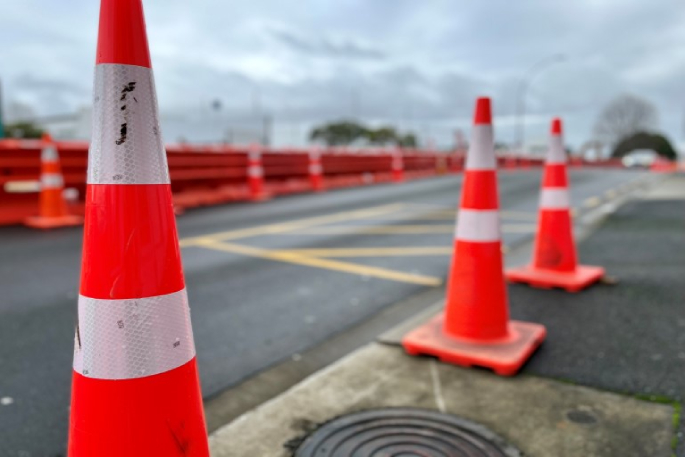
A Government crackdown on the overuse of road cones has come into force, with Tauranga City Council welcoming changes aimed at reducing unnecessary traffic disruption.
Transport Minister Chris Bishop announced that from July 1, councils must adopt a more practical, risk-based approach to temporary traffic management or risk losing access to national transport funding.
The move targets what Bishop describes as an “overly prescriptive” system that has led to excessive use of road cones and rigid rules that do not always reflect the risks present at worksites.
“The Government invests over $1 billion annually through the National Land Transport Fund into local road infrastructure and maintenance,” Bishop said.
“Too many councils still require contractors to follow an outdated, overly prescriptive code. Instead of measuring exact distances between cones, contractors should be assessing real risks and applying traffic management that fits the job.”
The reforms replace reliance on the Code of Practice for Temporary Traffic Management, a document spanning more than 500 pages, with a risk-based framework that focuses on site-specific hazards.
According to Bishop, the approach has already delivered significant benefits on the state highway network, where NZ Transport Agency Waka Kotahi has reduced temporary traffic management costs by about $46 million over the past financial year while maintaining safety standards.
About 85% of traffic management applications on state highways now use the risk-based model.

Road cones are usually a regular fixture at road works sites.
NZTA asset and operations group general manager Andrew Clark said contractors had embraced the changes and were seeing positive results.
“All our contractors now use NZTA’s risk-based temporary traffic management guidance and they are finding road closures are an effective safety tool,” Clark said.
“They reduce the reliance on road cones, minimise the use of other temporary traffic equipment, and allow road workers to work at pace in a safer environment.”
Clark said road closures often provided a safer and more efficient alternative to maintaining live traffic flows through work sites.
“Everyone wins – we get more work done in shorter timeframes, and we minimise disruption to people’s journeys.”
The new requirements will apply to all new council road contracts from July 1, with existing contracts required to transition to the new system by July 2027.
Tauranga City Council is among a number of local authorities recognised by the Government for already making progress toward implementing the changes.
Council head of transport Mike Seabourne said Tauranga had shifted to the new guidance over the past year.
“It’s great to see Tauranga acknowledged for this work,” Seabourne said.
“We’re committed to safer, smarter traffic management that focuses on real risks, supports our road workers, and keeps our city moving with less disruption for everyone.”
He said the new framework gave contractors greater flexibility to use detours, road closures and night works where appropriate, reducing reliance on large numbers of cones.
The council has also been trialling alternative traffic management methods, including vehicle-mounted traffic signals and short-term road closures during chip-sealing projects.
“These approaches are helping us work more efficiently, and we expect to see cost savings over time – especially on our quieter, lower-speed local roads,” Seabourne said.
Bishop said the reforms aimed to strike a balance between protecting road workers and reducing frustration for motorists.
“Road workers deserve to go home safely, and motorists deserve traffic management that’s proportionate to the job,” he said.
For Tauranga motorists, the changes could eventually mean fewer cones, fewer delays and a more streamlined approach to managing roadworks across the city.

2 comments
Bingobango bongo
Posted on 02-07-2026 18:05 | By Whatsisname
Well How about you go and have a look at Waihi Rd and Omokoroa Rd
This needs urgent attention
Posted on 03-07-2026 14:43 | By 2up
Such a pathetic issue to be concerned about.
Set up a complaint hot line. Saved $46 million, rally?
Laughing stock...
Leave a Comment
You must be logged in to make a comment.