


The Western Bay of Plenty district has slashed its coming rates rise in response to cost-of-living concerns – but some councillors say it may mean a bigger increase next year.
Councillors have agreed to a 5.1% rise, down from the 8.13% the council consulted on, and 9.64% forecast in the Long-Term Plan.
The council approved the Annual Plan 2025/26 – its budget and work programme for the year – in a meeting on Thursday.
Neighbouring Tauranga set a 7.2% rise on Tuesday last week.
(Scroll down for a breakdown of both city and district rates by property value.)
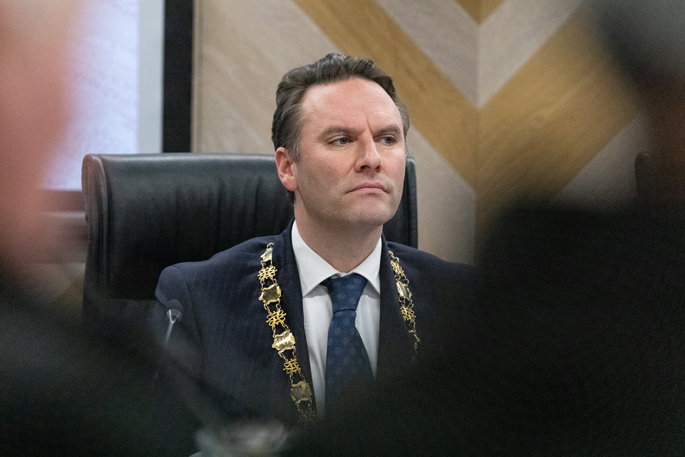
Western Bay Mayor James Denyer said in Thursday’s meeting he had “lingering concerns” about his district’s rates increase being “much lower” than previously expected.
“It could lead to a larger increase in rates next year.”
He said the council had been prudent and cautious with its spending, managing to bring some key projects forward.
Deputy Mayor Margaret Murray-Benge said it had been a difficult annual plan to come through.
“Knowing rate controls could come in, it’s really important that we continue to be strident in making sure that we give value for money for our ratepayers.”

Western Bay of Plenty District Council Deputy Mayor Margaret Murray-Benge, Katikati-Waihī Beach councillor Rodney Joyce and Kaimai councillor Graeme Elvin.
Katikati-Waihī Beach councillor Rodney Joyce said one of the areas in which the council had managed to make savings was by having built up ”too much money” in the solid waste reserve.
He said the annual plan set out to increase transport spending, which was in response to “a very clear message” from the public.
Joyce said the council should not take money off people unless it was needed, but added, “We may have delayed the increase rather than got rid of it”.
Kaimai councillor Graeme Elvin said the rates may bounce back again next year.
He acknowledged the idea to keep money in ratepayers’ pockets this year.
“That doesn’t mean to say it’ll stay in your pocket next year if we haven’t got it right.”
Western Bay of Plenty chief executive Matt Potton told Local Democracy Reporting the increases were largely driven by the rising cost of delivering roading infrastructure to the adopted levels of service.

Western Bay of Plenty District Council chief executive Matt Potton. Photo / Kelly O'Hara
“All aspects of costs were reviewed to try to manage the increase.
“We are currently facing additional costs due to the current Iran conflict that impact many parts of the core services [the council provides].”
He said the council decided not to rate for solid waste services in 2027 as there were sufficient reserves to cover it.
This represented a reduction in the rates requirement of $900,000.
He said a decision in deliberations not to rate for the proposed $3.1 million for roading, and to use the reserves available instead, also helped bring the increase down.
He said the decisions recognised the increased cost of living the community was facing.
He expected the council’s costs would increase in the coming years, given volatility from the ongoing Iran conflict and its knock-on impact for prices, especially for oil-related products such as bitumen.
The council would develop its next Long-Term Plan for 2027-37, which would consider all aspects of operations and costs and include community consultation.
Potton said the council was also keeping a “watching brief” on the Government’s proposal to introduce a rates cap.
“At this stage, there has been limited information on how the cap is to be calculated or the final implementation timeframe, which makes it challenging to determine the future impact.”
The 2026/27 rates take effect July 1.
Rates rise examples by property value (CV)
Western Bay of Plenty District
- $680,000 – down 1.6% or $62
- $910,000 – down 1.8% or $77
- $4.21m – up 14.6% or $1195
Commercial/industrial
- $760,000 – up 9.5% or $513
- $1.13m – up 7.4% or $478
- $3.4m – up 12.5% or $1156
Rural
- $1.04m – up 1.2% or $36
- $1.48m – up 4.5% or $127
- $2.06m – up 4.2% or $140
Water
Water charges will increase 15%, from $1.75 to $2.01 per cubic metre for water used.
Source: Western Bay of Plenty District Council
Tauranga City
Residential
Average: Up 6.9% or $288
- $450,000 – up 6.9% or $180
- $715,000 – up 6.9% or $231
- $875,000 – up 6.9% or $262
- $890,000 – up 7.9% or $265
- $3.47m – up 7.0 or $762
Commercial
Average: Up 6.7% or $1363
- $122,000 – up 7.3% or $200
- $660,000 – up 6.9% or $437
- $1,120,000 – up 6.8% or $640
- $2,570,000 – up 6.7% or $1280
- $24.292m – up 6.6% or $10,870
Industrial
Average: Up 6.3% or $3182
- $250,000 – up 6.9% or $270
- $1.49m – up 6.5% or $886
- $2.42m – up 6.4% or $1348
- $4.9475m – up 6.4% or $2603
- $50.6125m – up 6.3% or $25,288
Water
Water charges will increase 7.5% or by $0.29 per cubic metre used.
Source: Tauranga City Council
Ayla Yeoman is a Local Democracy Reporting journalist based in Tauranga. She holds a Bachelor of Arts majoring in communications, politics and international relations from the University of Auckland, and has been a journalist since 2022.
LDR is local body journalism co-funded by RNZ and NZ On Air.


0 comments
Leave a Comment
You must be logged in to make a comment.