


A Bay of Plenty regional councillor has warned proposed Government rates caps could undermine future emergency management efforts.
It comes after the council spent more than $340,000 responding to four weather events over the summer.
A report presented to the council’s regional delivery and evaluation committee today showed the Bay of Plenty’s Civil Defence Emergency Management Group’s emergency co-ordination centre was activated for four weather events during the 2025/26 summer period.
These included Cyclone Vaianu and a damaging January storm that has been linked to nine deaths in the Bay of Plenty, including eight people in landslides and a man swept away crossing a swollen river.
The report said the summer activations totalled 29 days, 23 operational shifts and 4950 staff hours, with the overall cost estimated at $341,000.
The figure did not include recovery work, meaning the final cost was expected to be higher.
The report also warned the “increasing frequency, scale, and duration of events” was affecting workforce capacity, with the same emergency-trained personnel repeatedly called on to respond.

Storm damage around Rotorua after Cyclone Vaianu. Photo / Rotorua Lakes Council
Tauranga regional councillor Kat MacMillan said the growing number of emergency events highlighted the challenge councils would face if rates increases were restricted.
“We are six months into the year and already had four events,” MacMillan said.
“This is climate change becoming a business-as-usual challenge.”
She said emergency management, climate adaptation and resilience planning would need to remain priorities regardless of future local government structures.
Regional councils face the scrap under the Government’s plans to simplify local government.
It has encouraged councils to look at forming unitary authorities, which include local and regional functions.
“Whatever entity is going to be in our place in terms of emergency management, climate change and rates caps needs to be eyes wide open about this,” MacMillan said.
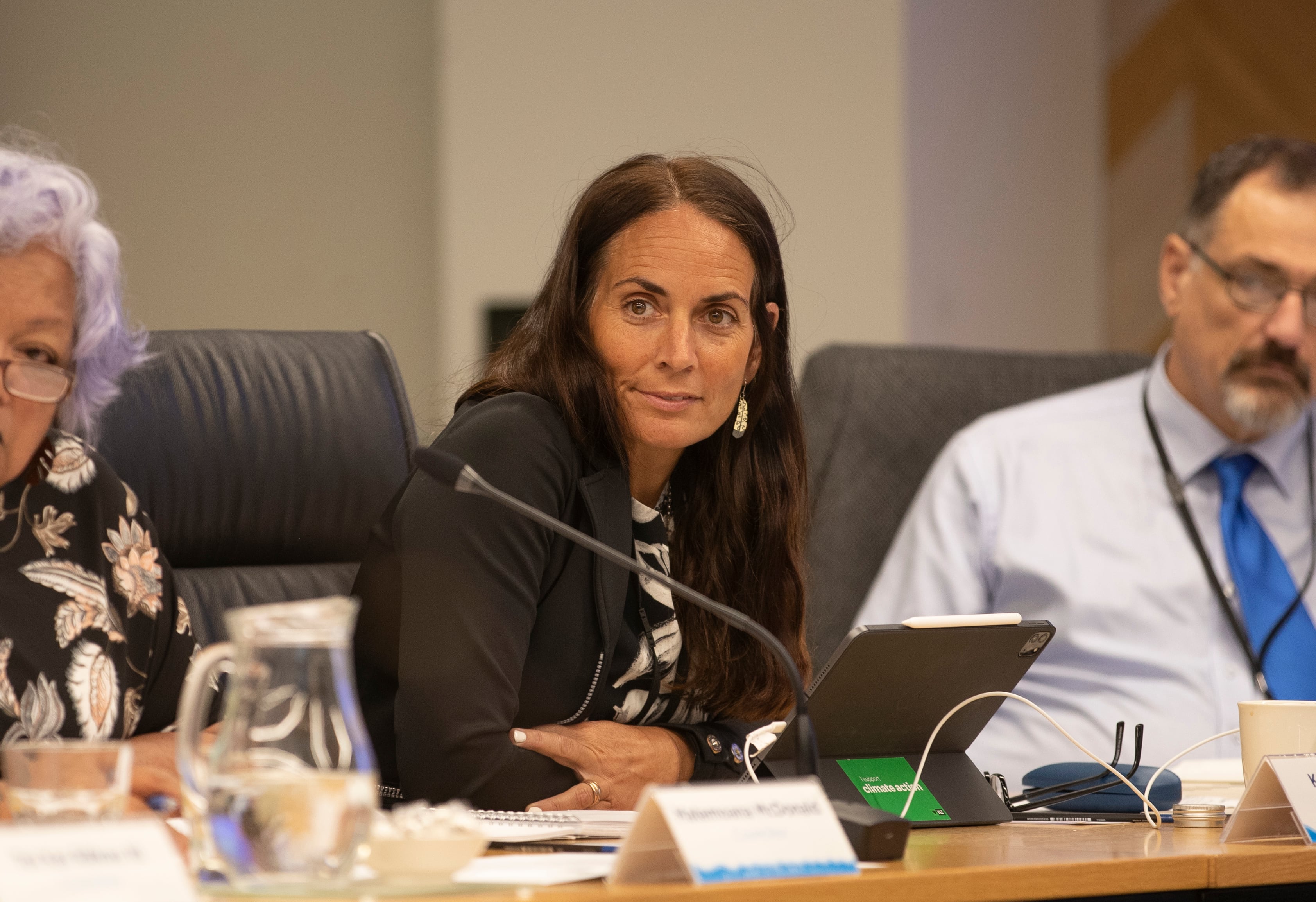
Bay of Plenty Regional councillor Kat MacMillan. Photo / NZME
The Government’s proposed rates reforms would limit annual rates increases and require councils to seek approval from a central regulator to exceed the cap.
A target range of 2% to 4% a year from 2029 has been suggested.
The regional council set an average rates increase of 0.4% this year, but rises for other councils in the region are expected to be between about 5% and 9%.
MacMillan’s comments echoed concerns previously raised by Local Government New Zealand president Rehette Stoltz, who warned in February that rates caps could weaken councils’ ability to invest in resilience and emergency preparedness.

Landslides took eight lives in the Bay of Plenty in January. Photo / Alyse Wright
Bay of Plenty regional manager of emergency management Jono Gracie did not comment directly on rates capping in the meeting but acknowledged the increasing challenge posed by severe weather events.
“I will reflect on your point that the frequency and severity of events are increasing,” Gracie said.
“From a response perspective, we’re faced with the dilemma of acting too heavily too early or too little too late.”
Gracie said the proposed Emergency Management Bill, expected to pass during the current parliamentary term, would require greater alignment between regional emergency management plans and councils’ long-term planning processes.
“This will give us greater opportunities to address these issues,” he said.
The Bay of Plenty Regional Council is not alone in facing growing weather-related costs.
In May, Rotorua Lakes Council revealed it had spent $8.5 million on emergency road repairs linked to severe weather events over the past four years.
The Western Bay of Plenty District Council has estimated its summer storm recovery could cost north of $28m and take years.
Tauranga City Council has budgeted $6m for recovery-related capital spending in 2026/27, on top of costs to date.
A summary of recovery operations and associated costs from the summer events will be presented to regional councillors at the committee’s next meeting in September.
Mathew Nash is a Local Democracy Reporting journalist based at the Rotorua Daily Post. He has previously written for SunLive, been a regular contributor to RNZ and was a football reporter in the UK for eight years.
LDR is local body journalism co-funded by RNZ and NZ On Air.


5 comments
Need more money?
Posted on 24-06-2026 11:47 | By morepork
Why is the first thing they think of, the pool from Rates? If the Council was a commercial business the LAST thing they would do is raise prices.
Rate capping has only become necessary BECAUSE Councils see Ratepayers as an endless source of revenue.
The profligate spending and waste is a matter of record.
Despite promises, there is little/no REAL effort to cut waste or constrain vanity projects.
Councils build their own gravy trains and live beyond their means as a matter of course. It is really tough on them when unexpected events might rain on the party, so the obvious solution is to increase the Rates.
There needs to be a firmer hand in control and a general change of attitude, with protection of Rates being the top priority, not the least priority.
Emergency funds should be being built as a matter of ongoing requirement.
Yes, well….
Posted on 24-06-2026 12:01 | By Shadow1
…of course there will be more atmospheric rivers creating chaos on our roads and rivers, but if Central Government are willing to cap the rates, which is what all ratepayers want, they must be willing to fund emergency works.
It’s easy to make a case for increasing rates when the increase is for “what ifs”. Regional Councils need to stick to their knitting, and look for ways to reduce rates.
To be honest, we do need a regional authority. Whether it’s run by Central Government or by an elected council is immaterial.
We definitely don’t need them to be run by our own elected urban council. We need our council to be fully involved in our local community. That’s why we elected them.
Shadow1.
Appropriate
Posted on 24-06-2026 12:28 | By Yadick
Perhaps scale back the stupidity of the museum and meeting rooms to nothing and use the money where it's more appropriate and needed.
lost my vote..
Posted on 24-06-2026 14:51 | By fair game
Ever since the debacle of spending $500,000 for staff coffees, I have lost all confidence in TCC. At our workplace we only get instant coffee and teabags. Nothing wrong with that, and seems to be the same at most workplaces. A lot could be achieved with $500,000, and how dare the mayor spend my hard earned tax dollars on paying for his staff coffees....
Time to live within means
Posted on 24-06-2026 16:55 | By jed
The whole links ave debacle cost millions, and achieved little.
Council barrelled on with this insane project (and many other similar projects) without thought to affordability, with the abject belief they can keep hitting ratepayers an extra 10% per year.
Rather than removing carparking and building cycleways and beautification projects, council should first ask whether they are affordable. Discretionary spending should be abandoned if rates need to increase beyond inflation.
Leave a Comment
You must be logged in to make a comment.