


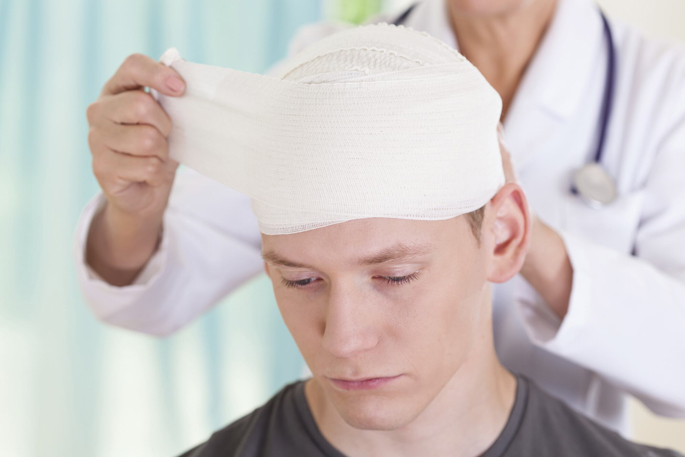
ACC is urging Bay of Plenty athletes to take concussion seriously this winter, with hundreds of injuries recorded across the region last year.
In 2025, ACC accepted 5854 concussion-related claims nationwide across the five main winter sports – rugby union, football, netball, basketball and rugby league.
Of those, 324 were in the Bay of Plenty, costing $801,221 to support recovery.
In a media release, ACC injury prevention leader James Whitaker said concussion remains a complex injury with wide-reaching impacts.
“Concussions can be very complex and can affect people in a wide range of ways over a prolonged period of time,” Whitaker said.
“They don’t just affect the injured person – there can be flow-on effects for family, friends and workmates too, so it is always better to prevent the injury in the first place.”
Whitaker said good technique and early recognition are key, particularly in contact sports.
“If you’re playing rugby or league, always use the right technique when tackling. For league it’s important to get low and close. For rugby the mantra is cheek to cheek.”
He said players showing signs of concussion – including headaches, dizziness, confusion or nausea – should be immediately removed from play and medically assessed.
According to ACC, rugby union accounted for the highest number of concussion claims nationally, with 3256 cases in 2025 – more than half of all winter sport injuries. In the Bay of Plenty, 195 rugby-related concussion claims were recorded.
“Rugby is our national game and a highlight of the winter season, but people need to look after their brains,” Whitaker said.
“If someone isn’t 100% right, get them off the field and checked by a doctor. Early management can improve long-term outcomes.”
Football had the second-highest number of claims in 2025 with 1258, followed by rugby league (601), basketball (457) and netball (274).
Research also shows Māori and Pacific players experience higher rates of concussion but are less likely to report symptoms.
Whitaker said ACC’s National Concussion Guidelines for community sport aim to create a consistent and safer approach.
“The guidelines focus on increasing awareness and putting player welfare first – but they’re only as effective as the communities that adopt them.”
The guidelines require players to be symptom-free for 14 days before starting a graduated return to play, followed by a minimum 21-day stand-down from full competition. Medical clearance is also mandatory.
ACC is also promoting the “four Rs” of concussion management: recognise the signs, remove the player, refer them to a doctor and allow time to recover before returning to sport.
Whitaker said everyone involved in sport has a role to play.
“Early removal and access to care reduces recovery time. Extra caution is needed for children, adolescents and female athletes, who often take longer to recover.
“Ultimately, we all have a responsibility to support the recognition and management of concussion in sport.”

8 comments
I've Said It Before
Posted on 03-06-2026 10:56 | By Yadick
And I'll say it again.
We spend millions of dollars every year on concussion awareness, concussion ACC payments, Ambulance fee's etc, etc, etc . . .
but then we allow the stupidity of promoting 'sports' like boxing, kick boxing etc where the ultimate goal is a knockout, a concussion. Organizations that take kids potentially going off the rails and teaches them boxing as an escape. How to give someone a concussion, a head injury, brain damage.
'Sports' like this, where it's not an accident, should not be covered by ACC but on the other the other hand (or glove) you don't want the person and family suffering. You want them to get the care required. It's a catch 22.
@Yadick.
Posted on 03-06-2026 13:23 | By Howbradseesit
Agreed. And further to that ACC should not spending any money on drunk drivers, or speeding drivers. But then it snowballs right, how about we don't spend health money on obesity, or health money on smokers. Where do you draw the line?
con cused
Posted on 03-06-2026 14:47 | By terminal
ha ha when oh when are the powers that be make head gear compulsery for all sport
Frequent head injuries?
Posted on 03-06-2026 17:58 | By Watchdog
Any sport that has a history of concussion resulting from normal or accidental play, should have as standard issue, protective headgear. Cricket set a good example with helmets, and face-protecting gear with protection over the temple.
In rugby, often the objective is to take down the opposing player and its a bit like a head on crash in a car sometimes the force is doubled, especially with two larger type guys. It takes years to recover and sometimes if concussion is not detected early, it can result in death.
All players should be wearing helmets. How many older guys are suffering from head knock brain injuries as a result of their enthusiastic play in younger life.
I got knocked out once by a guy who threw a hockey stick at me. Knocked me clean out for a few seconds. Nobody thought to check me for concussion.
I don't believe...
Posted on 04-06-2026 16:52 | By morepork
...Boxing is any more "risky" than any other contact sport, or even horse riding.
I'm biased, because I attended a school in Wellington in the mid 1950s where Boxing was part of the curriculum ("the noble art of self-defence"). I loved it (and became pretty good at it, eventually having to box kids several years older than me because nobody my own age could beat me...). I got too cocky and eventually met my come-uppance, but it was all valuable life lessons.
Perhaps it isn't fair to compare schoolkids boxing, where the combatants are not generally physically strong enough to seriously damage each other, with the farce that purports to be "professional" Boxing, or even worse "mixed martial arts", which Trump wants for his birthday.
When the violence becomes more attractive than the principles, it is maybe time to stop.
The Olympics cleaned up Boxing and retains it.
Concussion...
Posted on 04-06-2026 17:13 | By morepork
...is a risk even if you ride a bicycle, and yet, for decades we rode our bikes without head protection.
Traffic (including bikes...) moves faster than it once did and the density of it is much higher than it has ever been in the past.
Risk aversion is a subjective thing. We all assess what risks are acceptable to us, and it's unreasonable to advocate banning a sport because YOU think it is too risky.
If you feel that way, don't participate.
(It is perfectly OK to insist that all reasonable actions are taken to reduce obvious risks [protective gear], and to ensure it is properly supervised - that applies to ALL of the contact sports.)
I won't go bunjy jumping, but I don't mind if you do.
BTW, I have had concussion... I bashed my head against a dresser while pillow fighting with my father... not boxing related.
@ morepork
Posted on 05-06-2026 14:11 | By Yadick
I hear what you're saying and I agree that accidents are going to happen and I eluded to this in my original comment, however the goal of these other activities is not a KO achieved ultimately by smacking the other guy round the head either with one well placed almighty blow or pummel his head over and over.
Google images of what happens to the brain when smacked in the head. It's not a pretty sight.
@ Yadick
Posted on 06-06-2026 01:15 | By morepork
I have seen the scans of brain damage from Boxing and I agree it can be horrific. But the general idea of the sport is to ensure that you DON'T get smacked round the head, (it's called blocking, ducking and weaving), and you employ strategies to punish your opponent when he tries do that. This is where proper supervision is important, and referees should definitely stop bouts where opponents are mismatched. Olympic and even local gym matches are taking safety much more seriously than was the case in the days of Don King.
I found Boxing to be character building, and, quite often, some firm friendships were formed after exchanging blows with someone in the ring. You find courage and tenacity, and you don't lose them when you step out of the ring.
For me, the character part was more important than the thumping part.
Leave a Comment
You must be logged in to make a comment.