


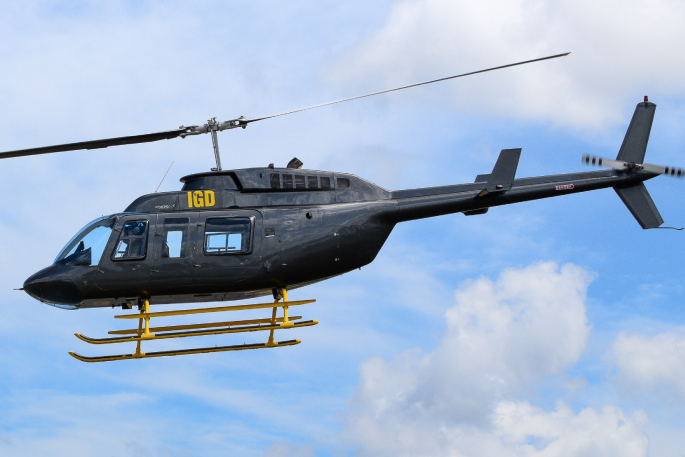
The cause of a helicopter crash in the eastern Bay of Plenty has been revealed.
The Transport Accident Investigation Commission investigated the incident, which involved a Bell 206L-3 LongRanger helicopter, registration ZK-IGD, on July 27.
The helicopter overturned during take-off from a private property near Matatā, about 15km northwest of Whakatāne.
The pilot intended to fly back to the helicopter’s home base at Ardmore Aerodrome, following a familiar flight path.
According to the commission’s final accident report, the pilot intended to lift into a low hover, move slightly left away from a nearby wall, then reposition and depart.
“Soon after the helicopter started moving left, it rolled onto its side, and its main rotor blades hit the concrete and the tail boom separated,” the report summary read.
The pilot sustained a head injury and briefly lost consciousness. Two passengers sustained minor injuries and all three were taken to hospital.
The commission found the helicopter entered a condition known as “dynamic rollover”, which it described as a ”well-known helicopter hazard”.
In a dynamic rollover, the helicopter can roll uncontrollably around a pivot point, often leading to an accident if not corrected early.
During take-off, the helicopter was in a slightly more “nose-high” attitude than the pilot normally experienced, likely because of a light tailwind.
“As the pilot applied the cyclic to move away from the wall, it is virtually certain the rear of the left skid was still touching the concrete, creating friction between skid and ground.”

The top of the helicopter and remains of the main rotor blades. Photo / Transport Accident Investigation Commission
The commission said the helicopter started rolling over this pivot point.
“The pilot tried to recover by lowering the collective, which is the correct recovery action, but the helicopter had already rolled beyond the point at which recovery was impossible.”
The commission said the accident was a reminder that helicopter pilots needed to be slow and controlled.
“And ensure landing gear is fully clear of the surface before moving sideways or backwards.”
It was also noted that the pilot was not wearing a helmet, which was not unusual and not contrary to any rule.
“However, flight helmets can reduce the risk of a head injury, should an accident occur,” the report said.
The commission identified no new safety issues and made no new recommendations.

0 comments
Leave a Comment
You must be logged in to make a comment.