


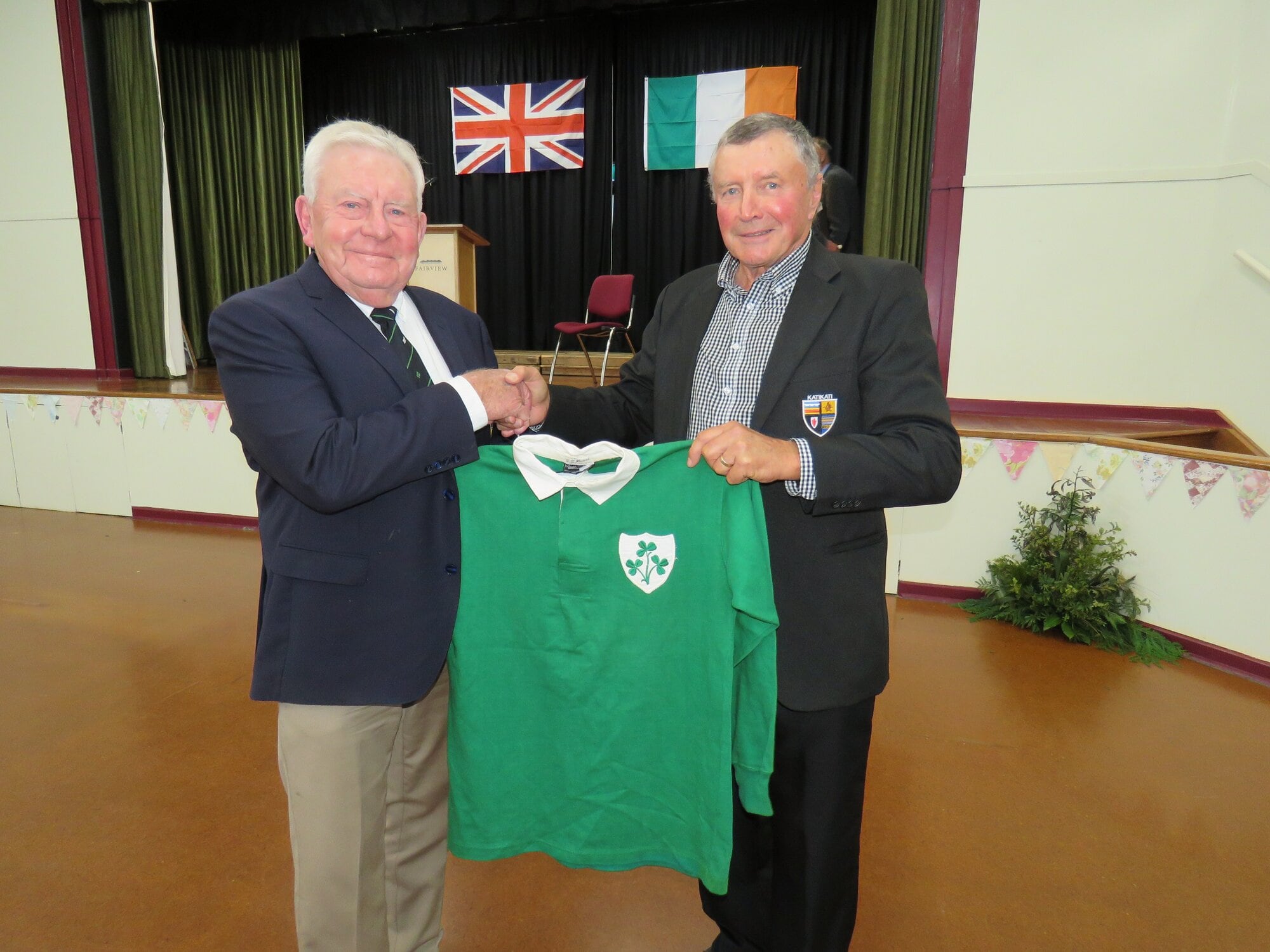
A former All Black gave his Irish rugby shirt he received on a 1974 New Zealand Rugby Union tour of Ireland to Katikati last Friday.
Te Puke business Graeme Crossman gave his bright emerald green shirt to Katikati Rugby Club stalwart Rollo Dunlop on permanent loan at the end of his speech at Rugby Remembers – Lest we Forget event at Katikati War Memorial Hall.
Rugby Remembers kicked off public events from September 12-14 to mark the 150th anniversary since Ulster Irish settlers arrived here in 1875.
The event’s five speakers took the audience through three main themes – remembering local residents who’d lost their lives serving New Zealand in conflicts worldwide, the history of the game in the town, and acknowledging All Blacks who went to war – including Katikati’s most famous Ulster Irish Settler Dave Gallaher.
Katikati RSA president Trevor Gilbert spoke of each serviceman who died in the Boer and World Wars. Records show 60 Katikati residents served in WWI and 120 in WWII, Gilbert said.
He also highlighted Dave Gallaher’s military service. “It sheds light on what sort of person he was. Dave had seen active service in South Africa in 1901 where he lied about his age, putting it back three years, so he could go overseas. He rose to the rank of sergeant.”
Serving his country in WWI, on October 14, 1917, Gallaher was fatally wounded at Gravenstafel Spur, according to the information in a special exhibition on him at Western Bay Museum – on loan from Ponsonby Rugby Club for the 150th weekend. “He is buried at Nine Elms cemetery, Poperinge, Belgium. His grave has become a shrine to many Kiwi tourists and All Black teams alike.”
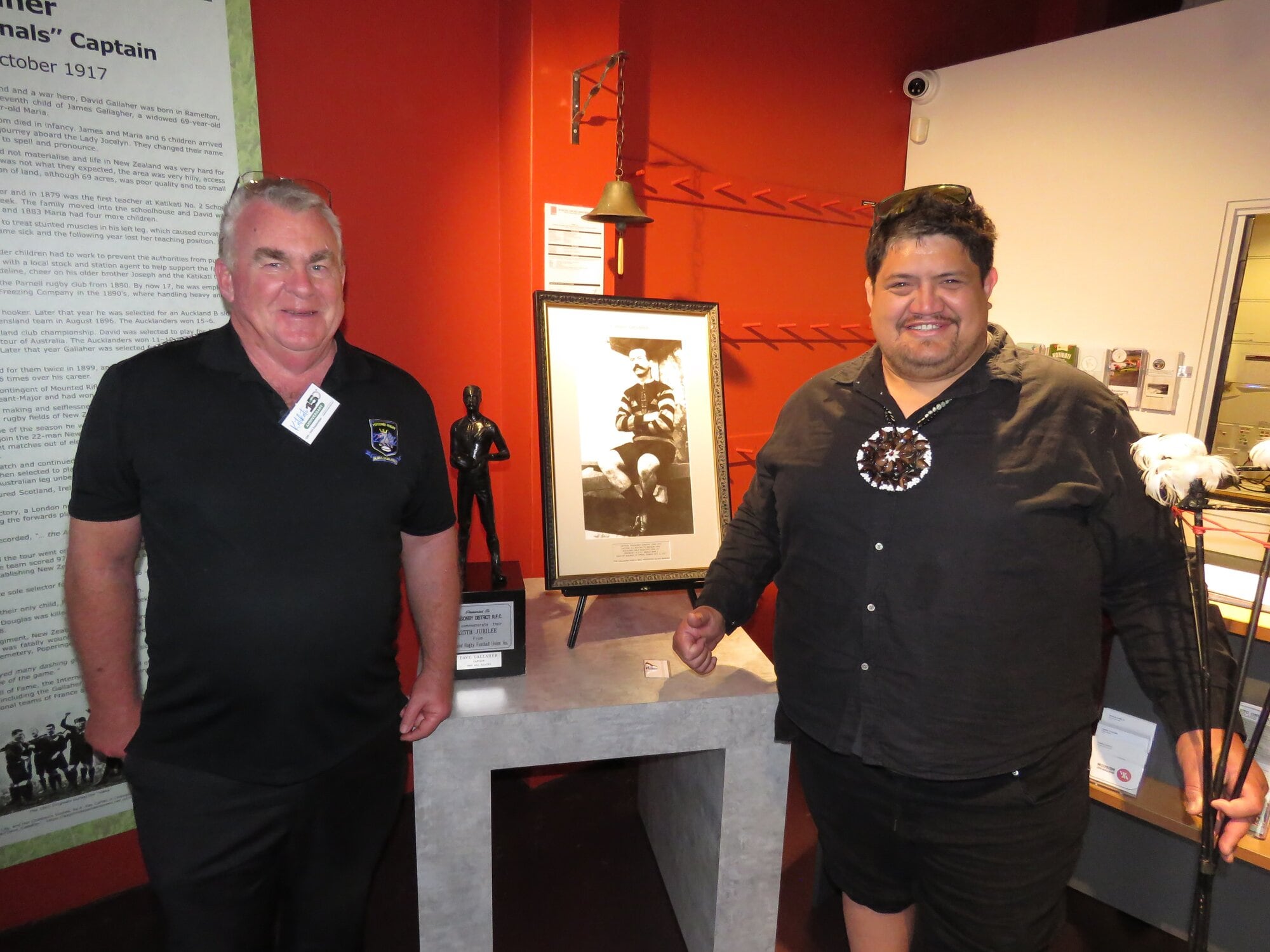
Ponsonby Rugby Club’s volunteer historian Paul Neazor with the Dave Gallaher memorabilia and Haimona Brown at Western Bay Museum. Photo / Merle Cave
Gilbert said Gallaher’s two brothers were also killed in action overseas; Douglas Gallaher in 1916, and Henry in 1918. “So a very high price for freedom was paid by that family.”
Dunlop gave a history of Katikati Rugby Club’s 145 years of existence, and talked of the club’s nine notables – David Gallaher, George Henry, Ian Johnston, Greg Davis, Graeme Moore, Dunlop himself, Dave Murray, Peter Kennedy and Don Young – honoured in murals facing Moore Park.
“The first European settlers arriving here had three priorities: clearing the land, starting schools for education and playing sport. And the jobs around at the time required a heavy labour force, which was good for the sports field,” said Dunlop.
Initially, rugby was played on ad hoc basis in Katikati “and in the first 20 years there was about 14 club sides that we have records for”. “The players were mostly from the three local marae, and we even had players from Te Puna,” Dunlop said.
The first game was played July, 1880, between Tauranga County Football Club and Katikati’s club, Dunlop said. “Two-thirds of the team [from Tauranga] came by horseback and drag, the other third by steamer. They had to bring the goal posts and flags because we didn’t have any. That game was played on Hunter Reserve, on the corner of Wharawhara and the main road.”
Crossman detailed his 1974 All Blacks tour of Ireland, Wales and England. The tour, which was part of the Irish Rugby Football Union’s centenary celebrations, played six of eight matches in Ireland, culminating in the international against Ireland’s national rugby union team, which NZ won 15-6.
At the time, the All Black was made up mostly of farmers and school teachers, said Crossman, who’d moved to Paengaroa from Auckland to get over the teacher salary bar by doing country service.
Crossman, who played 19 games for the All Blacks from 1974-1976, said having never been to the Northern Hemisphere, the tour was a wonderful experience, and he enjoyed visiting communities such as Cork.
“The Irish were as soft, warm, friendly people. The climate was cold and dark all the time.” After his talk he gifted the rugby shirt to Dunlop to acknowledge the town’s historical connection to Ireland.
Dunlop said the number 19 shirt looked like a reserve shirt, which Crossman had swapped with an Irish counterpart on the tour. “We’ll put it in on show in our club rooms.”
Ponsonby Rugby Club’s volunteer historian Paul Neazor then described how Dave Gallaher inspired his club from his time there right through until today.
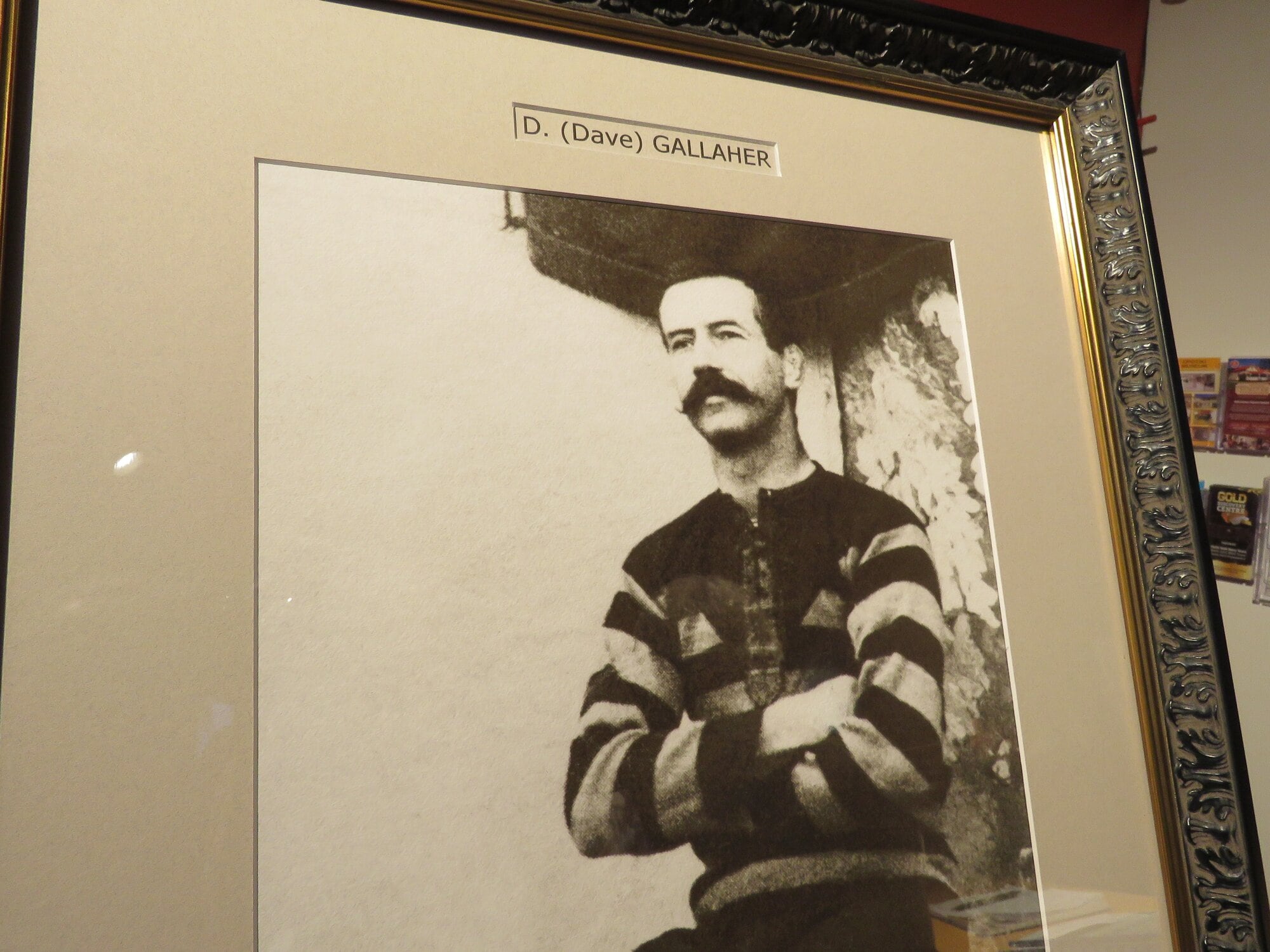
A photo of Dave Gallaher, displayed at Western Bay Museum for the weekend thanks to loan from the Ponsonby Rugby Club. Photo / Merle Cave
After playing for Ponsonby, Gallaher went on to captain the Original All Blacks, New Zealand’s first national rugby union team to tour outside Australasia. He captained the team from 1903 to 1906.
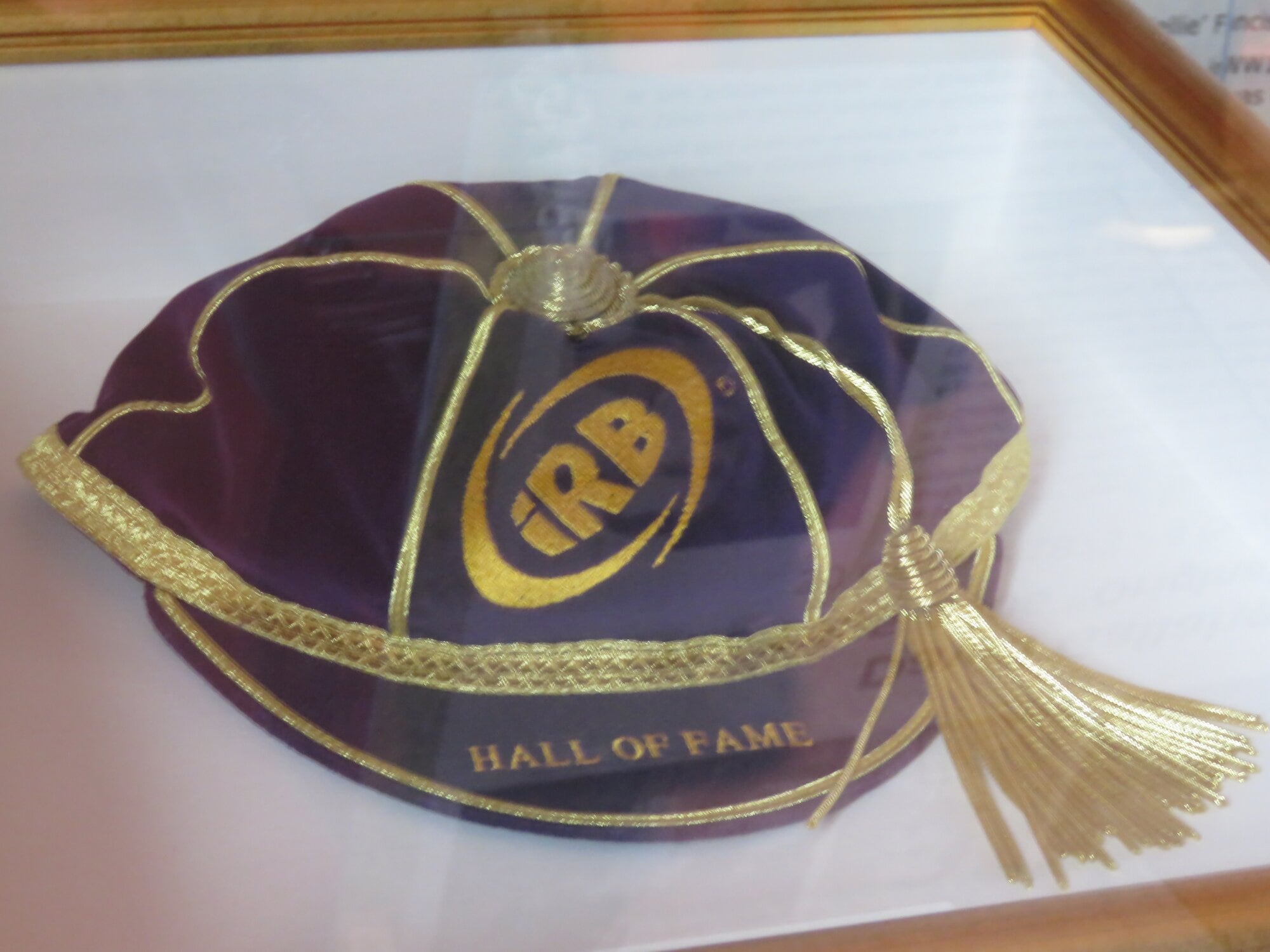
Dave Gallaher’s rugby cap, displayed at Western Bay Museum for the weekend thanks to loan from the Ponsonby Rugby Club. Photo / Merle Cave
Producer Jude Dobson also spoke of her film All Blacks at War – a 2024 documentary exploring the stories of the 52 former All Blacks who served in WWI, with 13 never returning home.
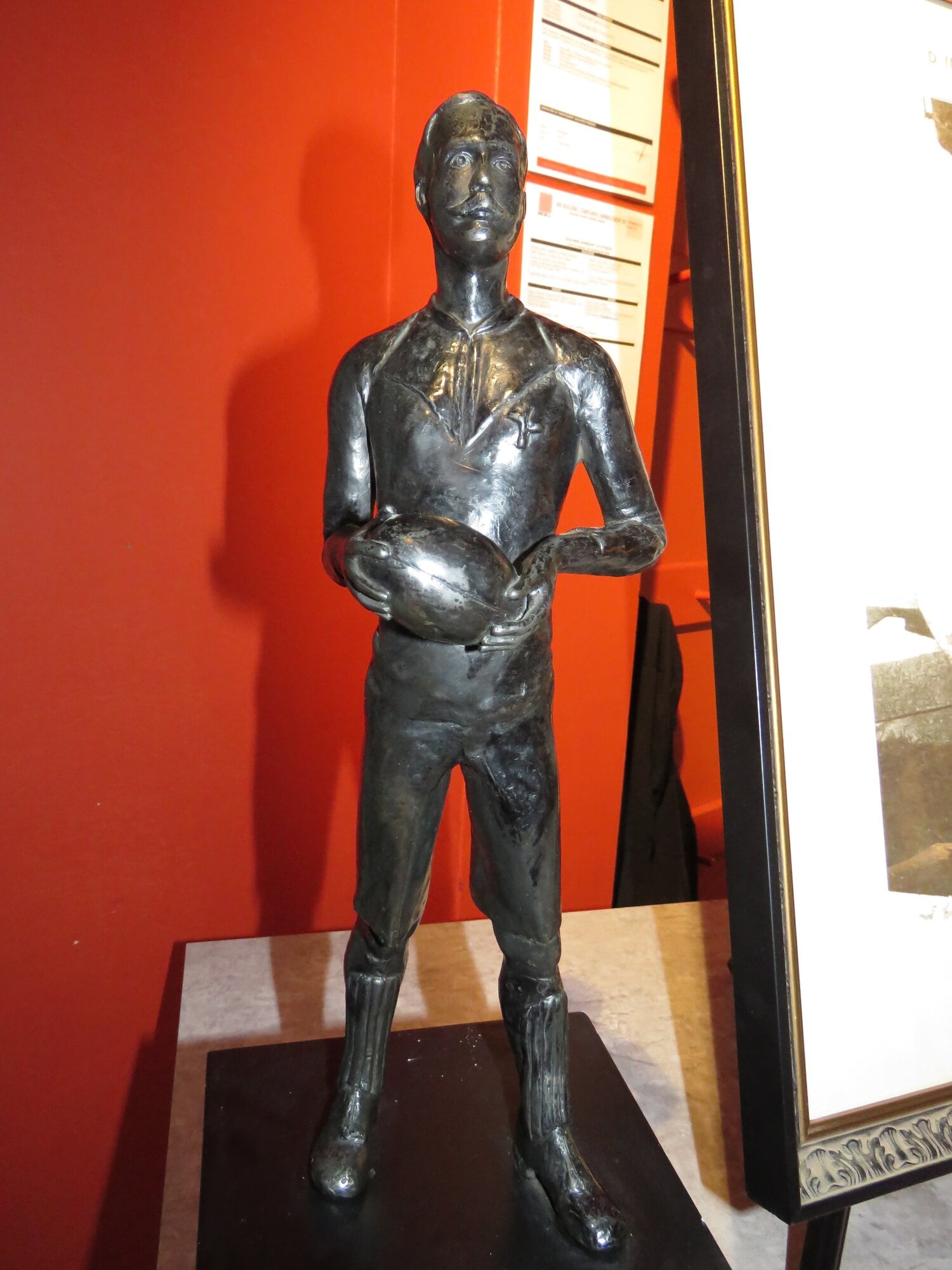
A statue of Dave Gallaher, displayed at Western Bay Museum for the weekend thanks to loan from the Ponsonby Rugby Club. Photo / Merle Cave

0 comments
Leave a Comment
You must be logged in to make a comment.